
Destination: Turin & Milan
I handed in our room key, said “thank you” to the lovely Filipina receptionist of our equally lovely boutique hotel, and, turning around, ready to depart for the airport, found ourselves facing a kind-faced, short bellman who asked, “Everything okay, madam?”
To which I replied, “Yes, everything’s okay.”
And then the bellman added, “How about the shopping?”
To which, with much amusement, I replied, “Even more okay!”
And then he looked at my husband, shook his head, and said, “Women!” before bidding us goodbye.
Because after all, we had just ended a weeklong visit to Milan. More popularly known as one of the world’s shopping capitals, it was no surprise that the bellman had asked about the degree of damage the city had done to my finances. At the same time, however, it is just as surprising that Milan appears to be known only for its incredible shopping when it so clearly has much more to offer.
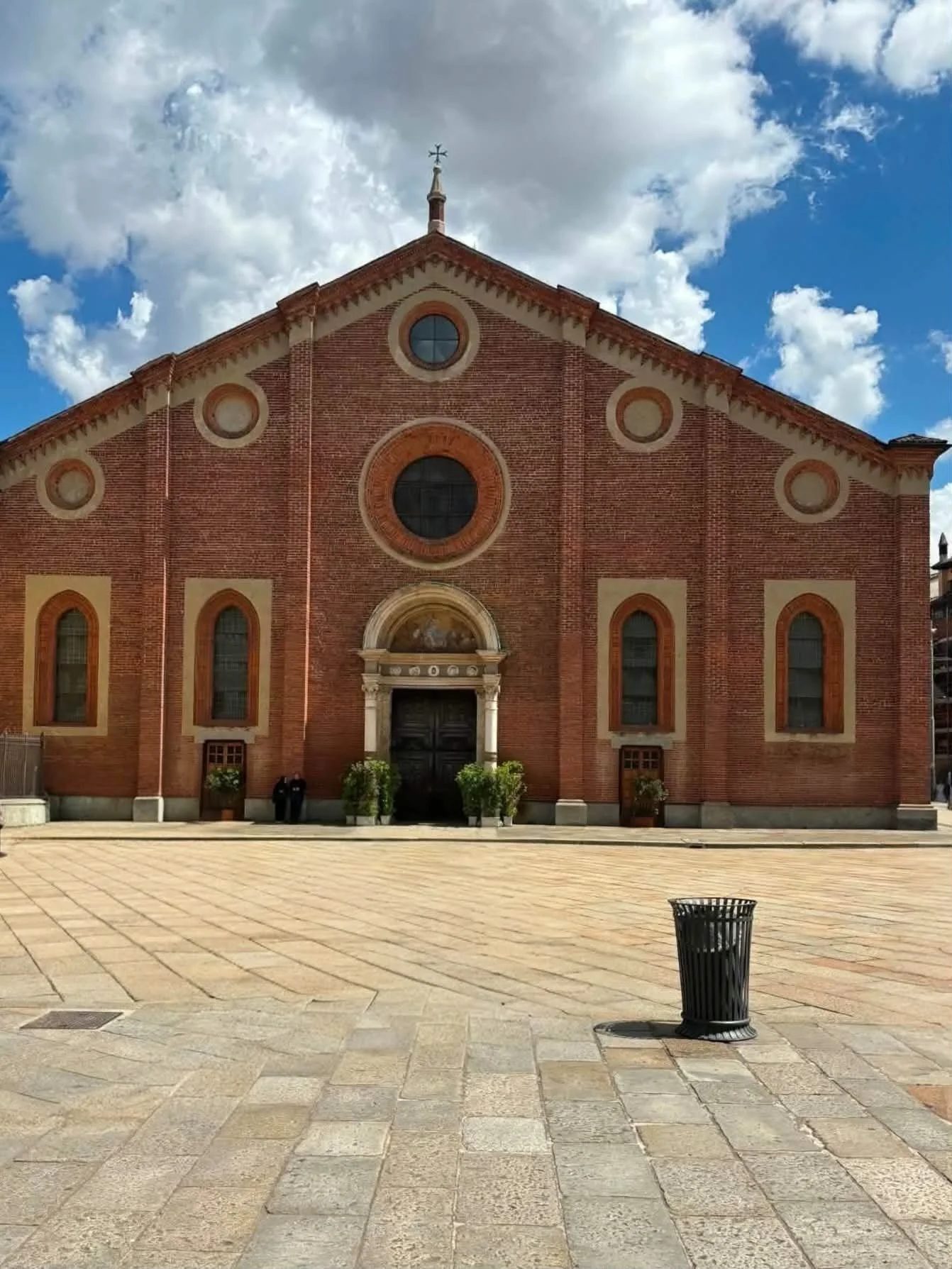
Before regaling you with how Milan captured our hearts, however, our spring Italian getaway actually began in a little Baroque city an hour away: Turin.
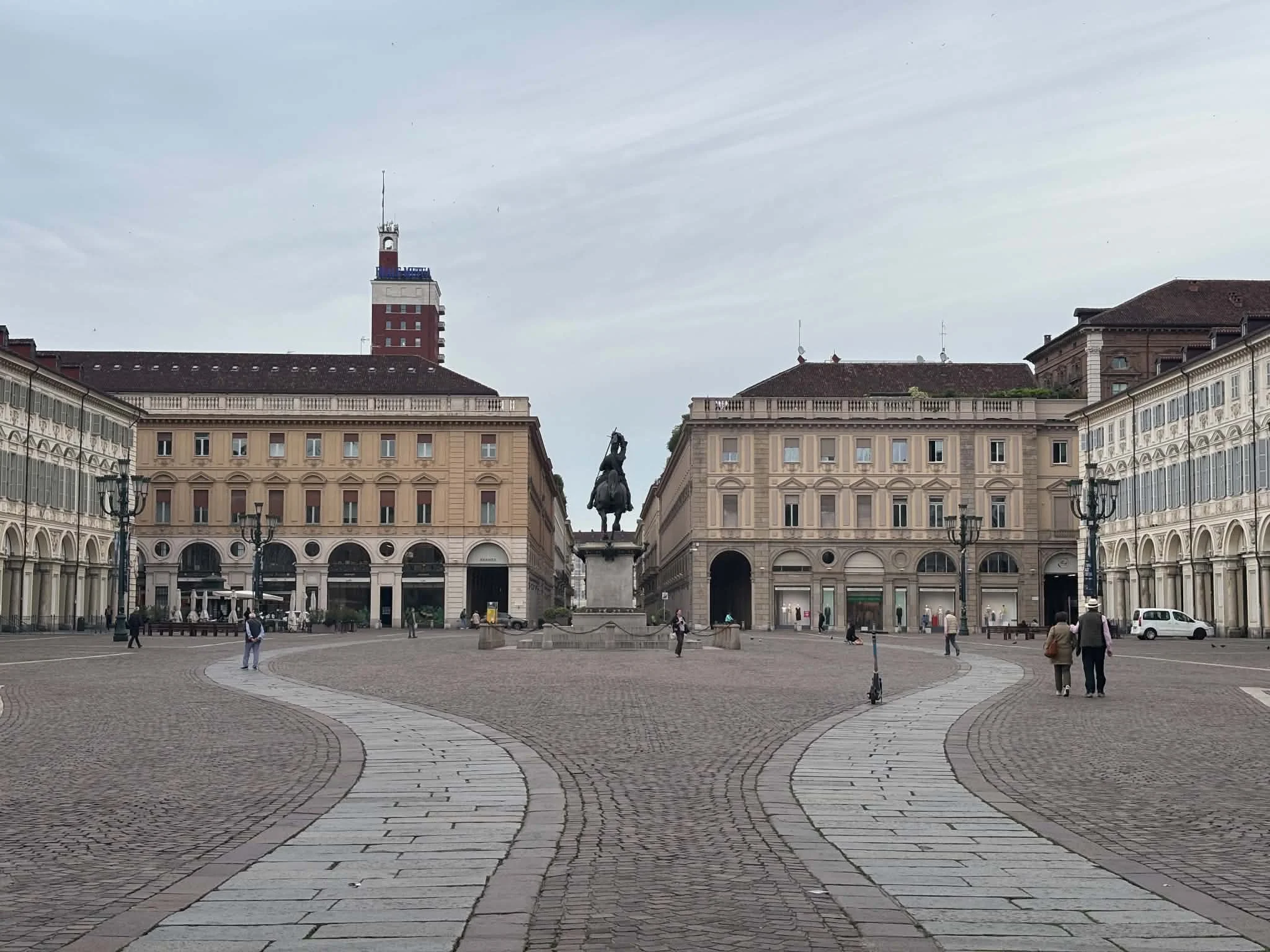
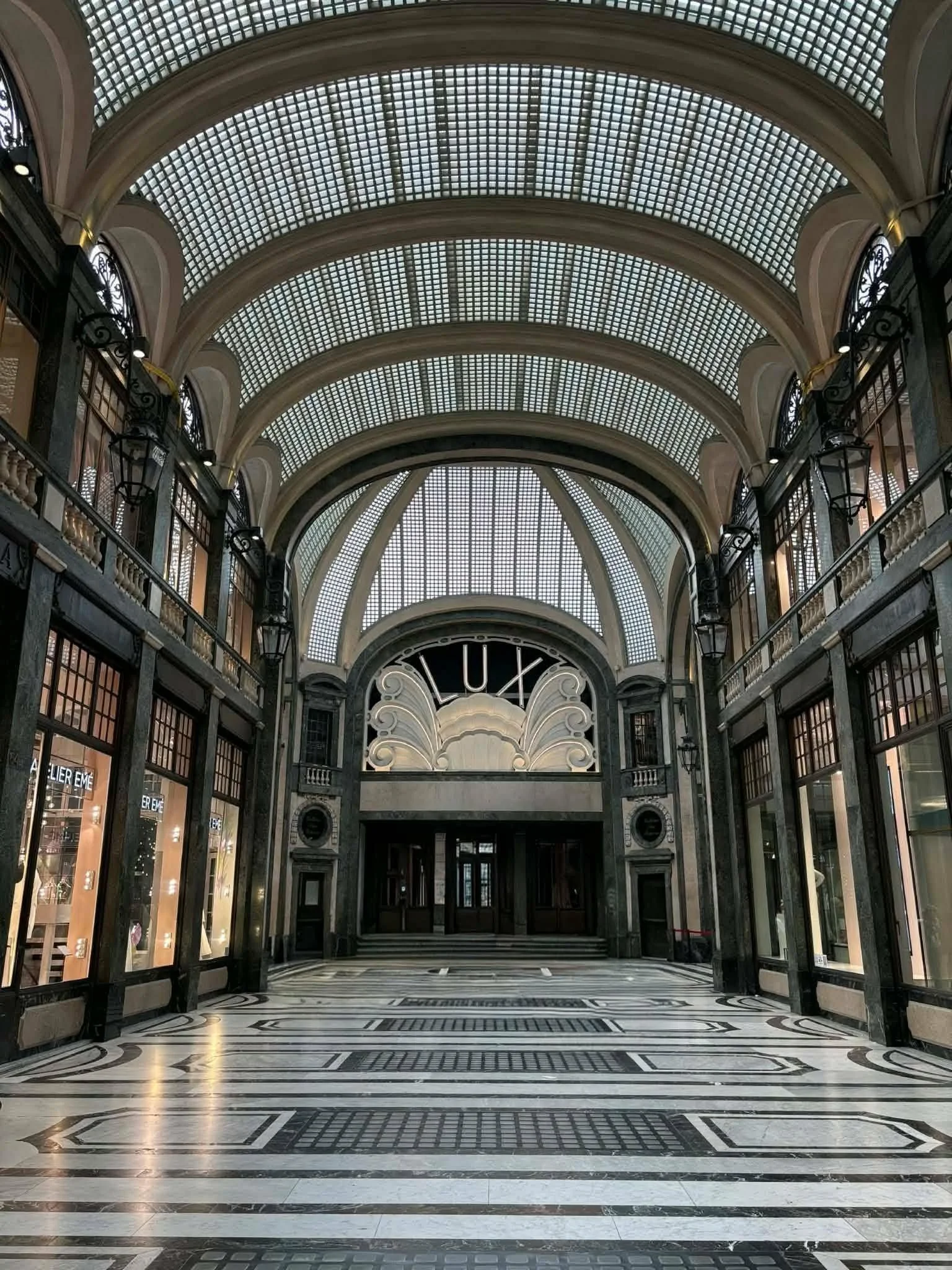
We initially planned on visiting romantic Venice, but Turin pulled us in its own special way. It was Italy’s first capital from 1861 to 1865 and is the birthplace of many iconic Italian things, including hazelnut chocolate (and, of course, Nutella), Lavazza coffee, Ferrero Rocher, Fiat, Alfa Romeo, and the slow food movement. The first Eataly store is located here. Italy’s third richest city after Rome and Milan, Turin’s famed 11 miles of porticos are thanks to a king who wanted to take his daily stroll around the city without having to carry an umbrella.
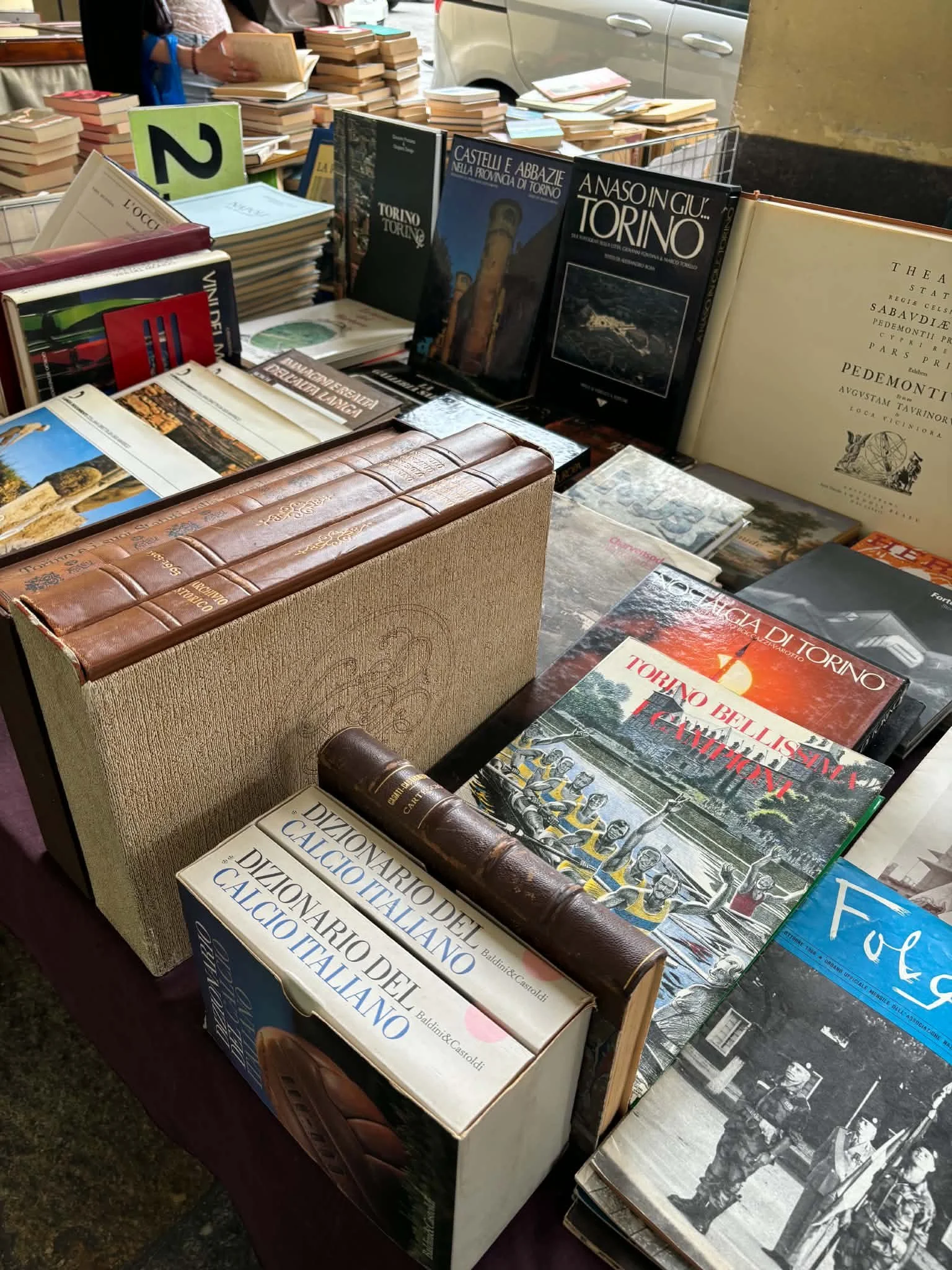
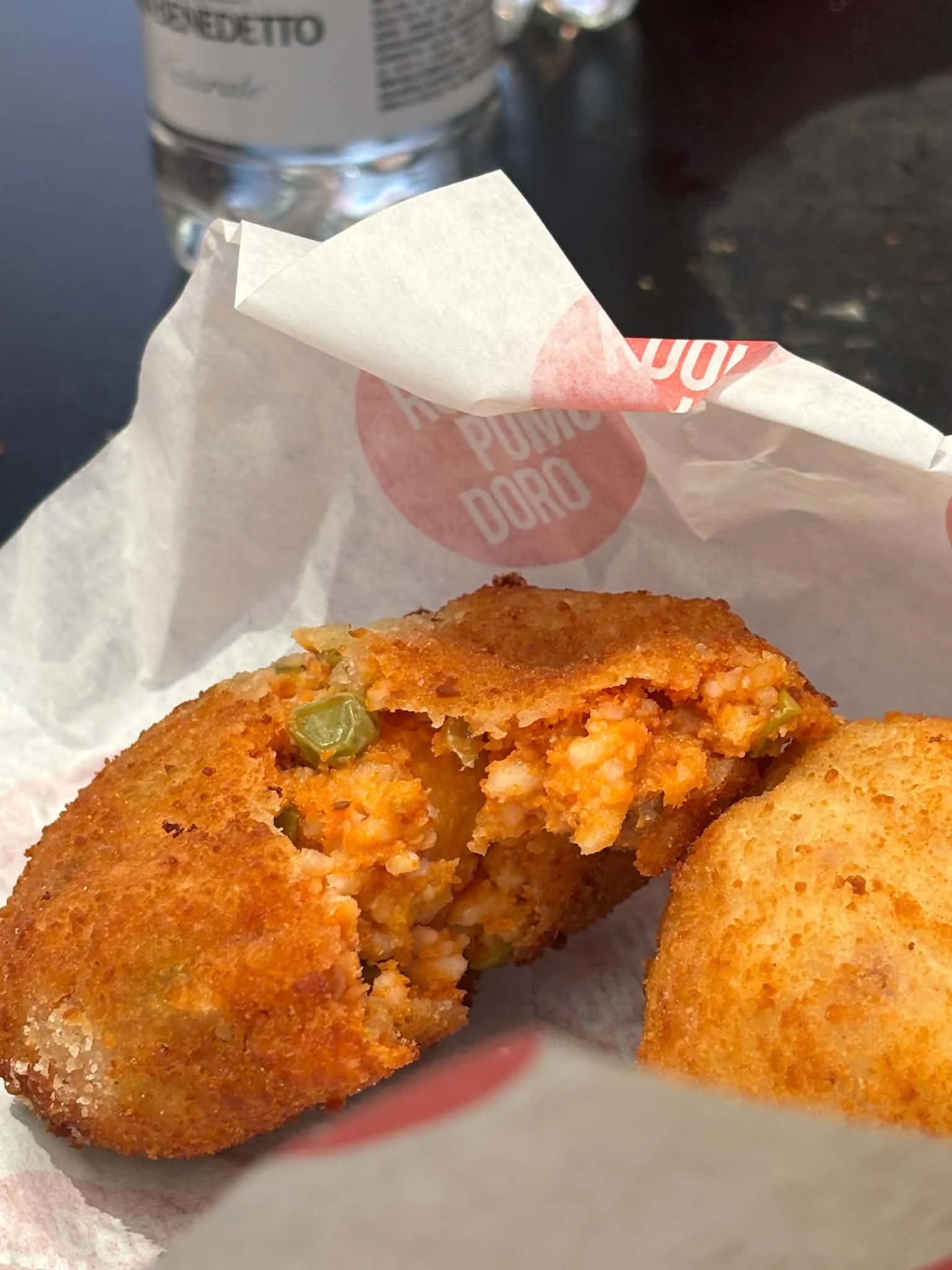
We were only staying for a night and so, after having an astounding arancini for lunch, we explored the city on foot. It was a Sunday and the covered streets were lined with vendors mostly selling secondhand books, and we marveled at the musty piles of old tomes. There was something wonderfully unhurried about it all: the smell of old paper, the quiet rustling of pages, the occasional treasure waiting to be discovered. We took our time appreciating the architecture too, lingering over ornate facades and details that we might otherwise have simply walked past.
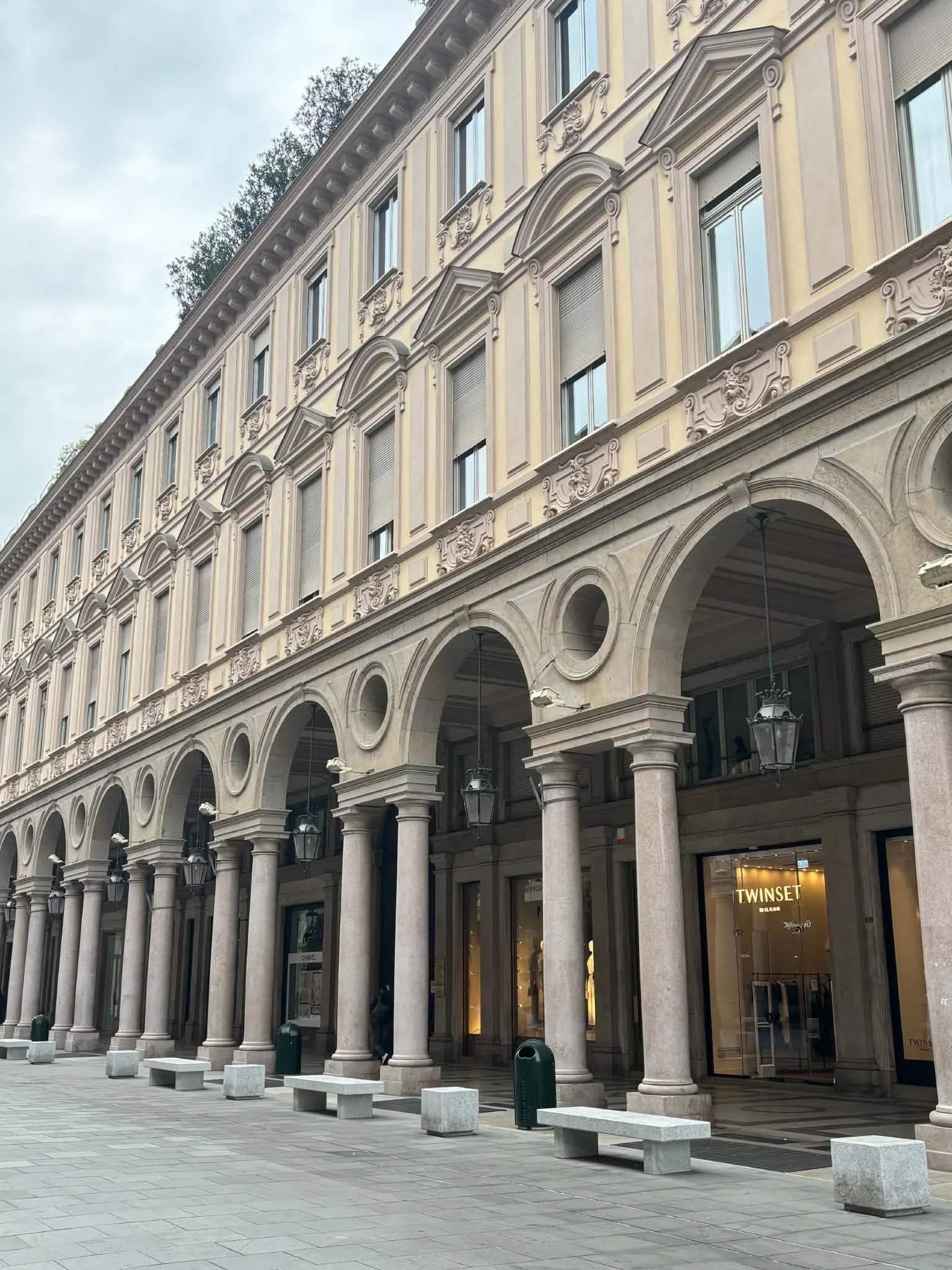
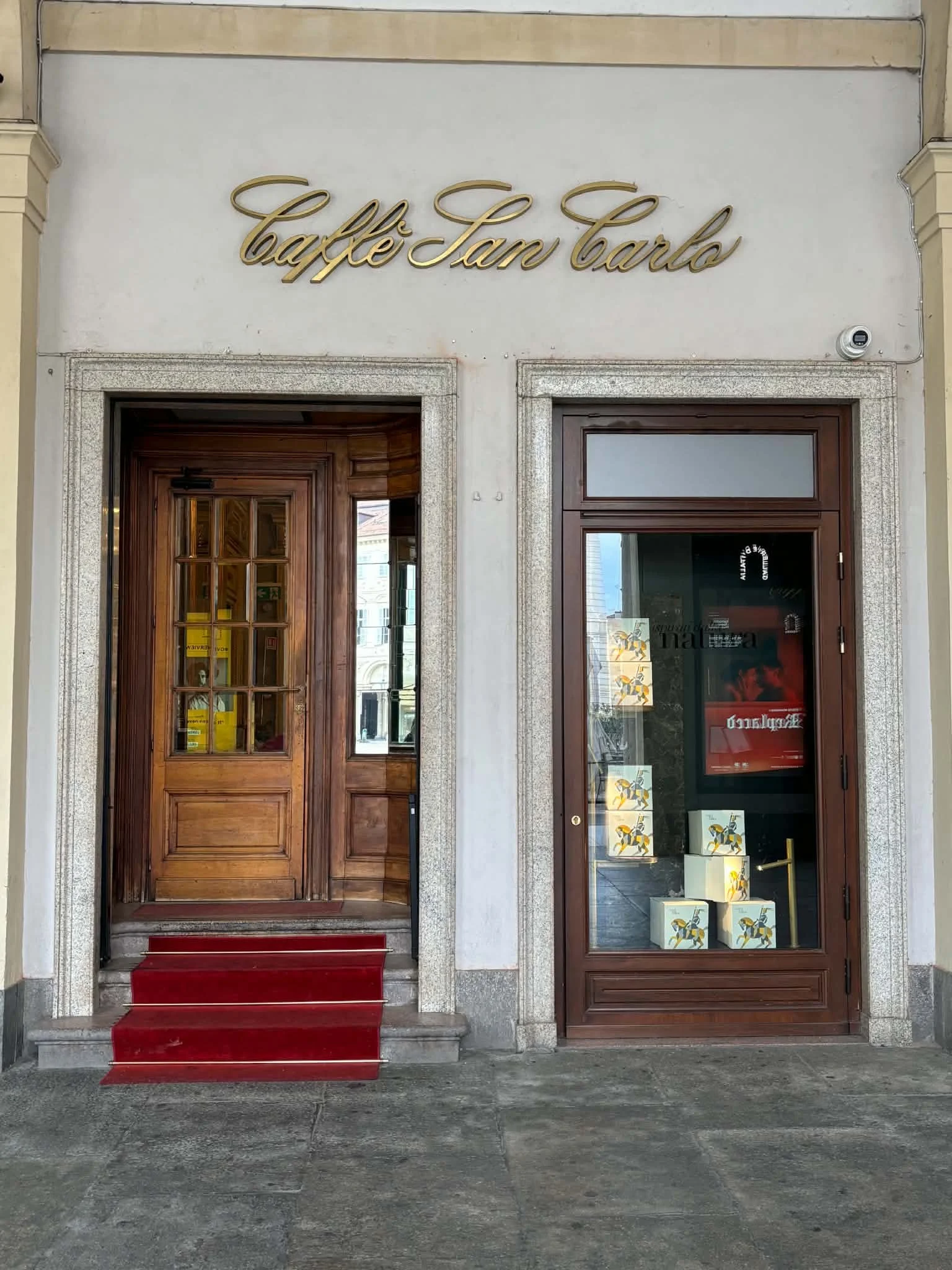
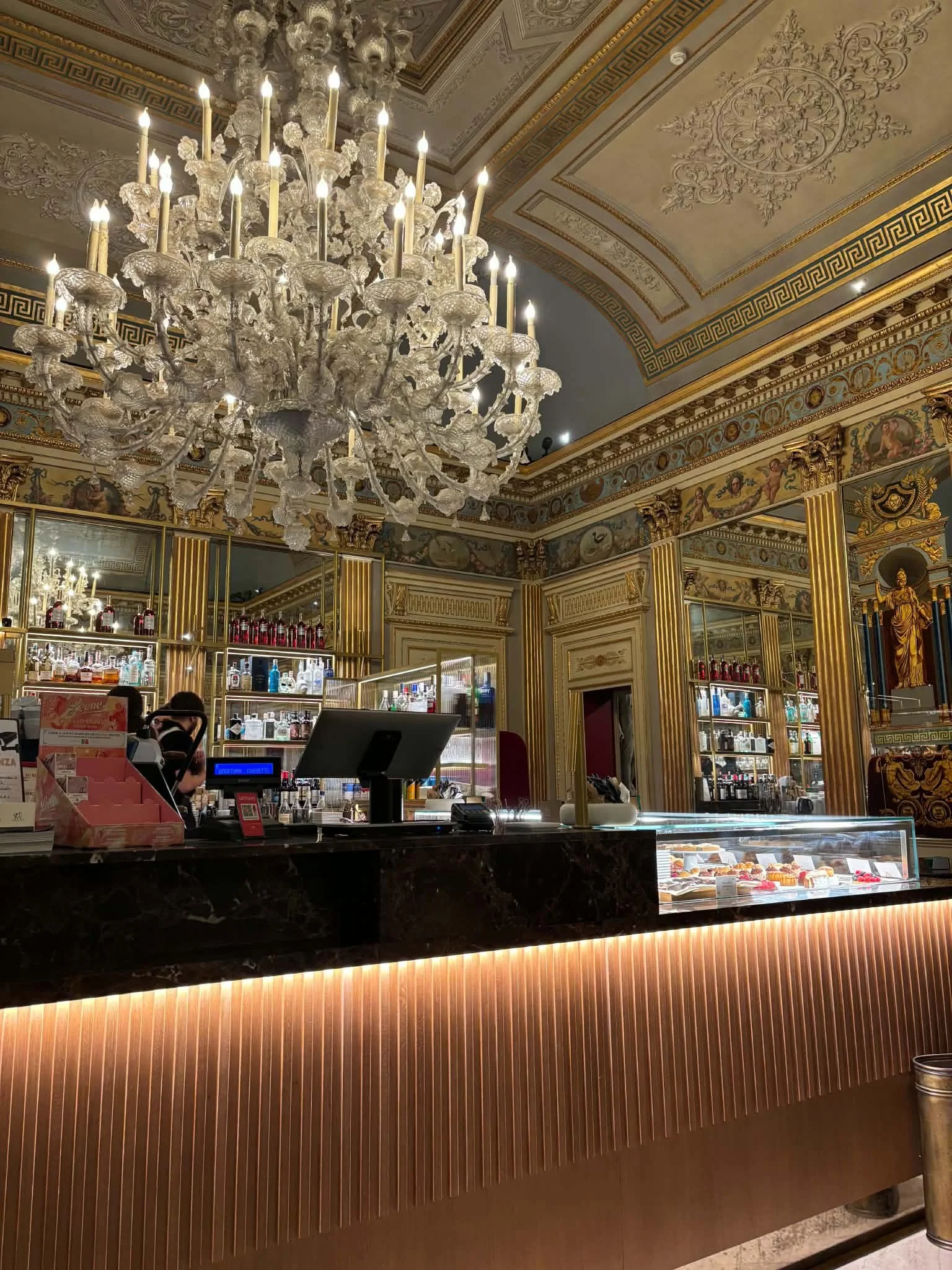
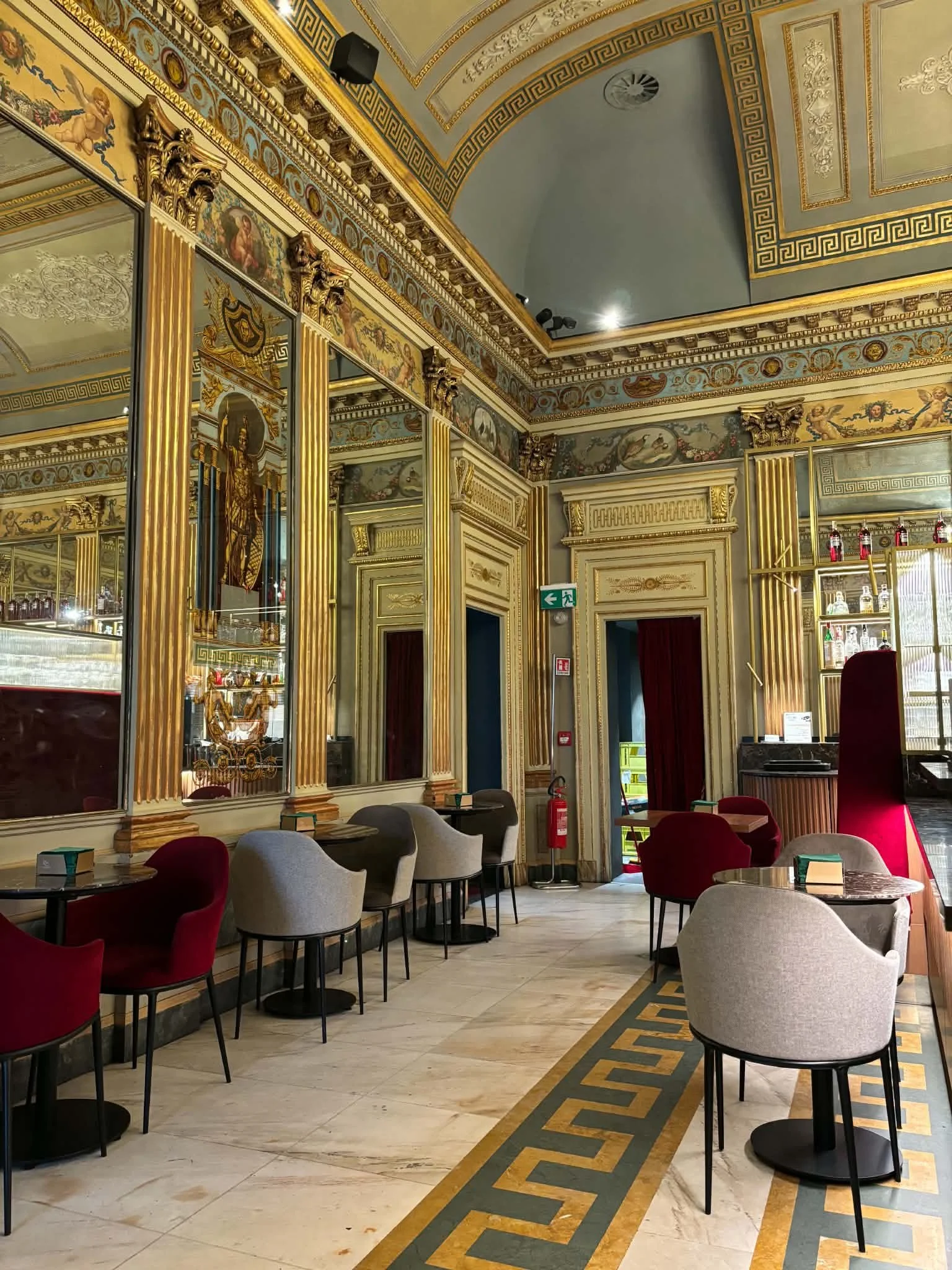
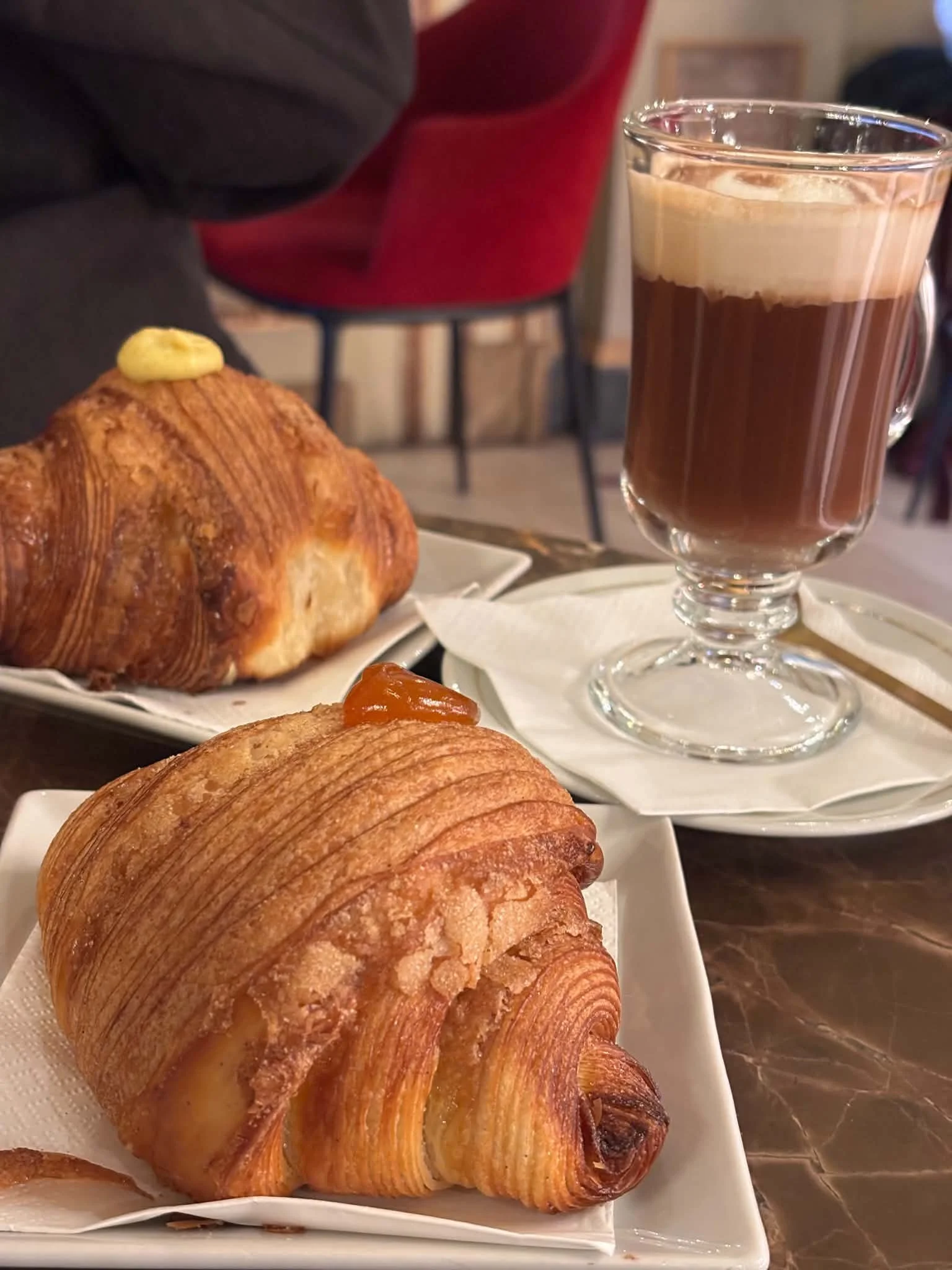
The following morning, we walked along the porticos of Piazza San Carlo on the way to Palazzo Reale, the Royal Palace. Before that, though, we stopped by one of Turin’s historic cafes for breakfast. Established in 1822 and once frequented by patriots, writers, and intellectuals, Caffè San Carlo served us our first taste of Italian cornetto - apricot jam-filled for me, custard for my husband - and bicerin, an intoxicating layered drink of espresso, rich chocolate, and cream. It was the sort of breakfast that still pleasantly haunts us to this day.
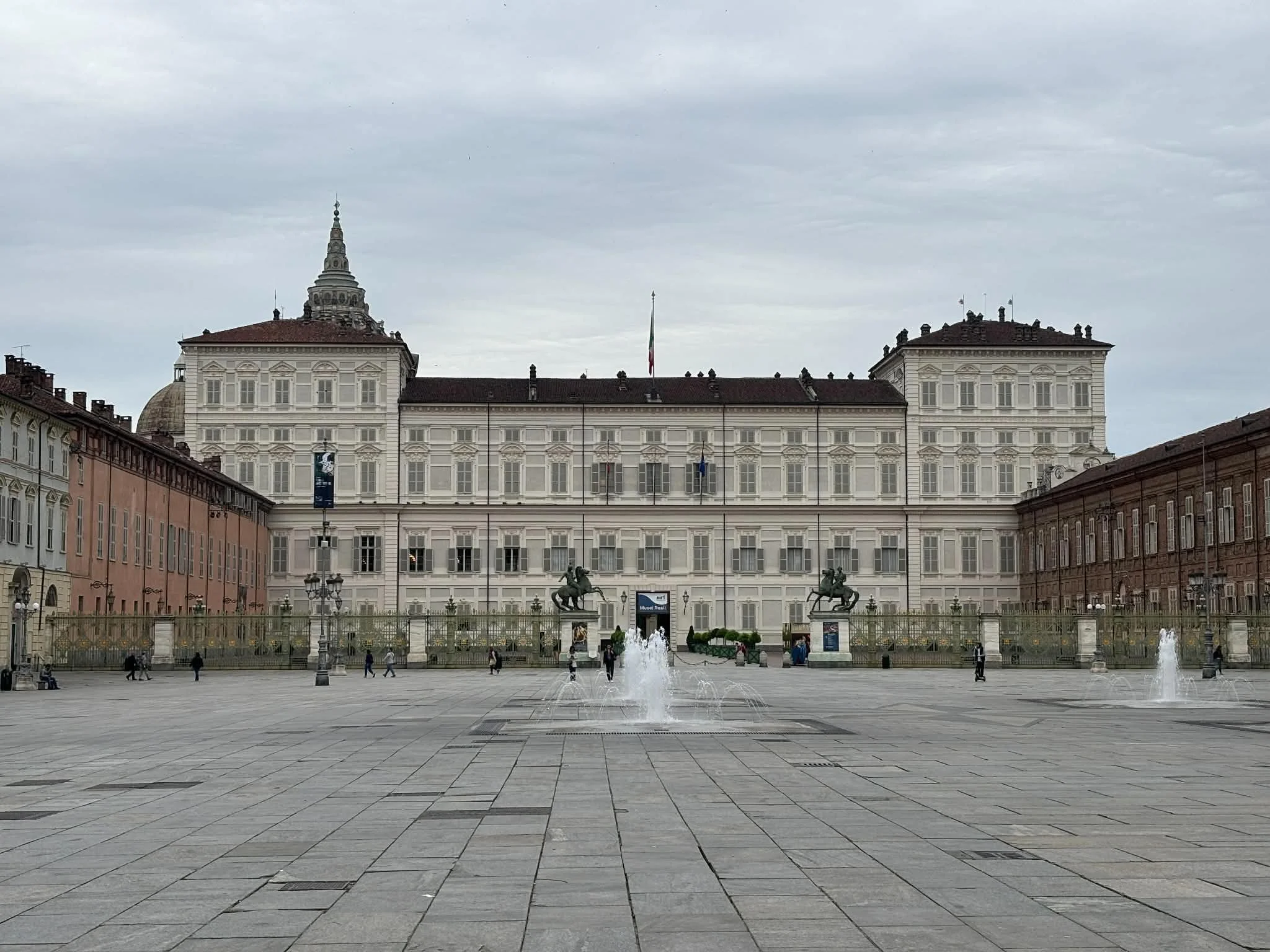
Palazzo Reale is as grand as you may imagine. After all, it used to be the royal residence of the House of Savoy until the capital of Italy was moved from Turin to Florence and, eventually, Rome.
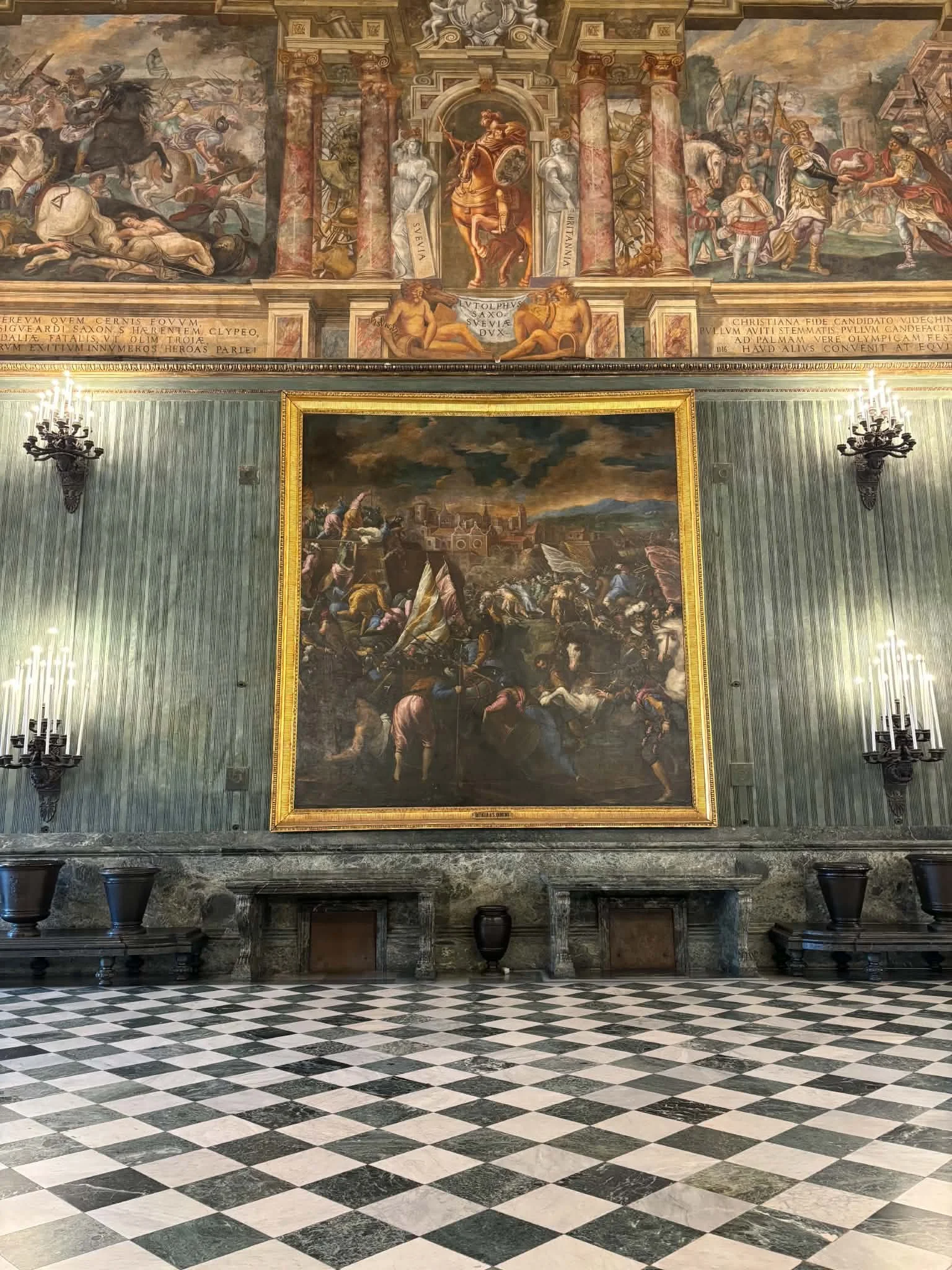
Inside, the palace unfolds in a succession of rooms that seem designed to make ordinary mortals feel very small. There are enormous halls with soaring ceilings, elaborate stucco and gilded ornamentation, crystal chandeliers, richly patterned tapestries, and walls lined with paintings and portraits. The grandeur is unmistakably royal but what struck me most was the sheer attention to detail. Everywhere you look, there is something competing gently for your attention – a carved door, an intricate ceiling, a marble floor, a piece of furniture that could easily have been the centerpiece of an entire room.
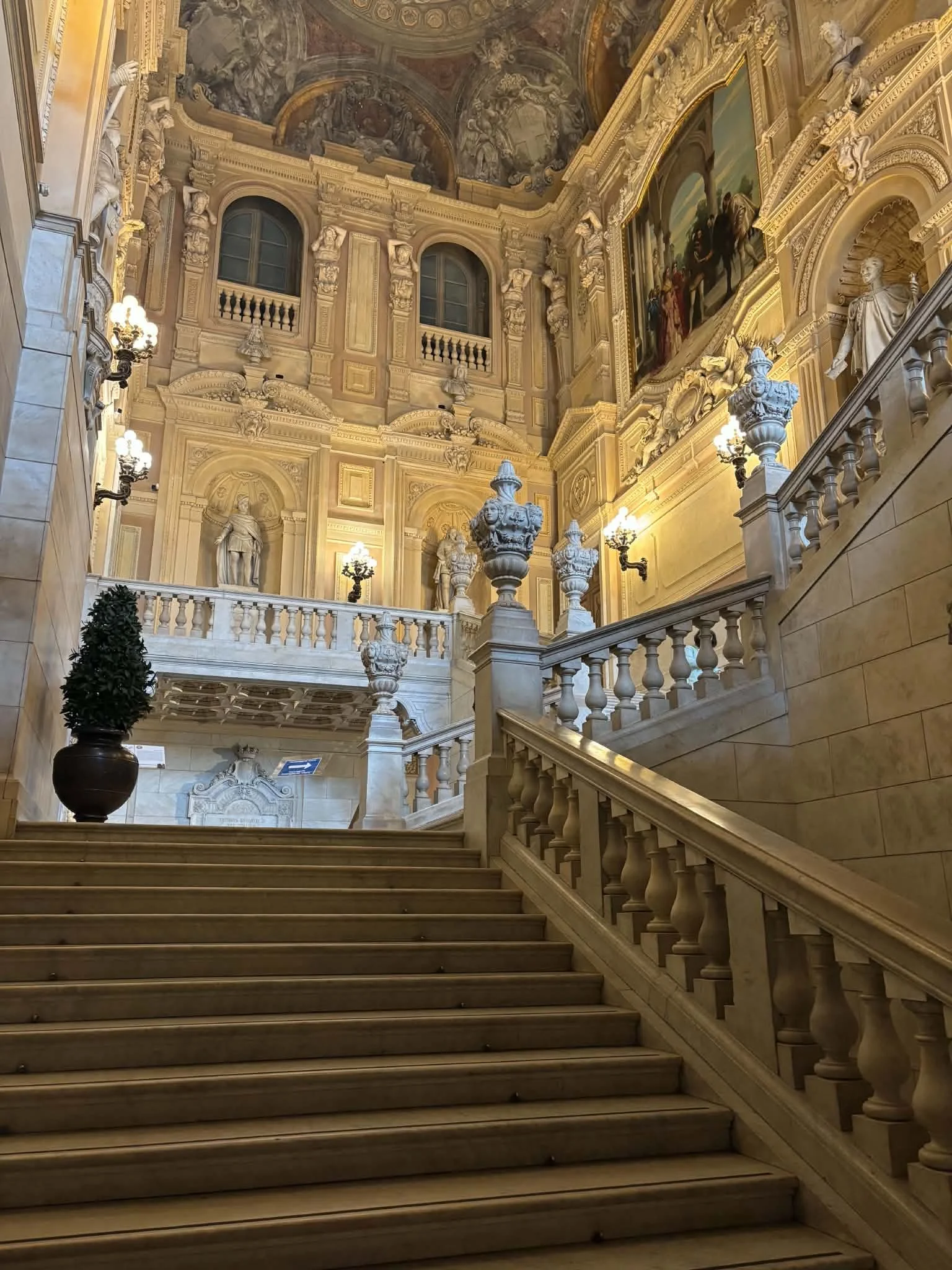
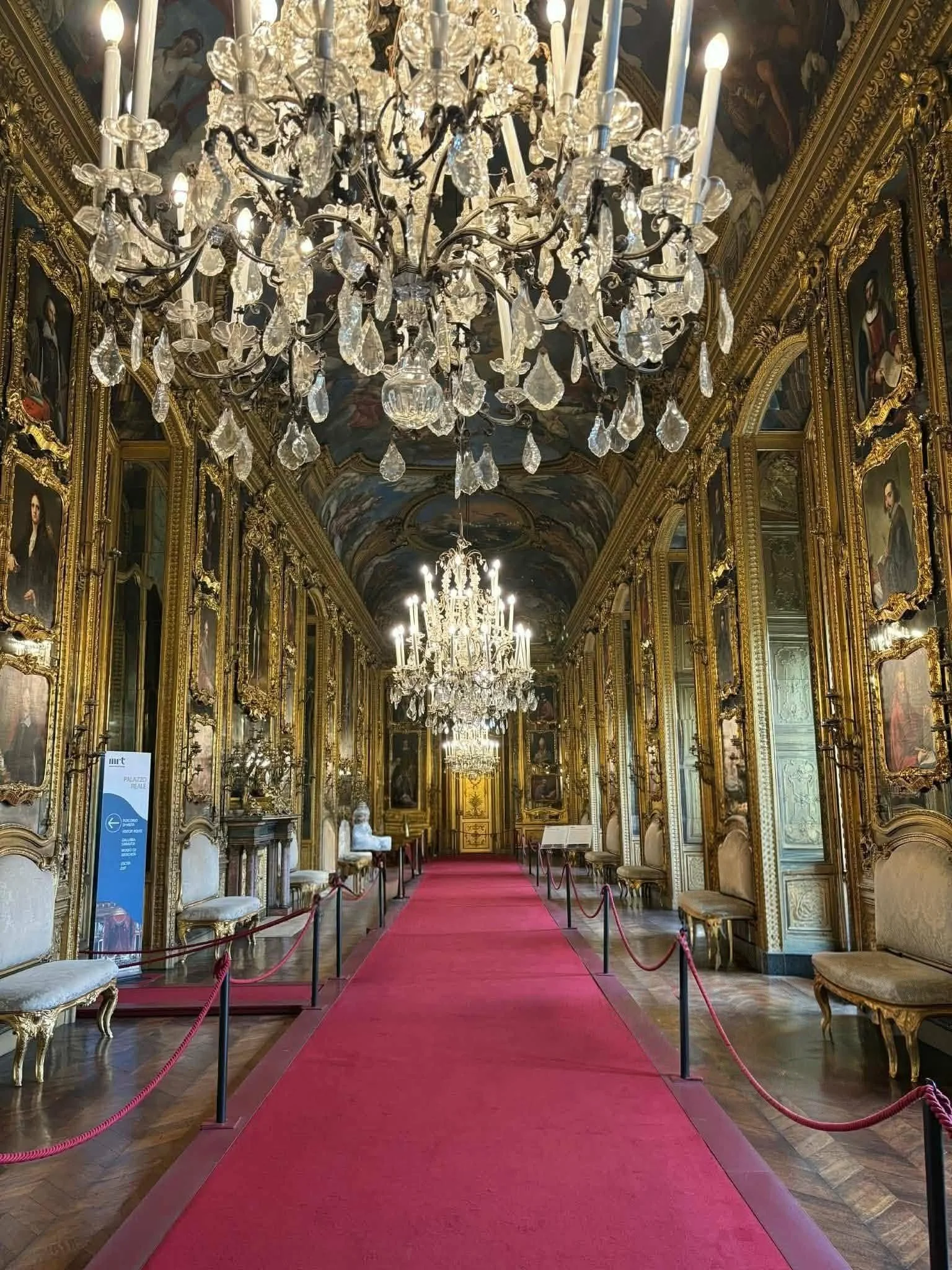
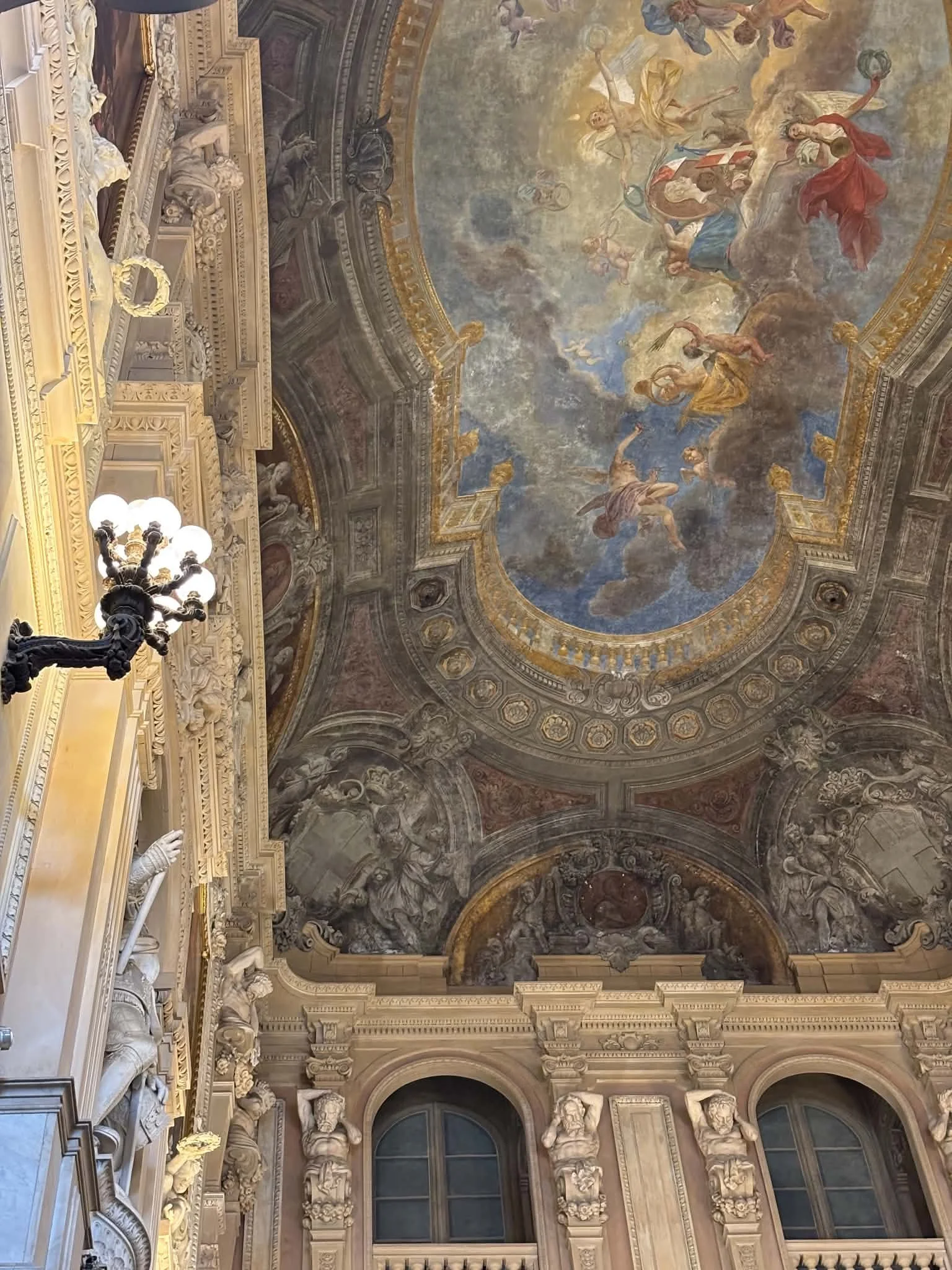
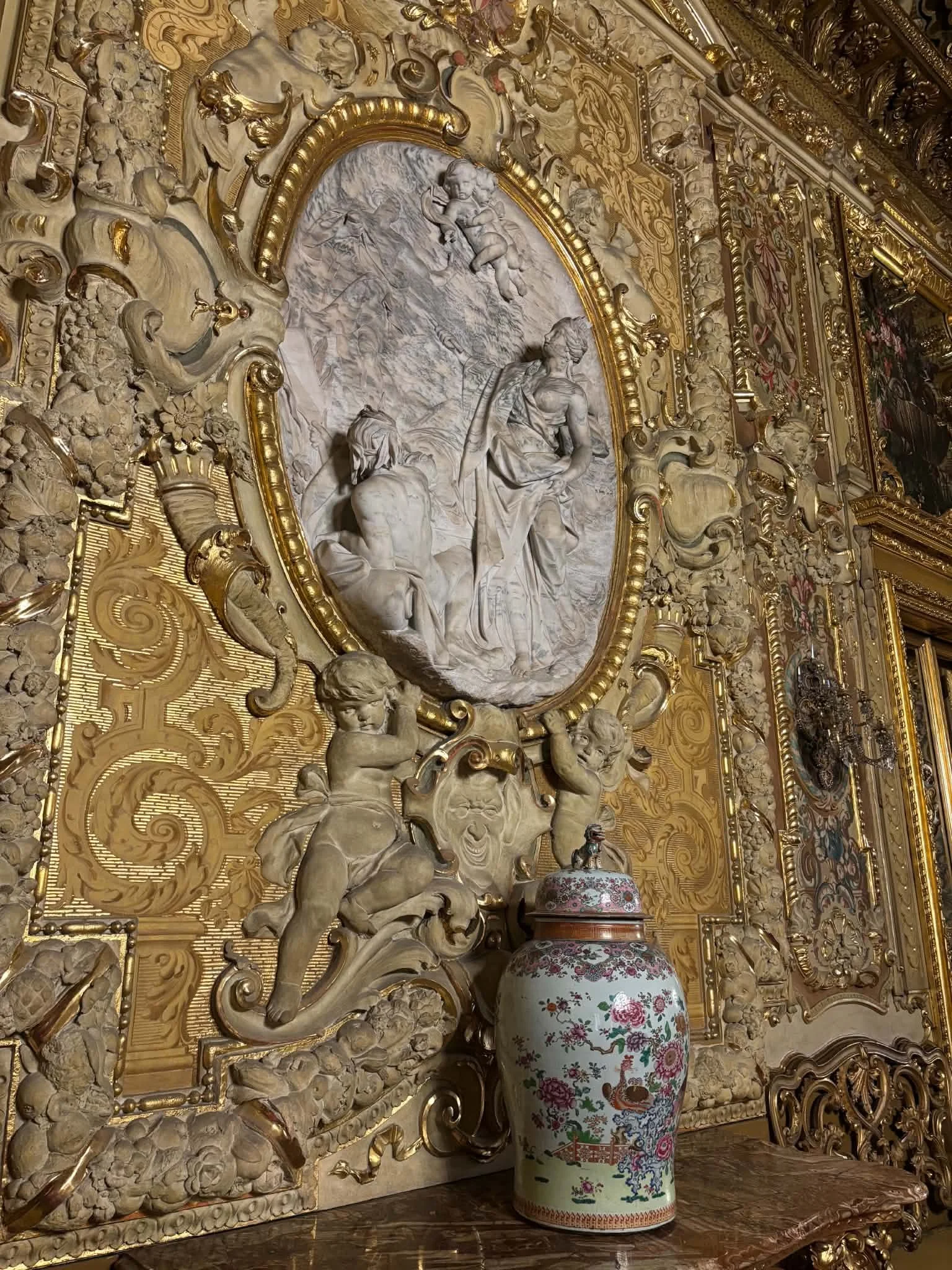
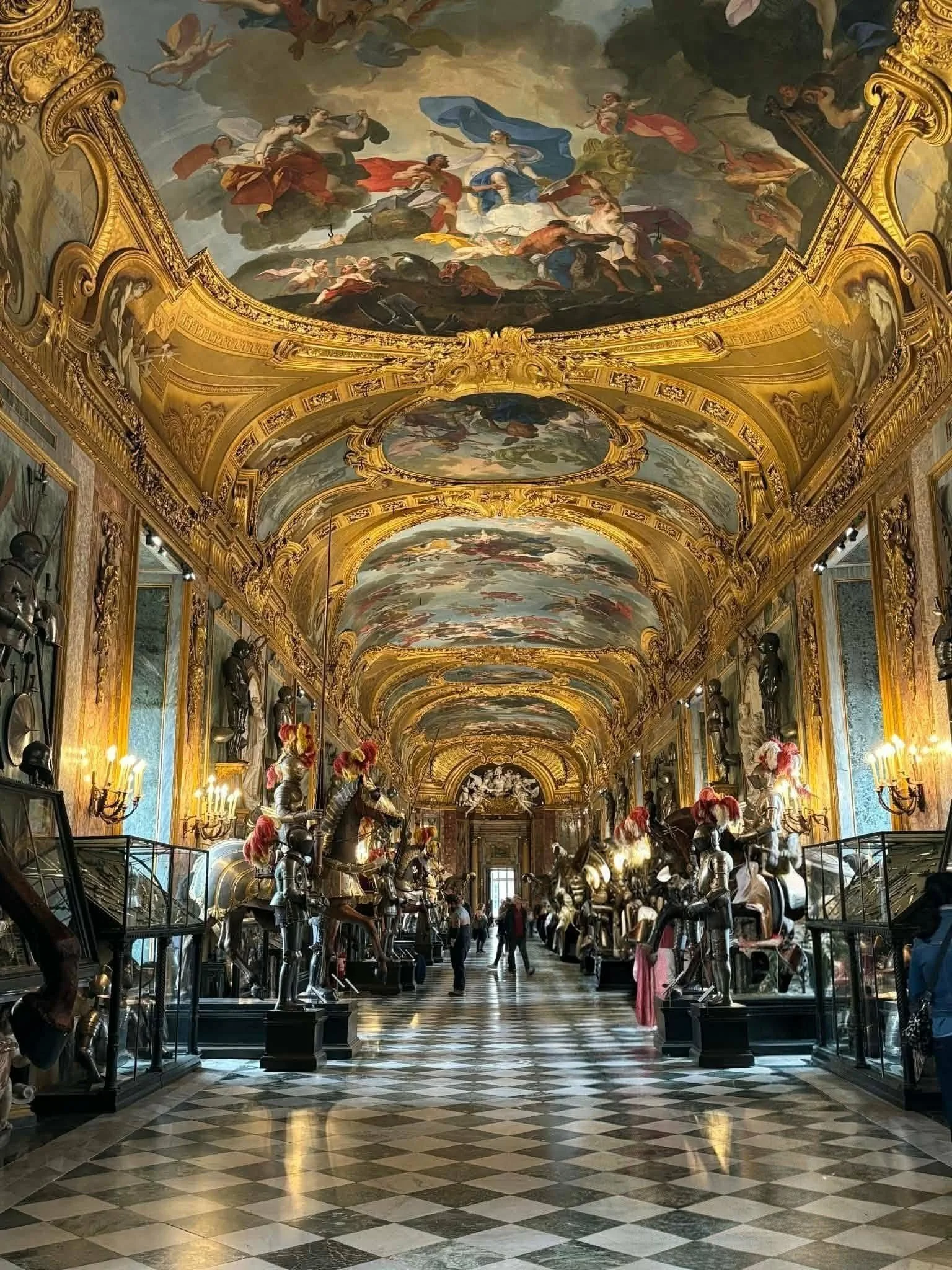
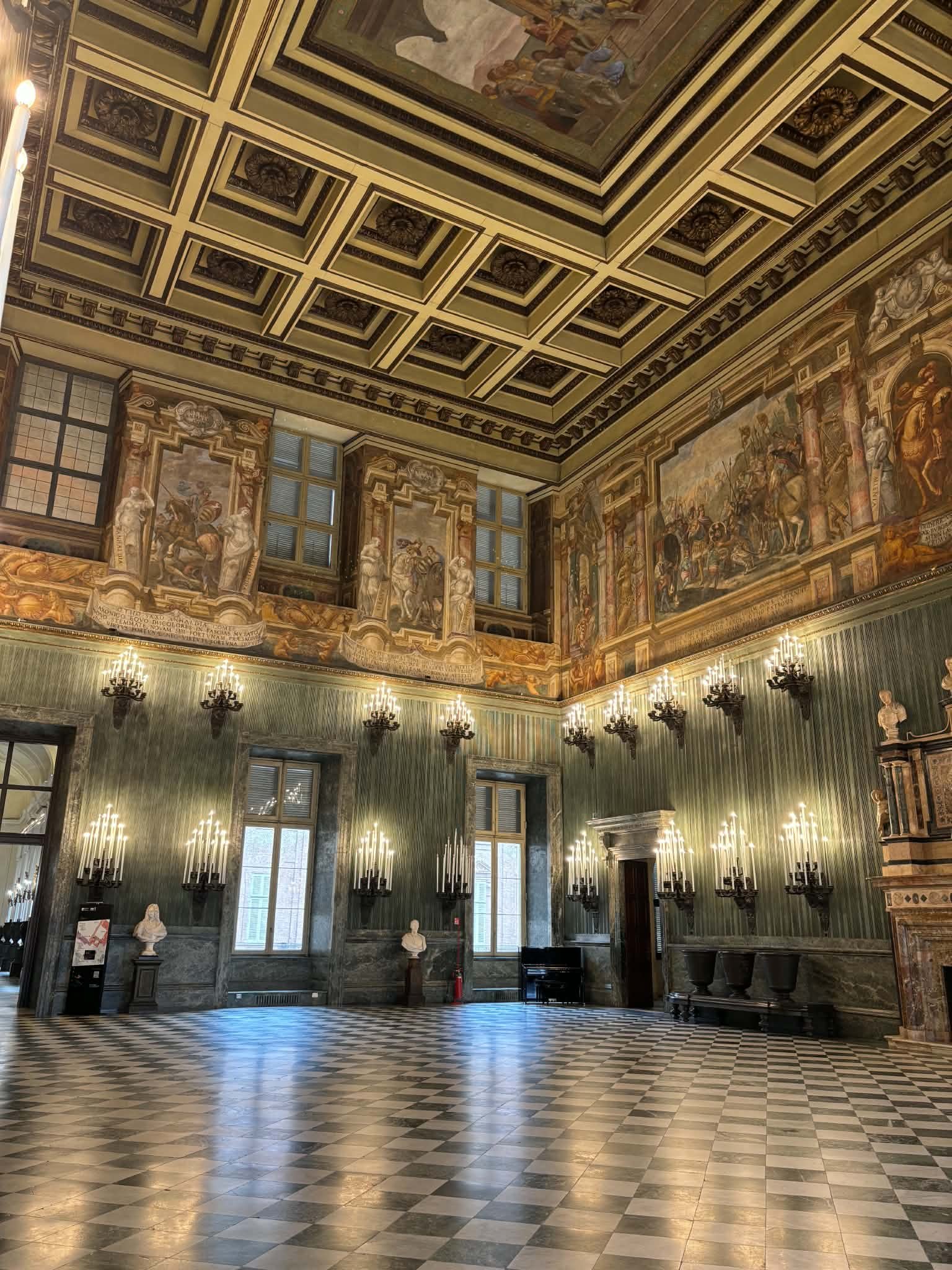
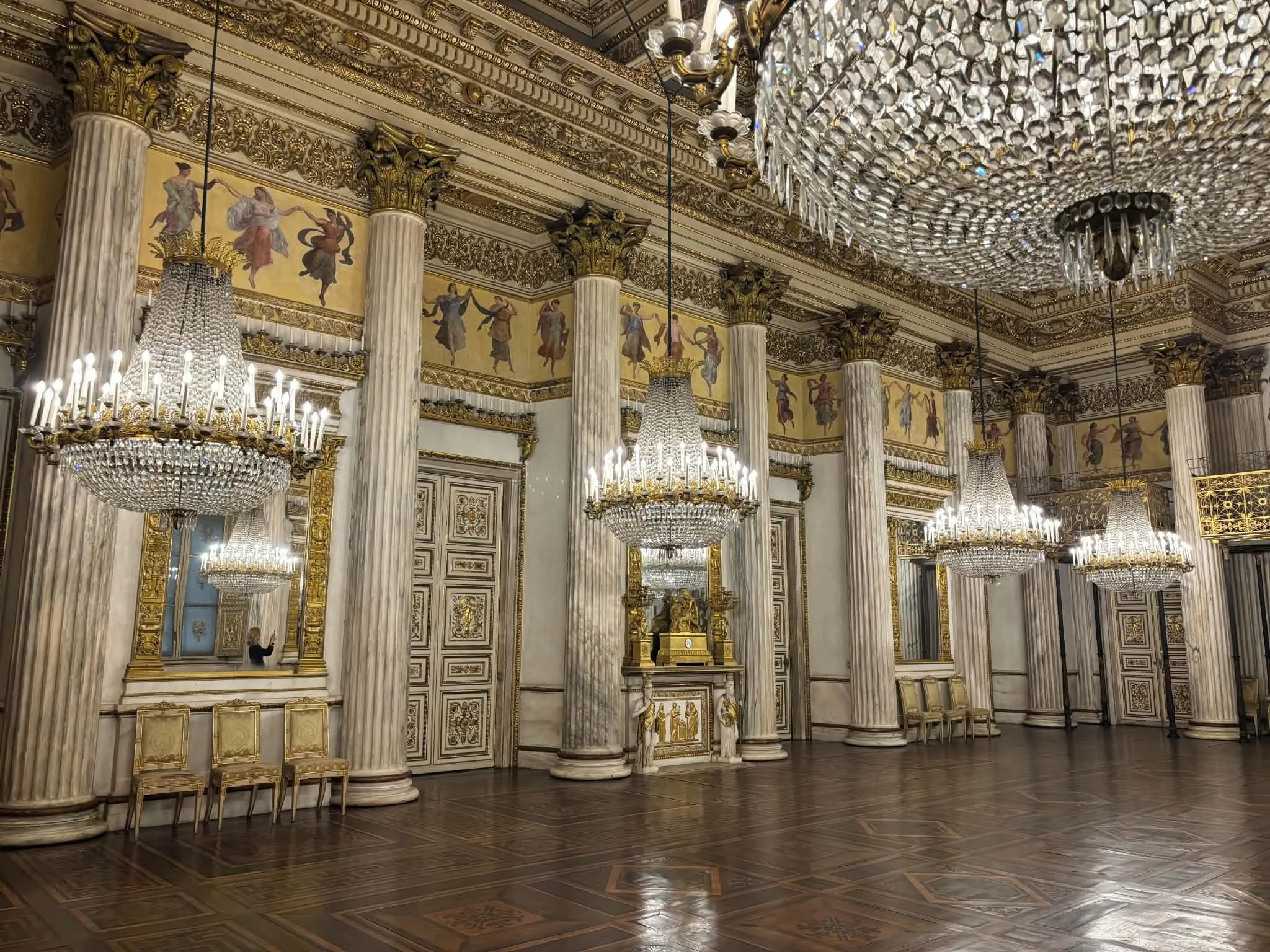
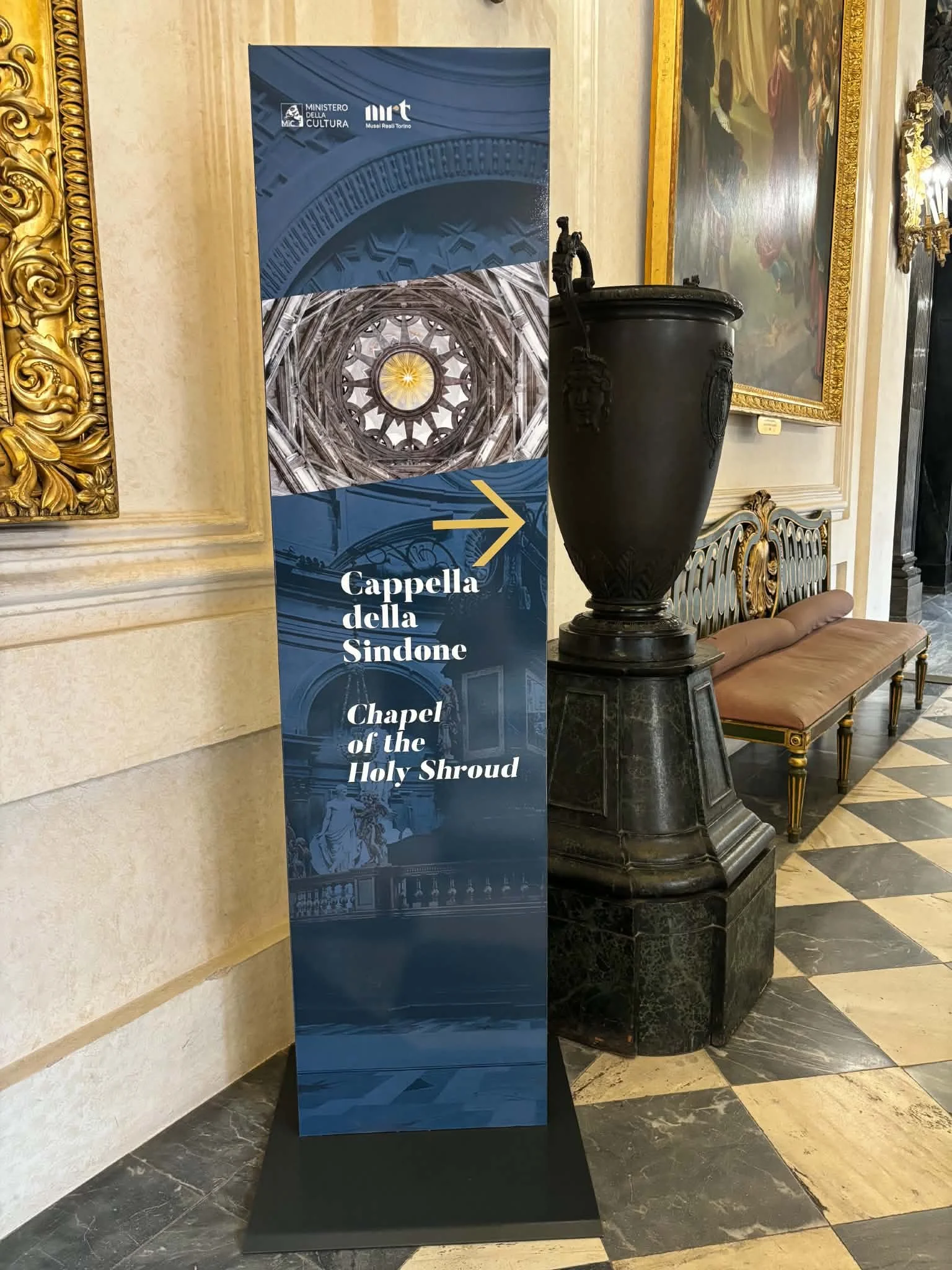
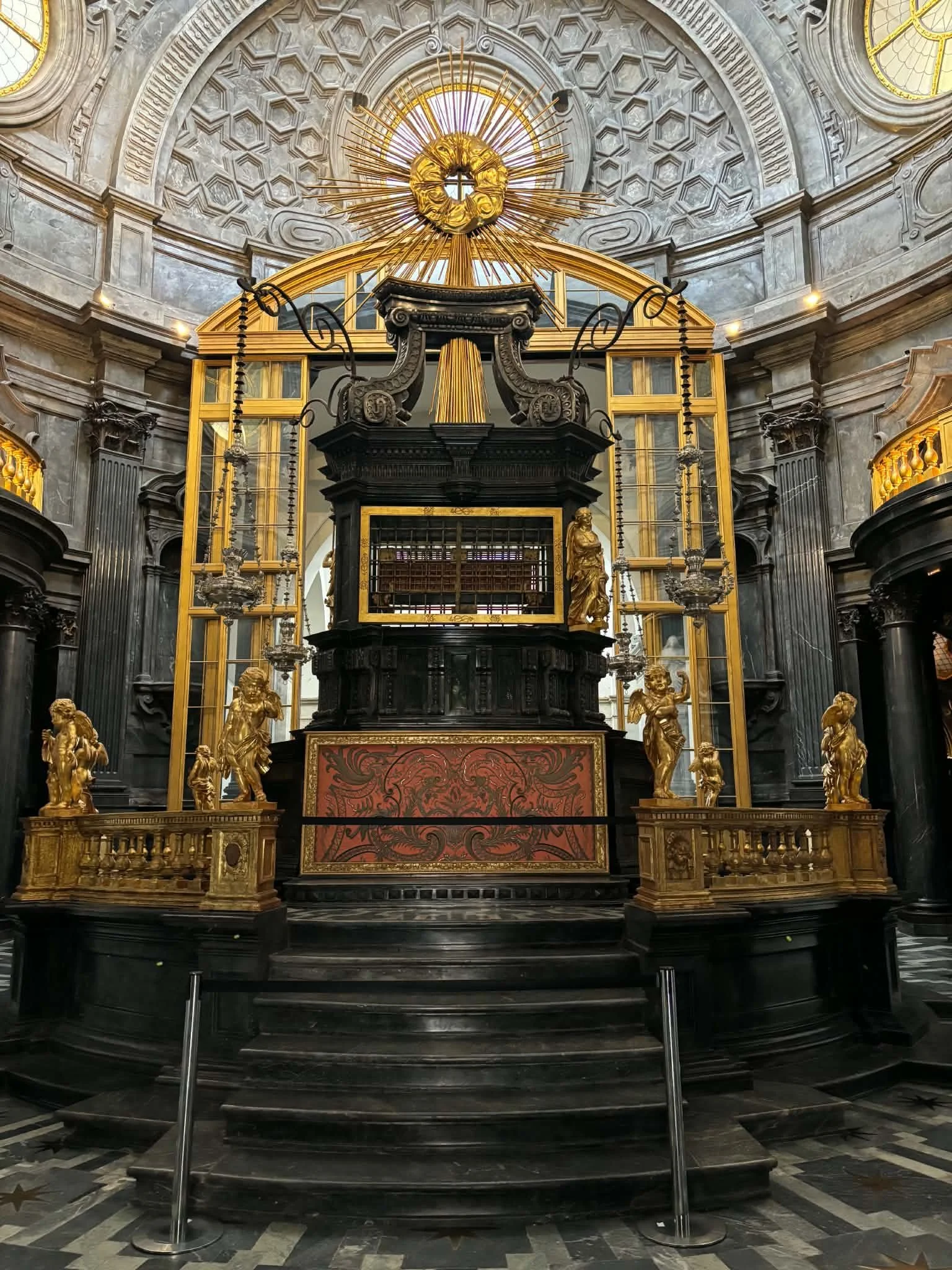
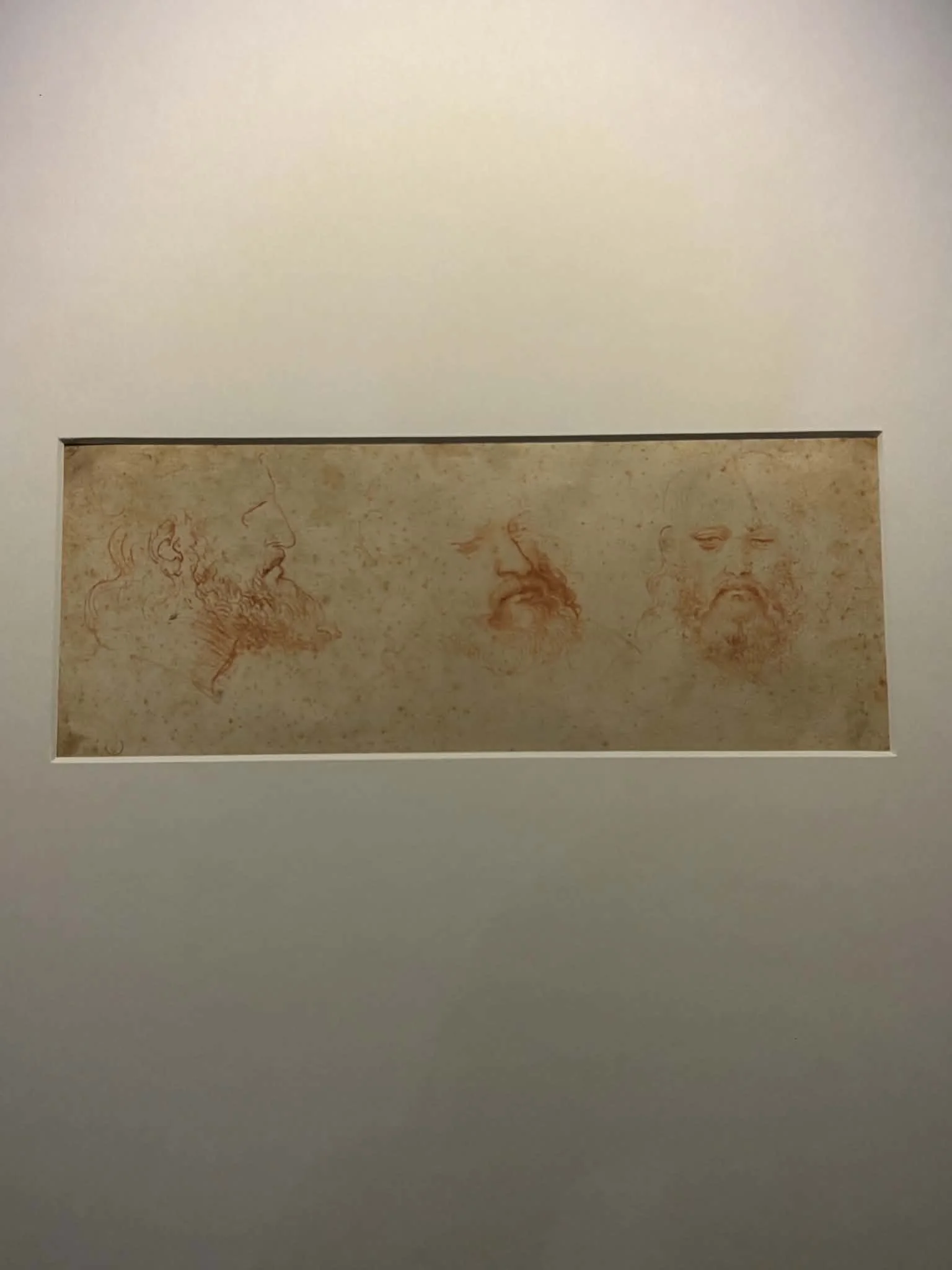
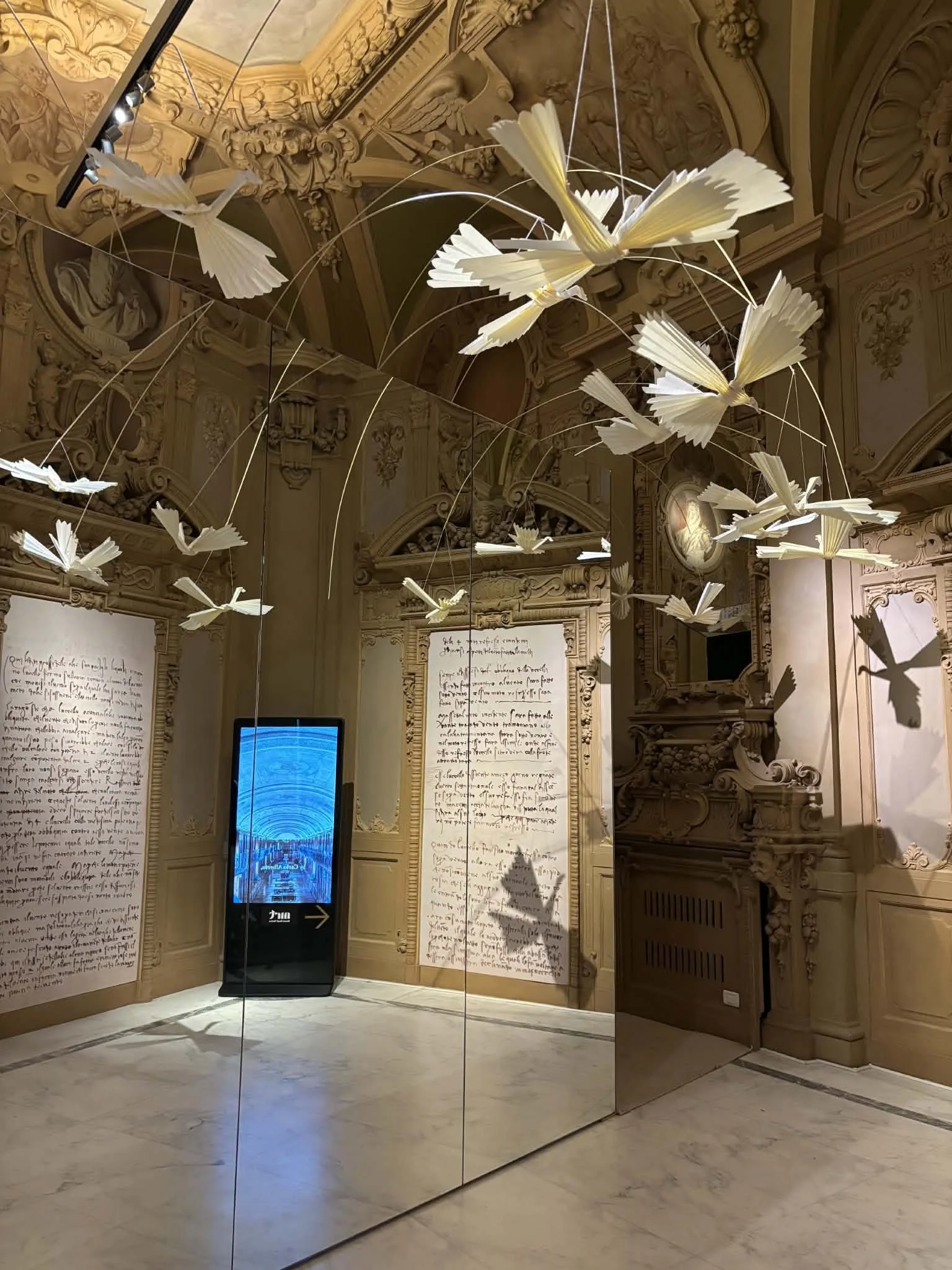
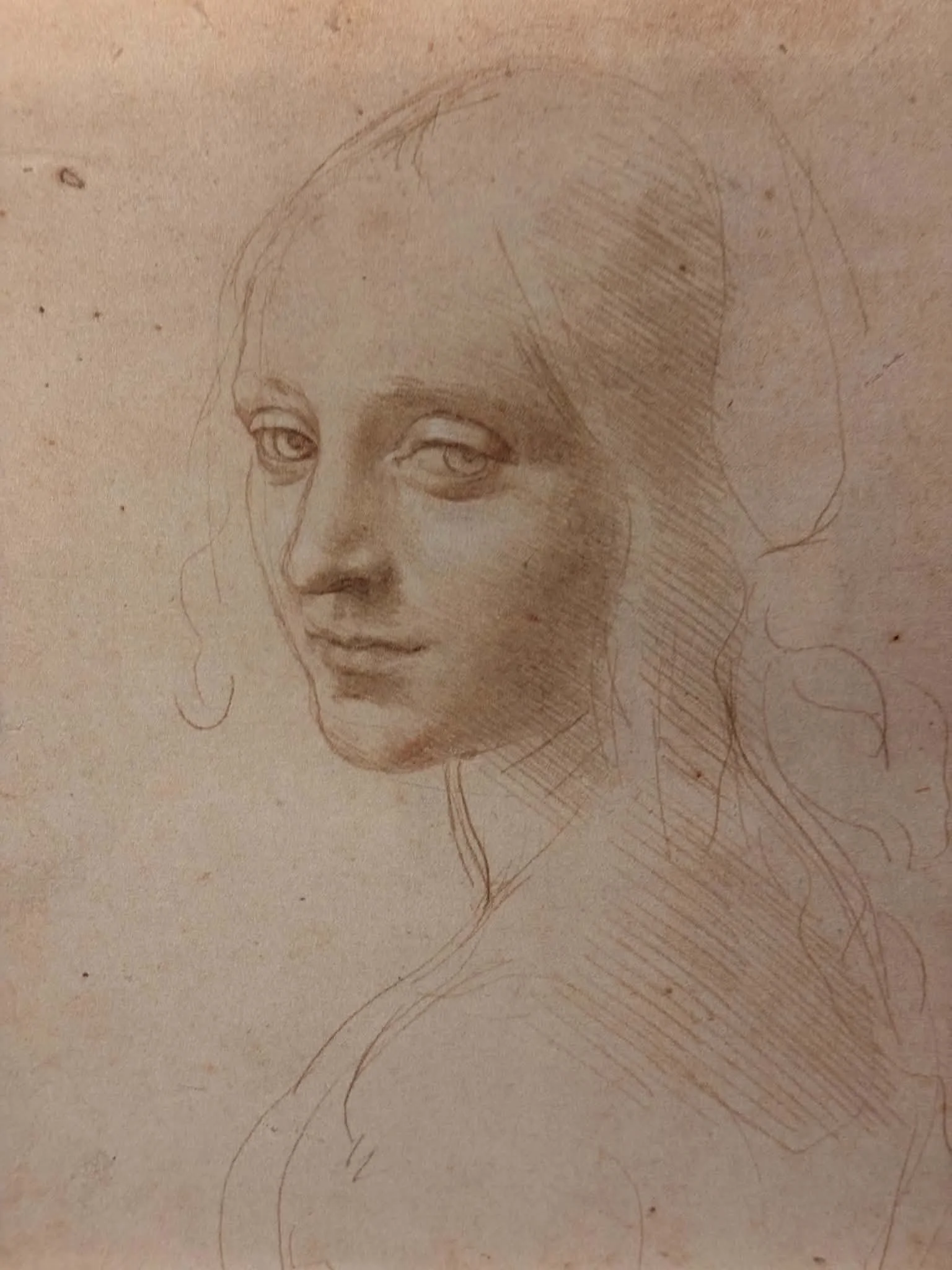
Incidentally, the Chapel of the Holy Shroud is located within the palace complex and we took everything in amidst a number of young art students sketching away around us. There was something particularly lovely about seeing them quietly studying and drawing the same spaces we were admiring. In addition, the Royal Library of Turin houses a few pages of Leonardo da Vinci’s Codex Atlanticus, and the palace had selections on display during our visit.
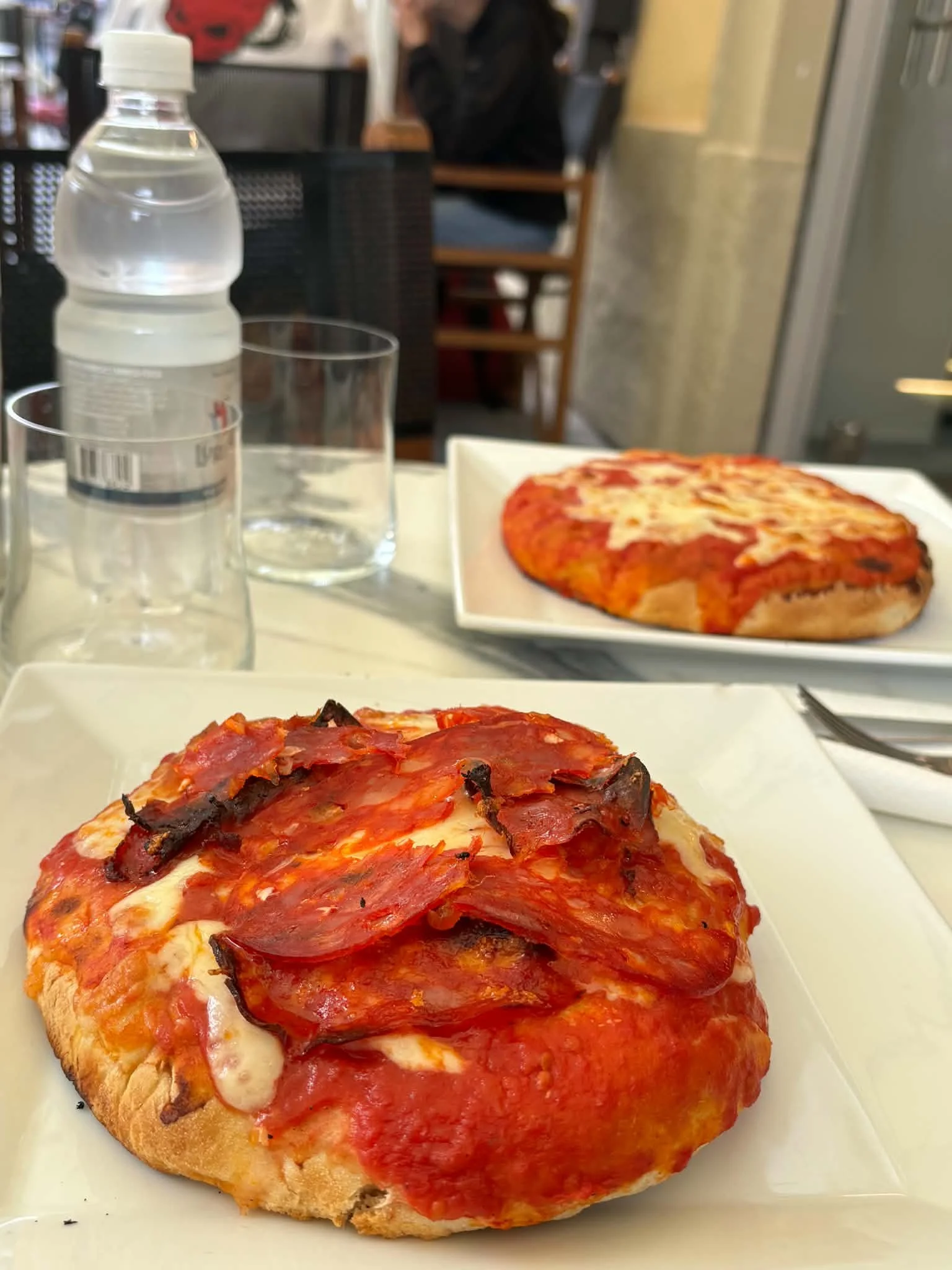
Turin is pleasant to walk around in and, soon enough, we found ourselves in a small cafe just outside the Mole Antonelliana, which houses the National Museum of Cinema, tucking ourselves into our pizzas against the Mole’s distinctive spire rising above the city.
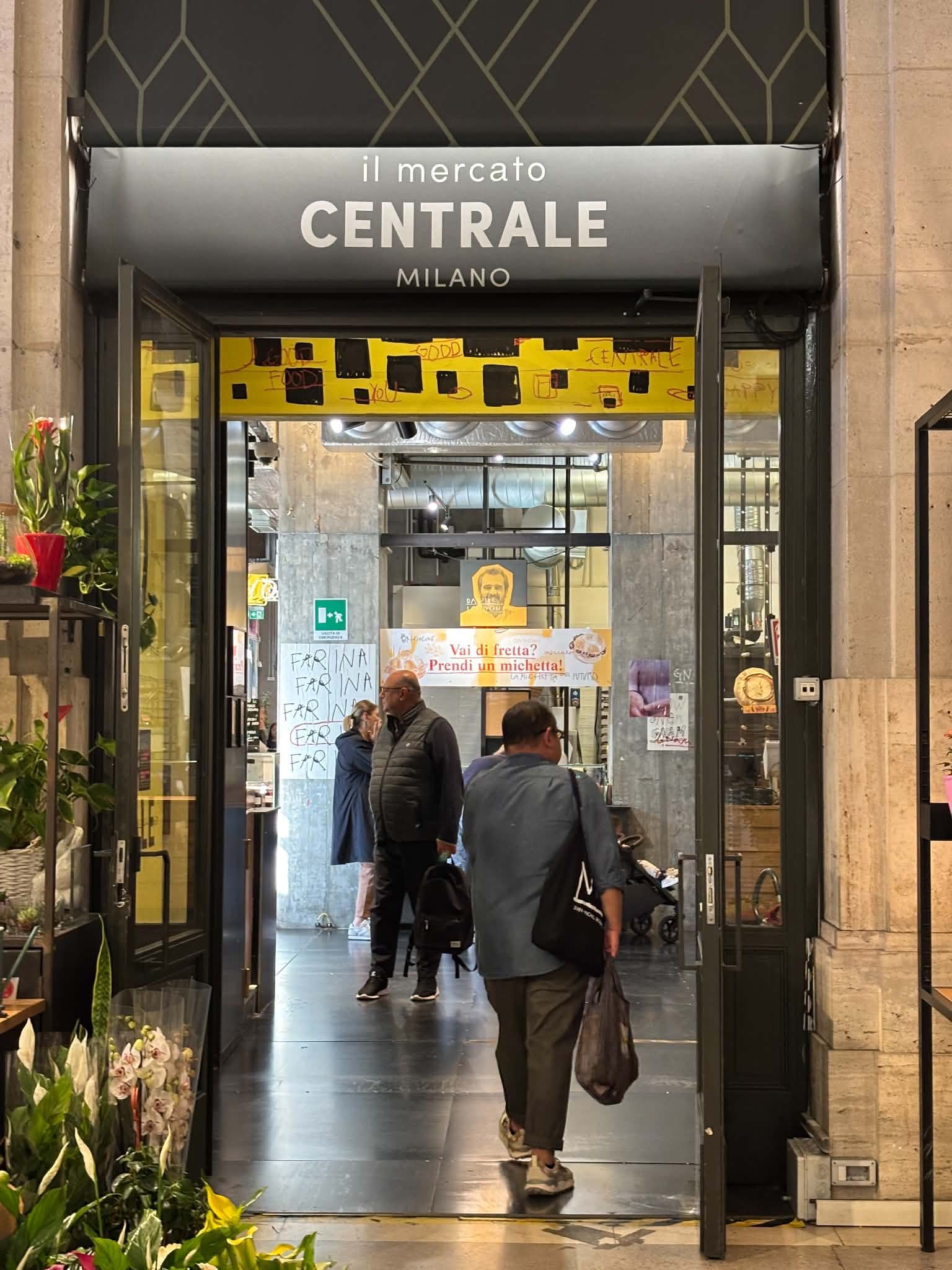
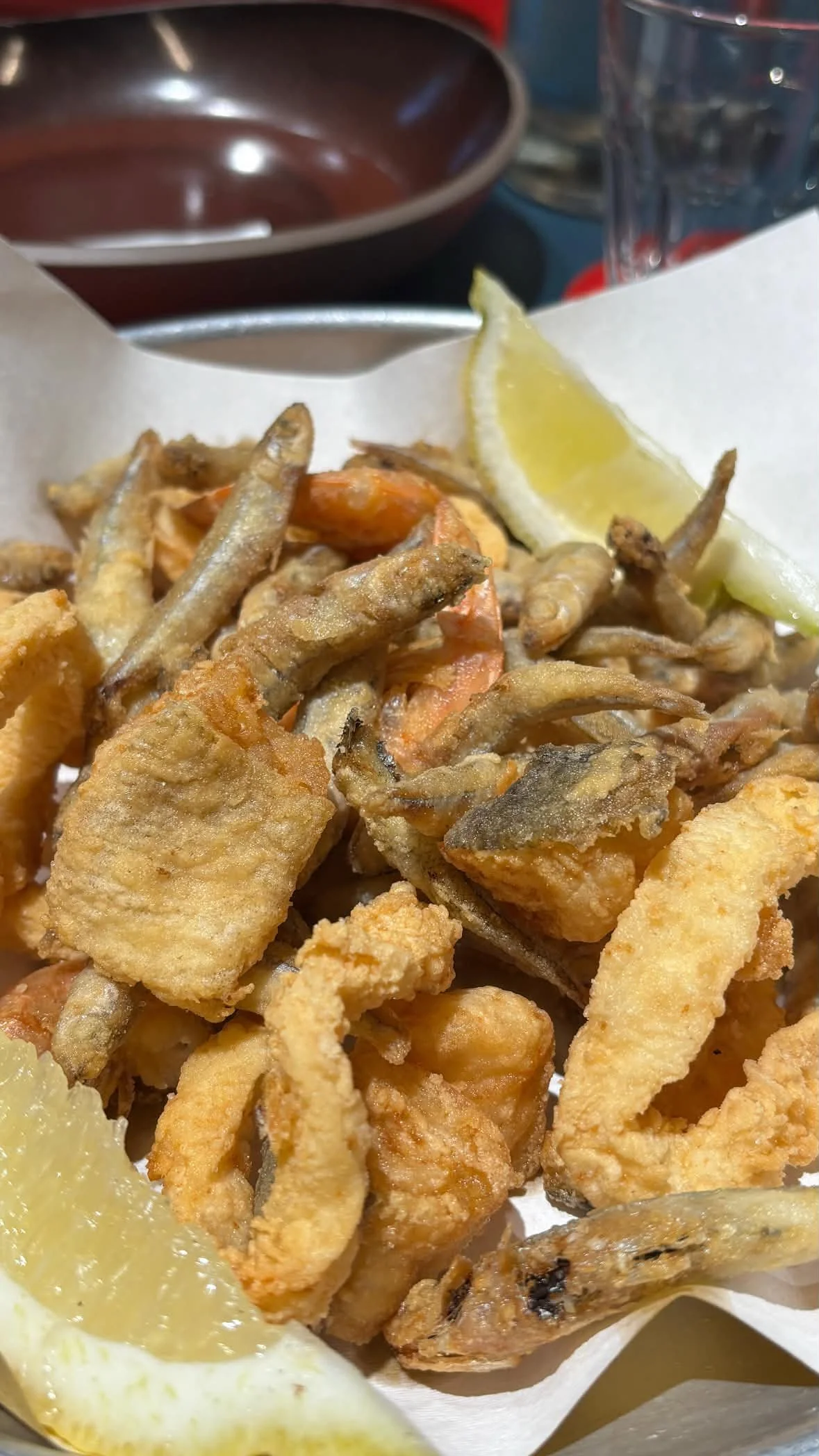
Having had our fill of quaint Baroque pleasures (but apparently not enough!), we arrived the next day at the bustling Milano Centrale Station. Our first stop: lunch at Mercato Centrale. Every Italian food one could possibly crave could be found here, or at least enough to make choosing lunch unnecessarily difficult. In my case that day, it was a plate of hot and fresh fritto misto.
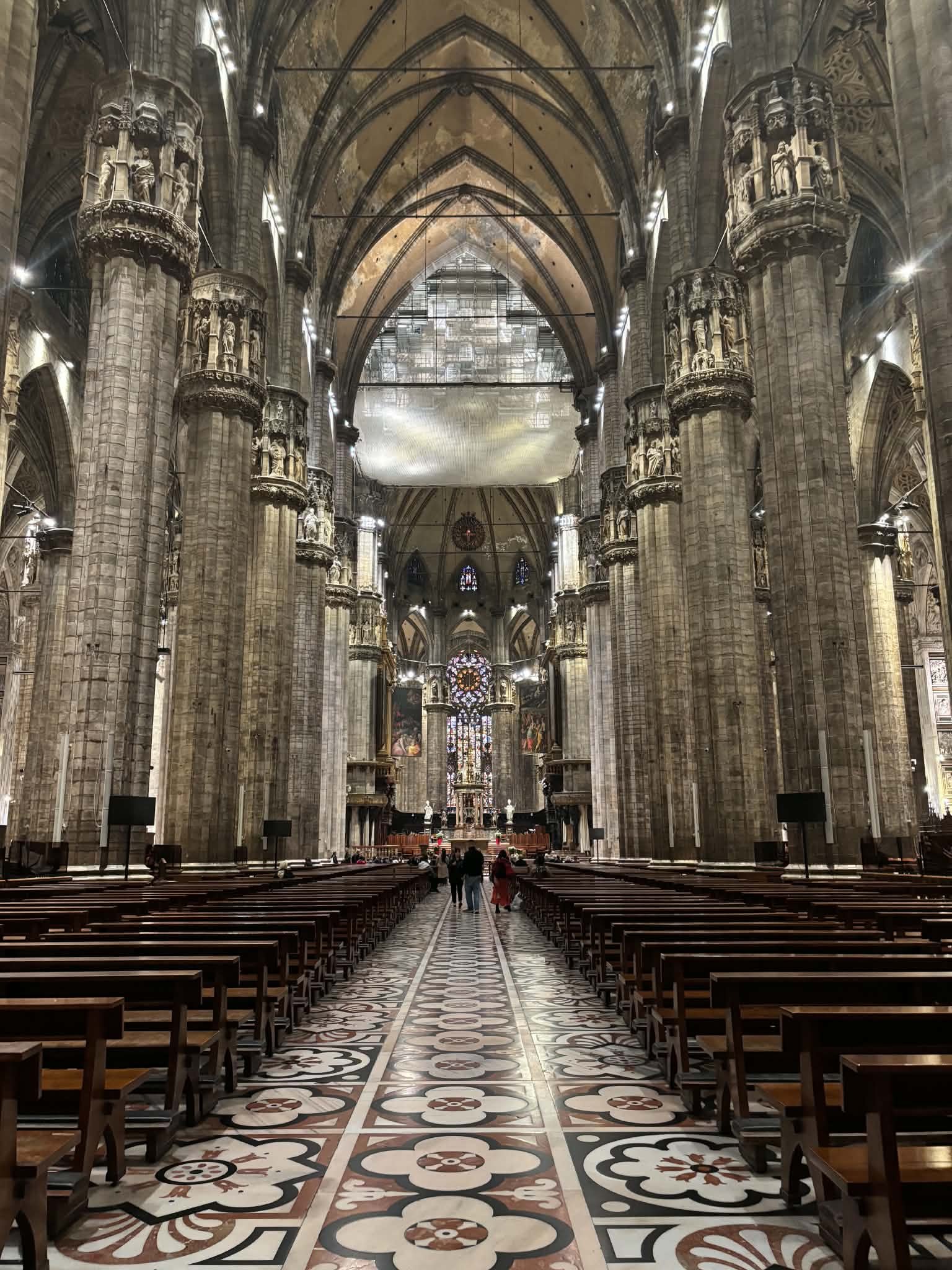
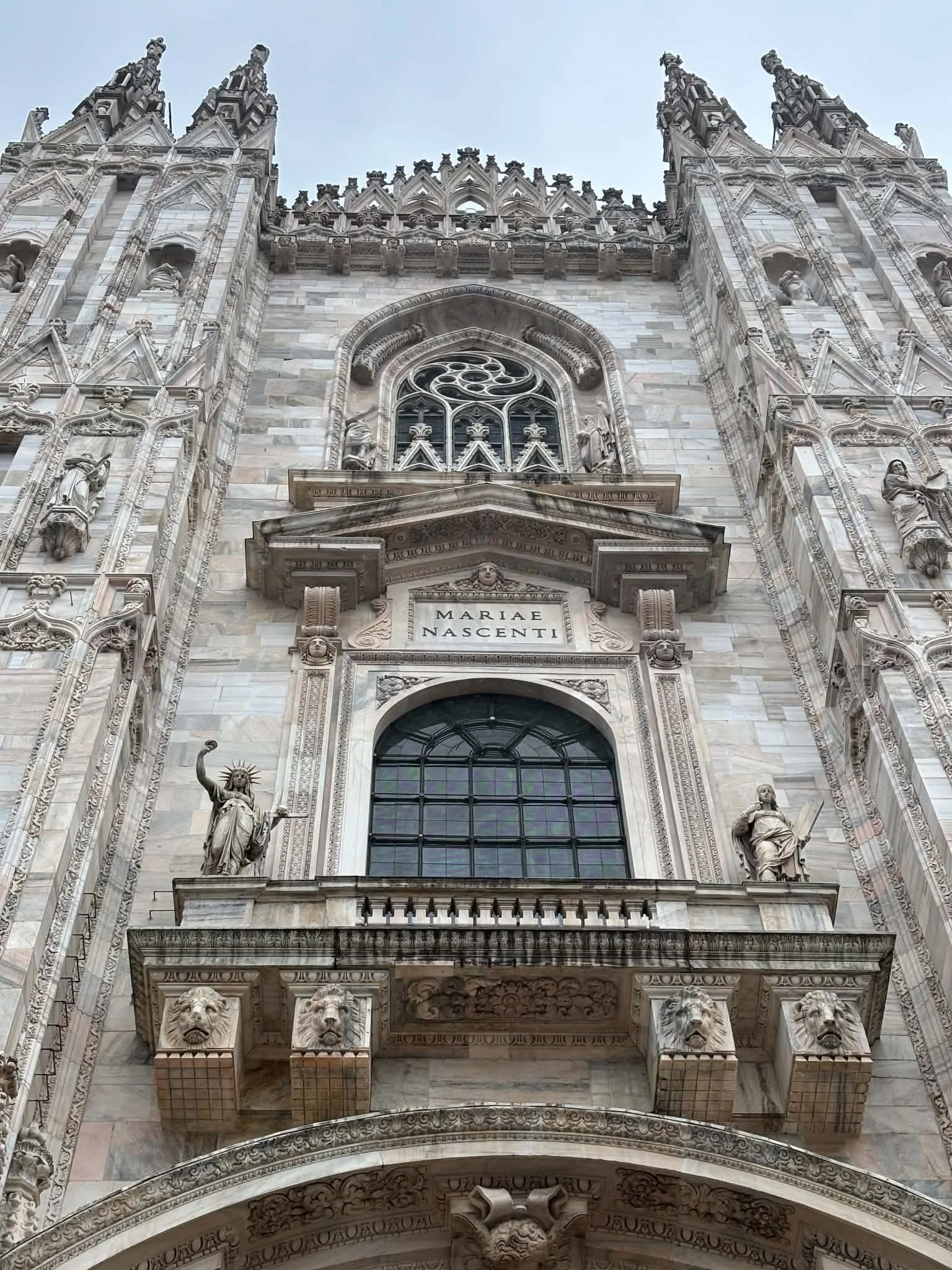
We didn’t want the spring rain to literally rain on our parade, so off we went to see the Duomo di Milano. Its scale and incredible attention to detail are jaw-dropping and breathtaking, to say the least. One really has to see it in order to understand.
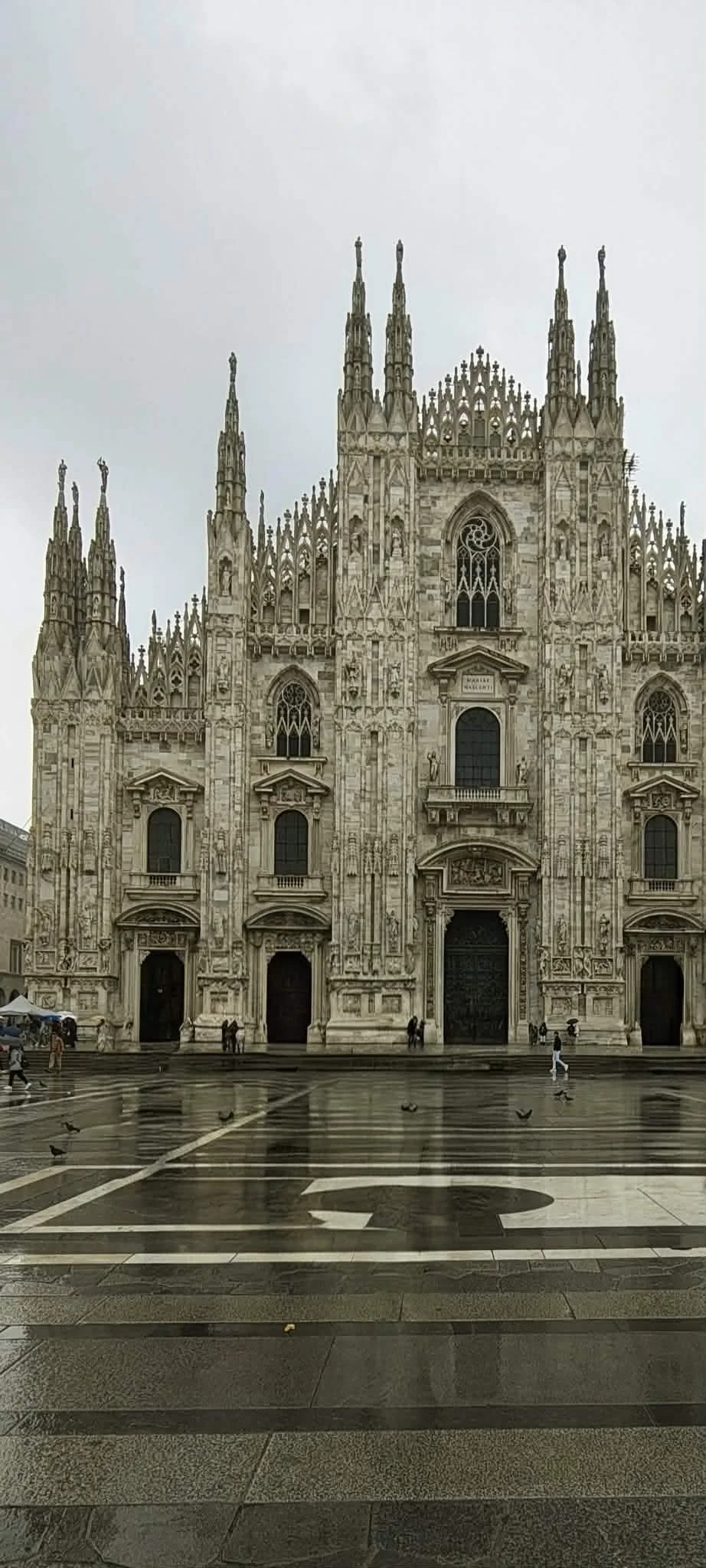
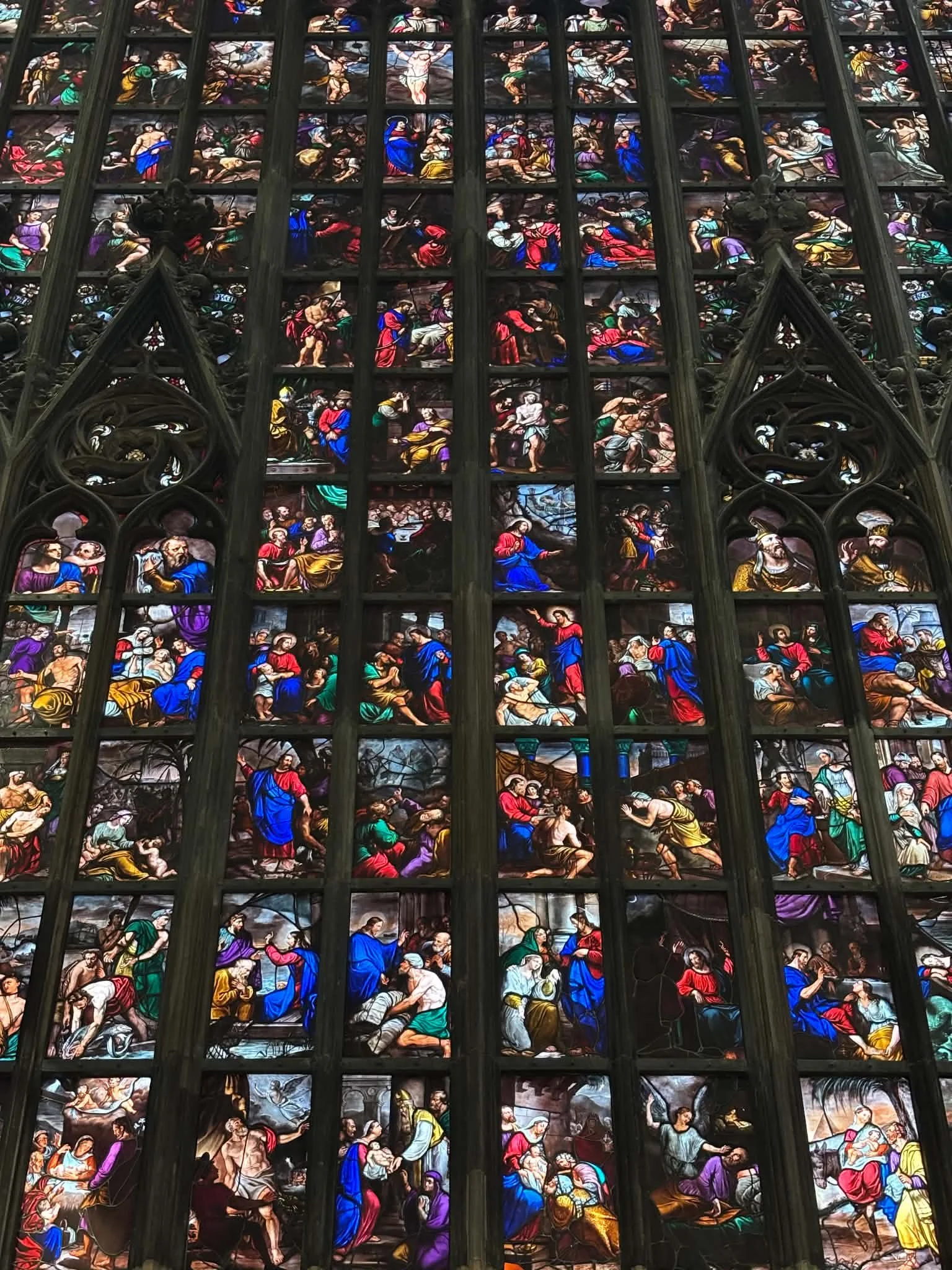
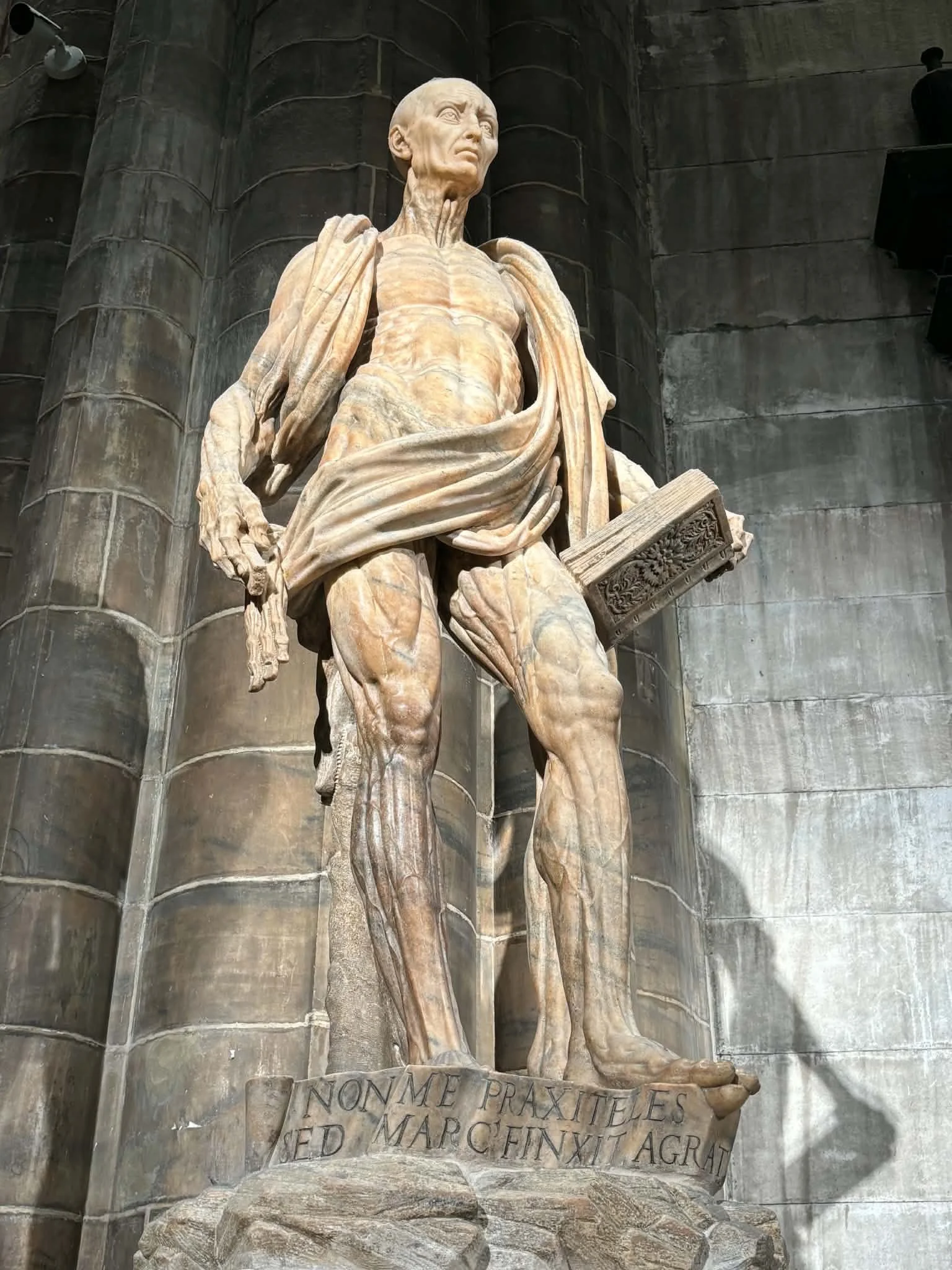
The predominantly Gothic exterior alone is almost overwhelming, with its forest of spires, pinnacles, and statues, but stepping inside is an entirely different experience. The vastness of the cathedral opens up above you and the light filtering through its enormous stained-glass windows gives the interior an almost otherworldly quality. The windows themselves tell biblical stories in jewel-like panels of color, while sculptures - too many to count - fill the cathedral. What amazed me most was the attention given to the human figure: the saints and biblical characters are not merely symbolic forms but remarkably observed bodies, with muscles, folds of clothing, gestures, and expressions carefully rendered in stone or marble. Even the floor beneath our feet deserves attention with its intricate geometric patterns.
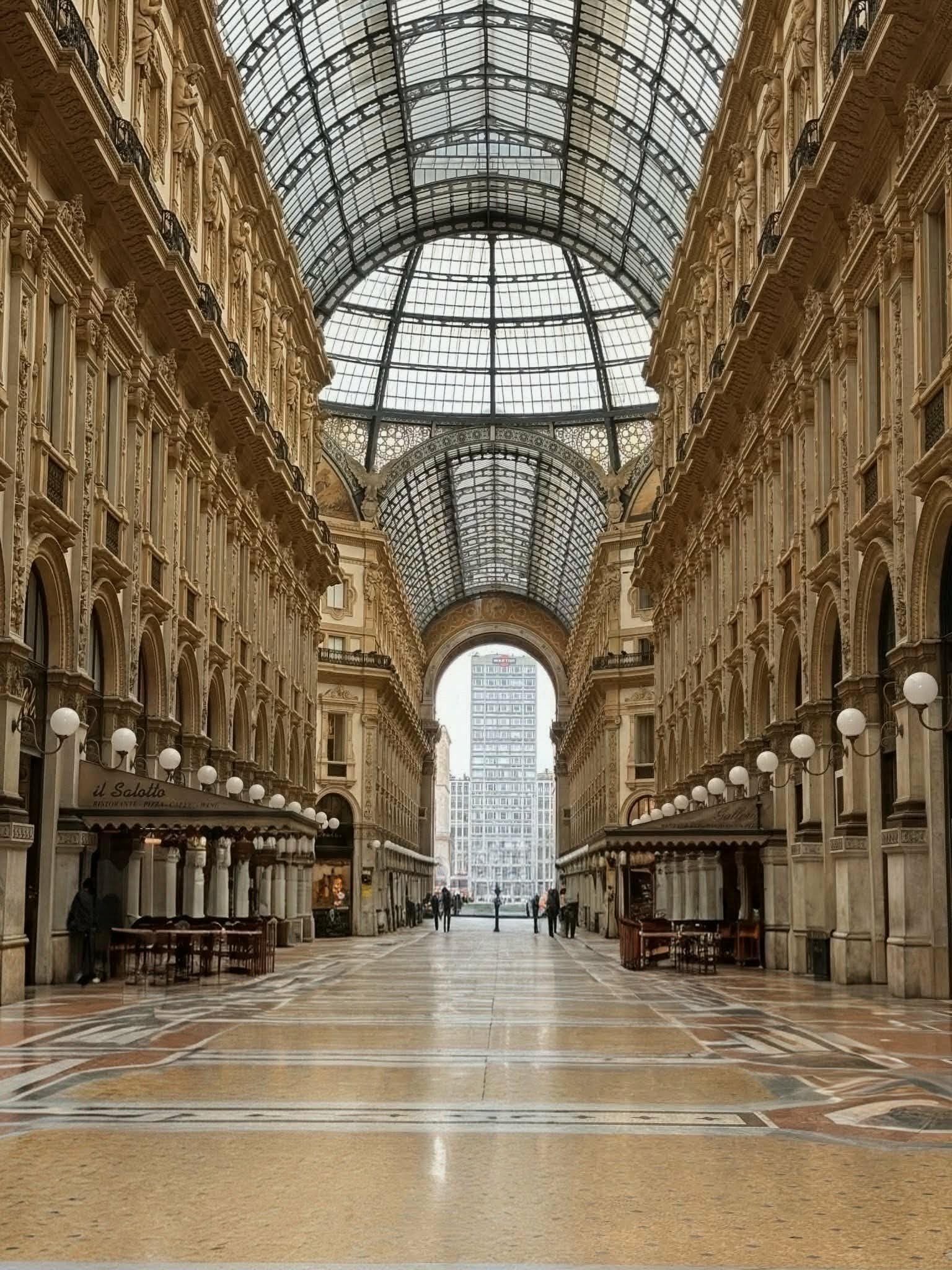
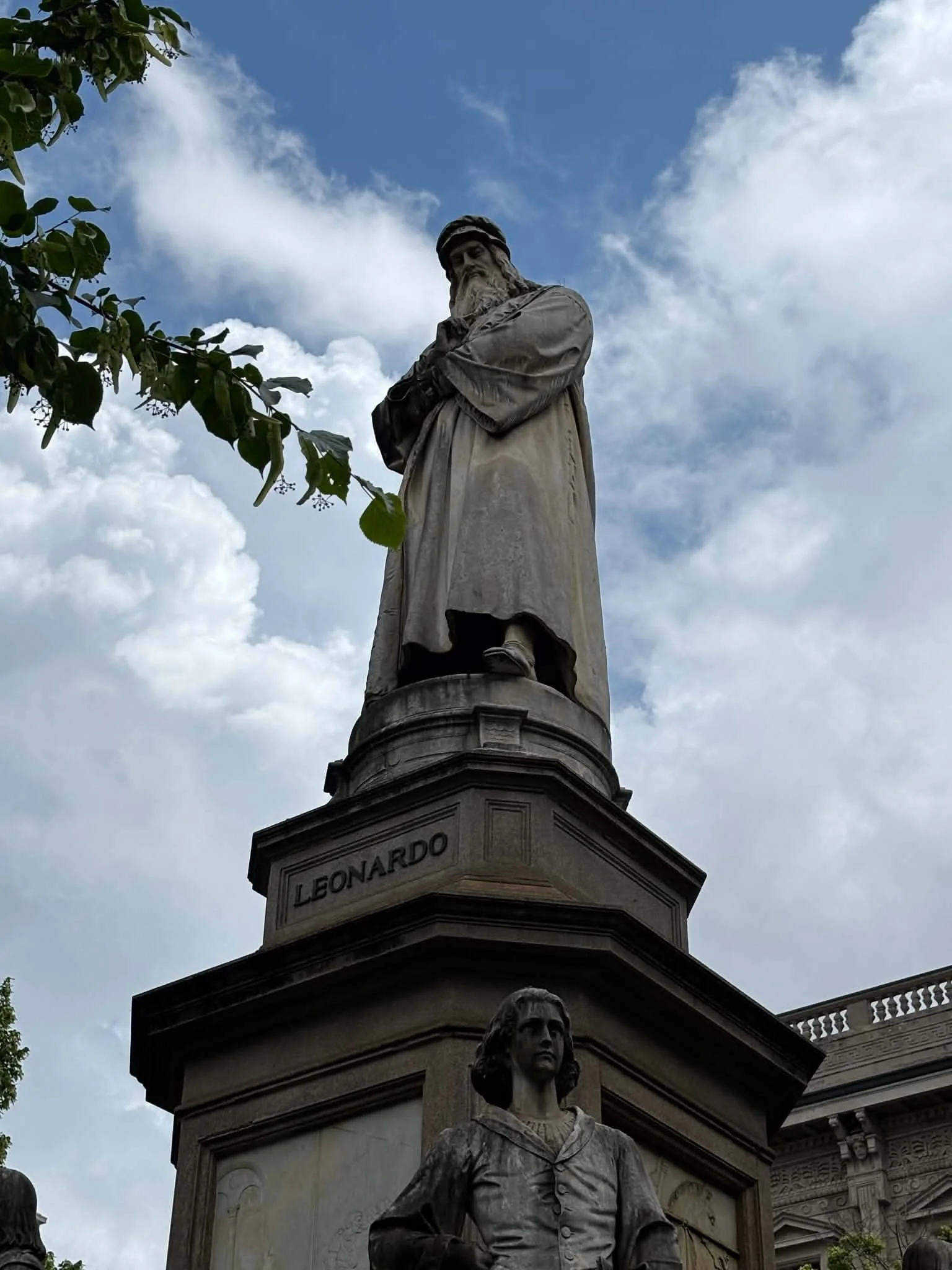
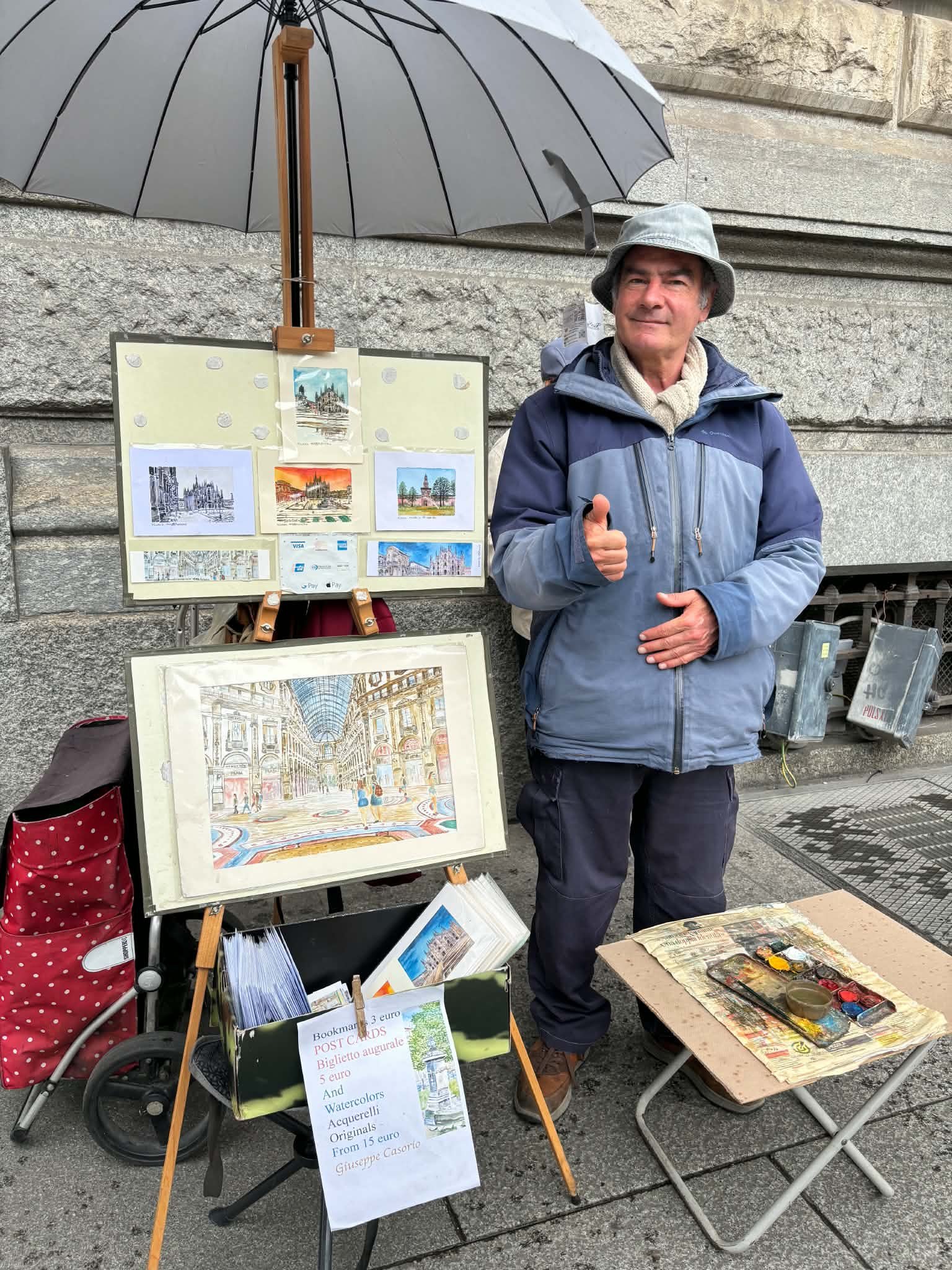
Of course, when visiting the Duomo comes the requisite stop at the Galleria Vittorio Emanuele II, if only to walk its famed covered pathway and to make your wishes on the mosaic bull amidst the luxury brands and trattoria tourist traps. At the end of the Galleria, however, we chanced upon the statue of the great Renaissance man, Leonardo da Vinci, and just across it, a kind Italian fella carving out his own artistic dream. We bought one of his watercolor paintings because we support artists like that.
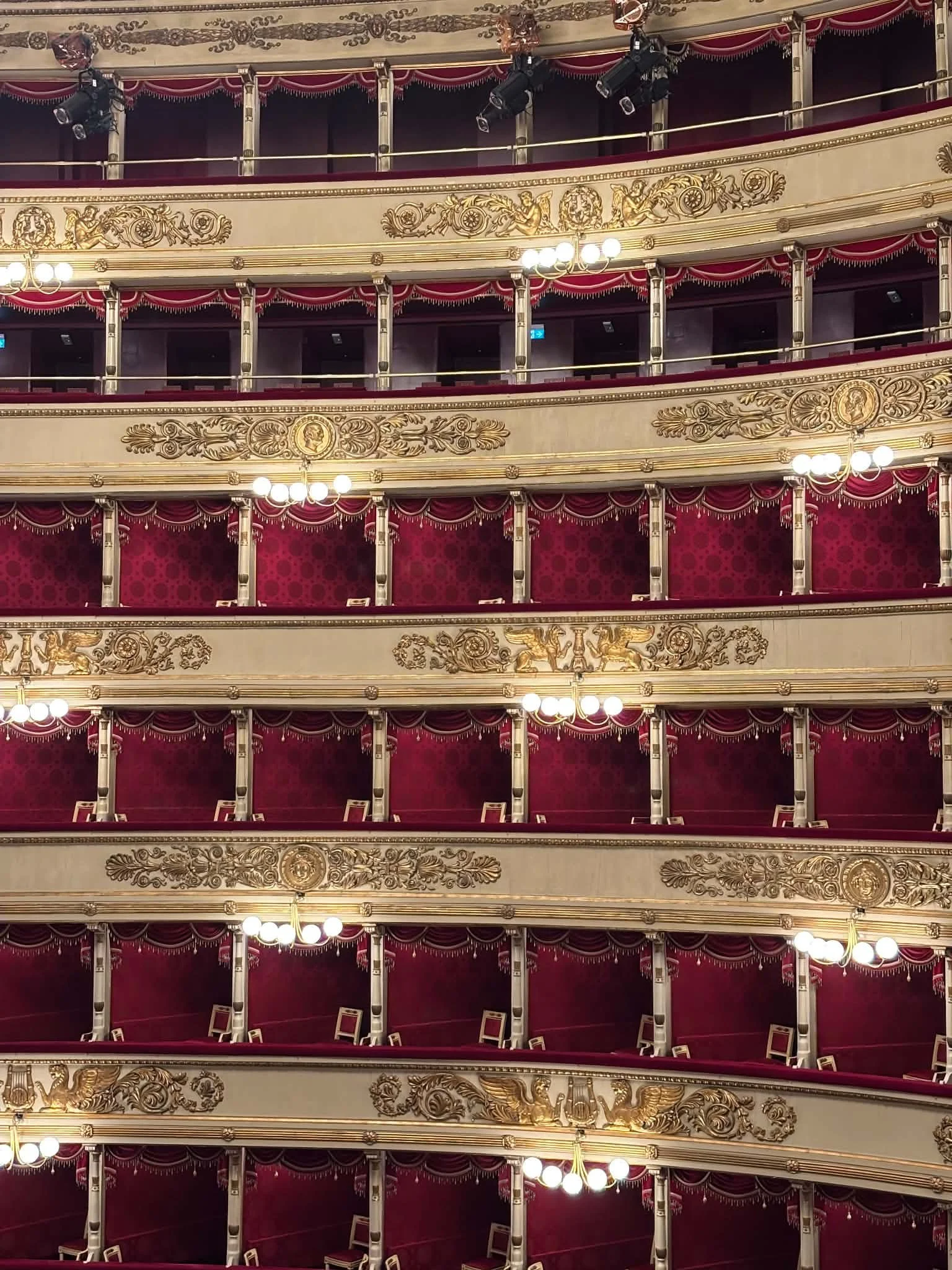
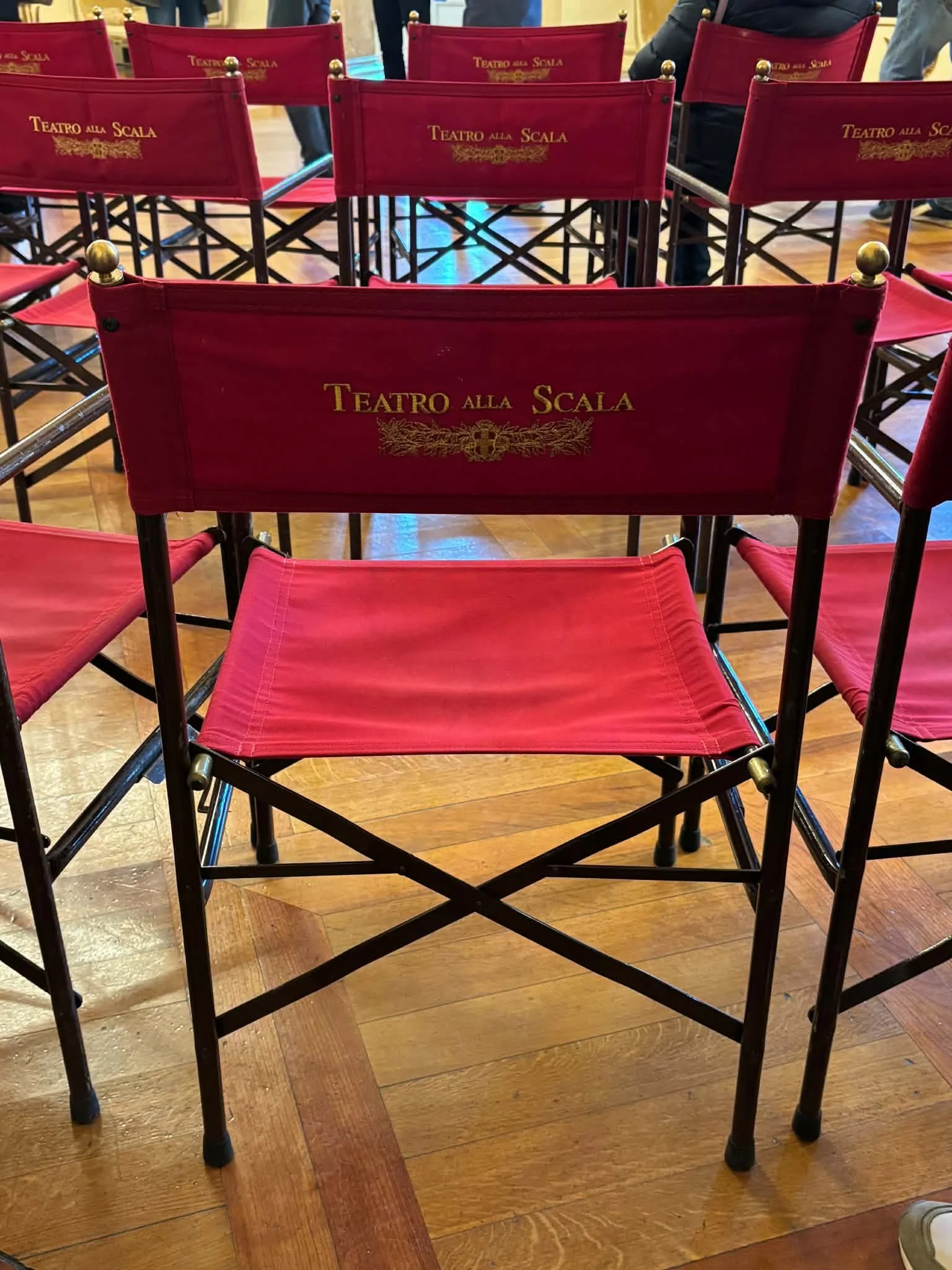
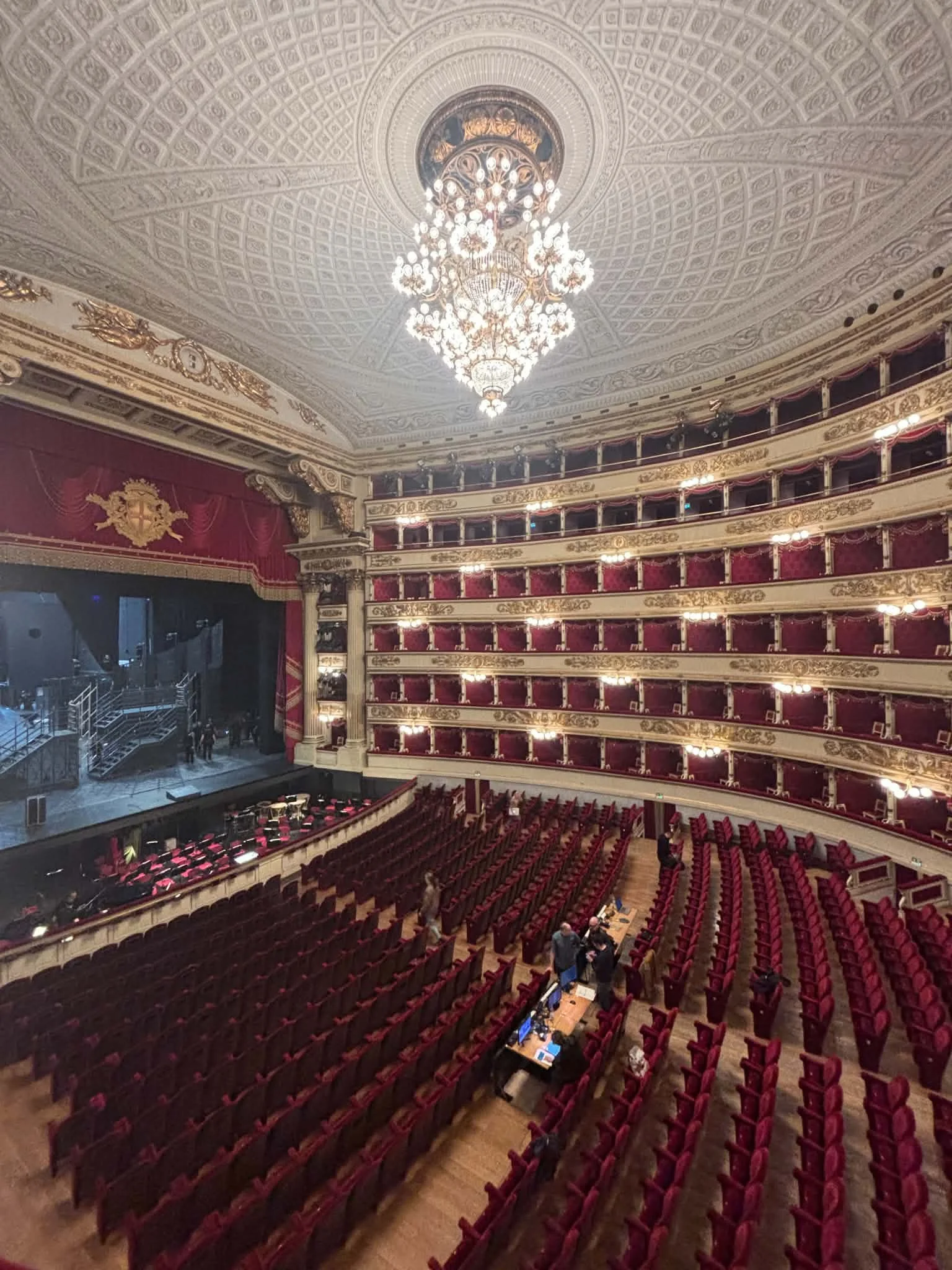
Looking at the Duomo di Milano may never get old but Teatro alla Scala had us leaving with our mouths open and wishing that, should there be a next time, we would be seated in one of its red velvet chairs with an opera being performed right before our eyes. There was something almost magical about standing inside a theater that has witnessed so much of the history of opera: the anticipation of performances, the applause, the music.
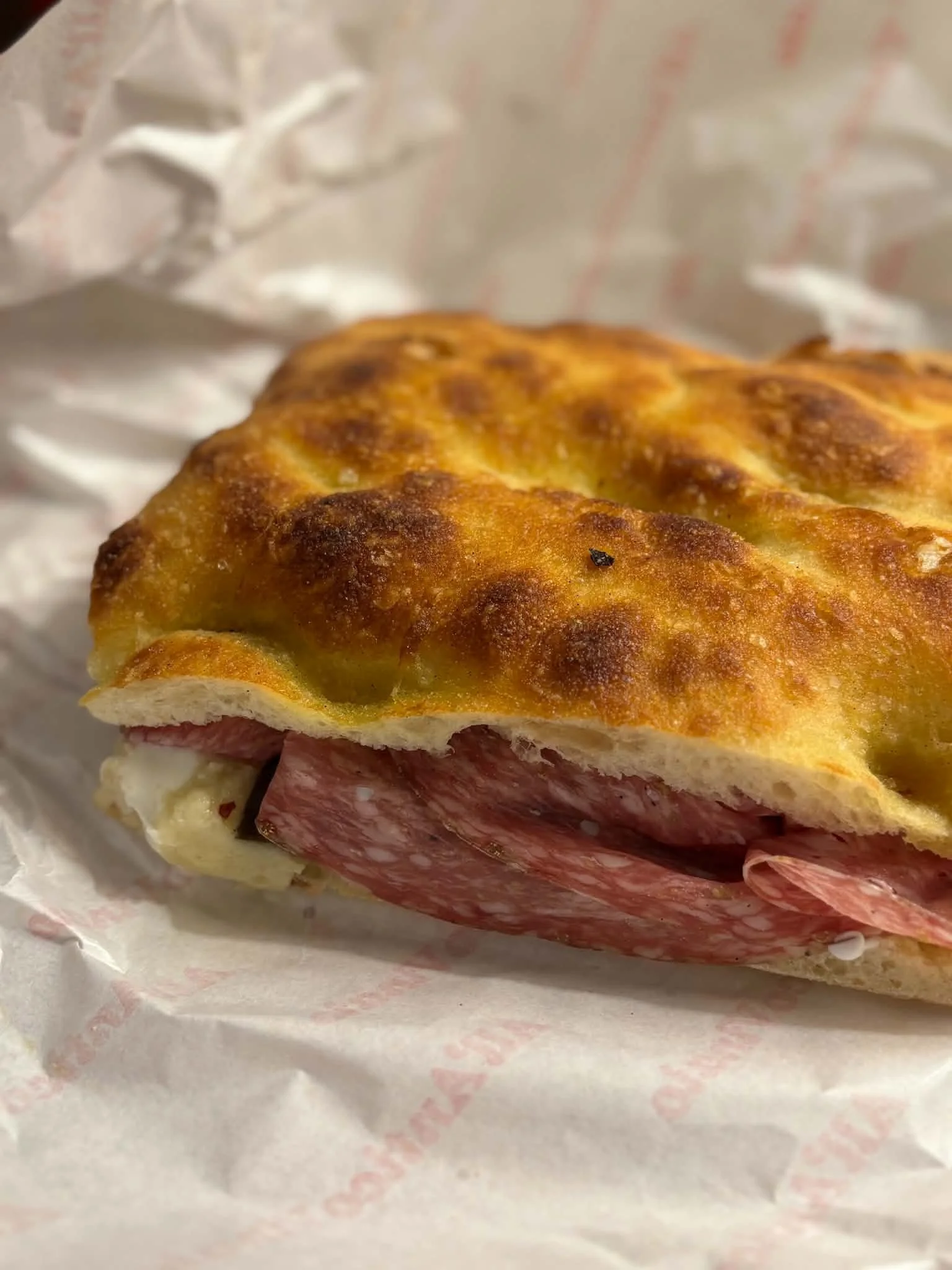
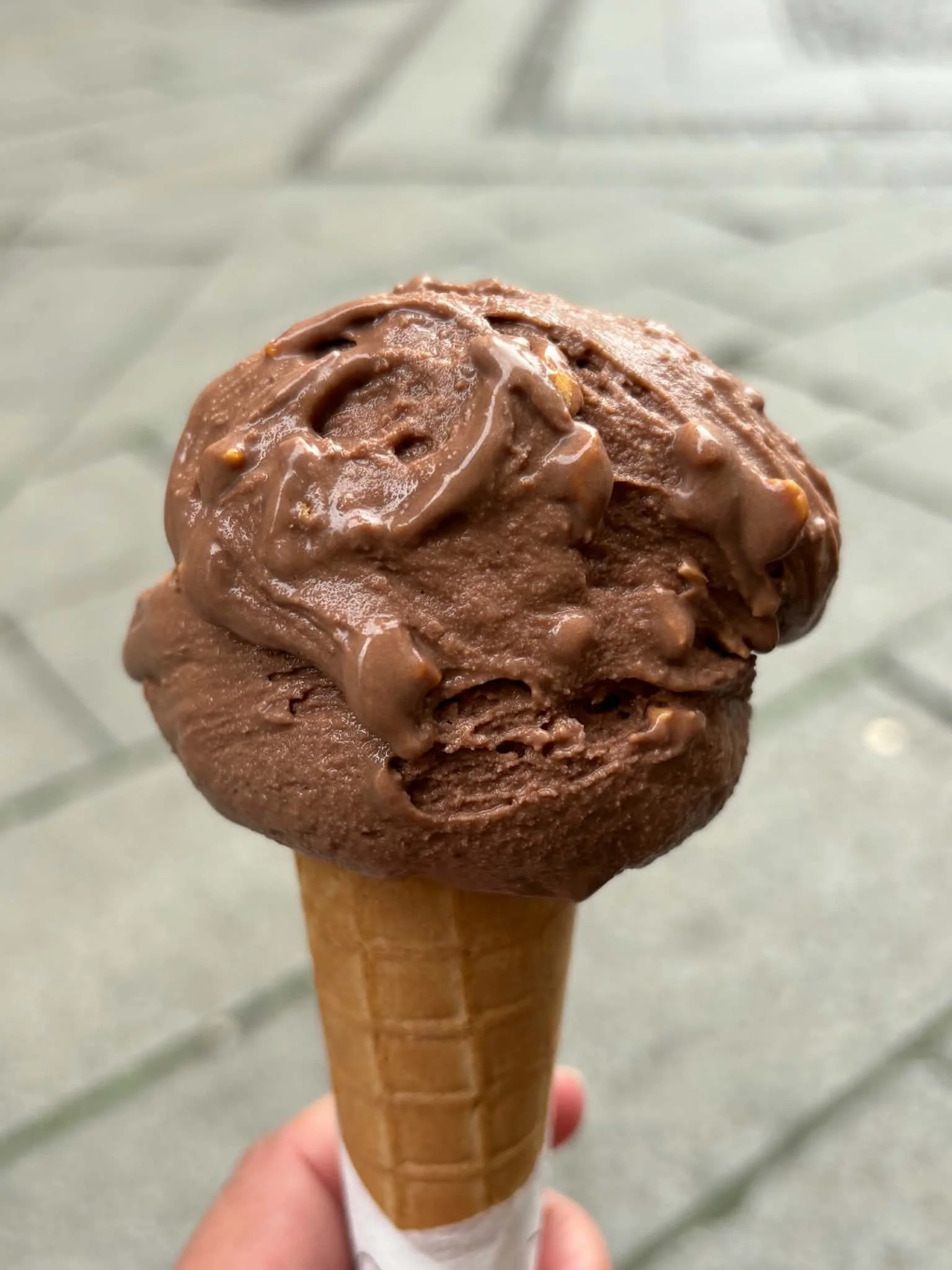
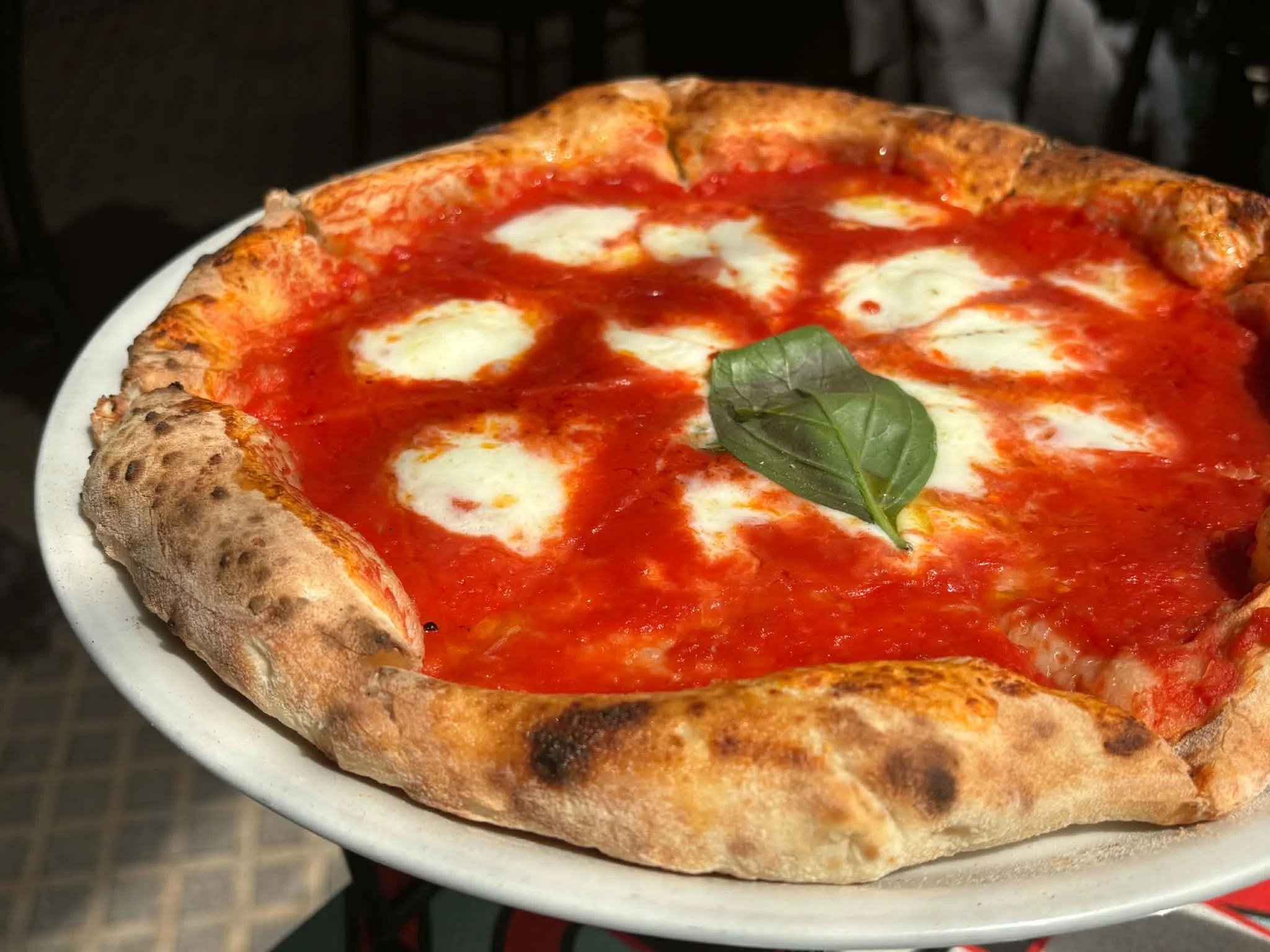
Speaking of mouths, we took in all these sights in between plates of Margherita pizza, cones of gelato, and Italian salami, pecorino cream, artichoke cream, and spicy eggplant sandwiched between two slices of schiacciata.
Other people go to Milan to shop; we went to Milan to see The Last Supper by Leonardo da Vinci.
We were wrong, however.
As it turns out, one doesn’t just see The Last Supper. One experiences it.
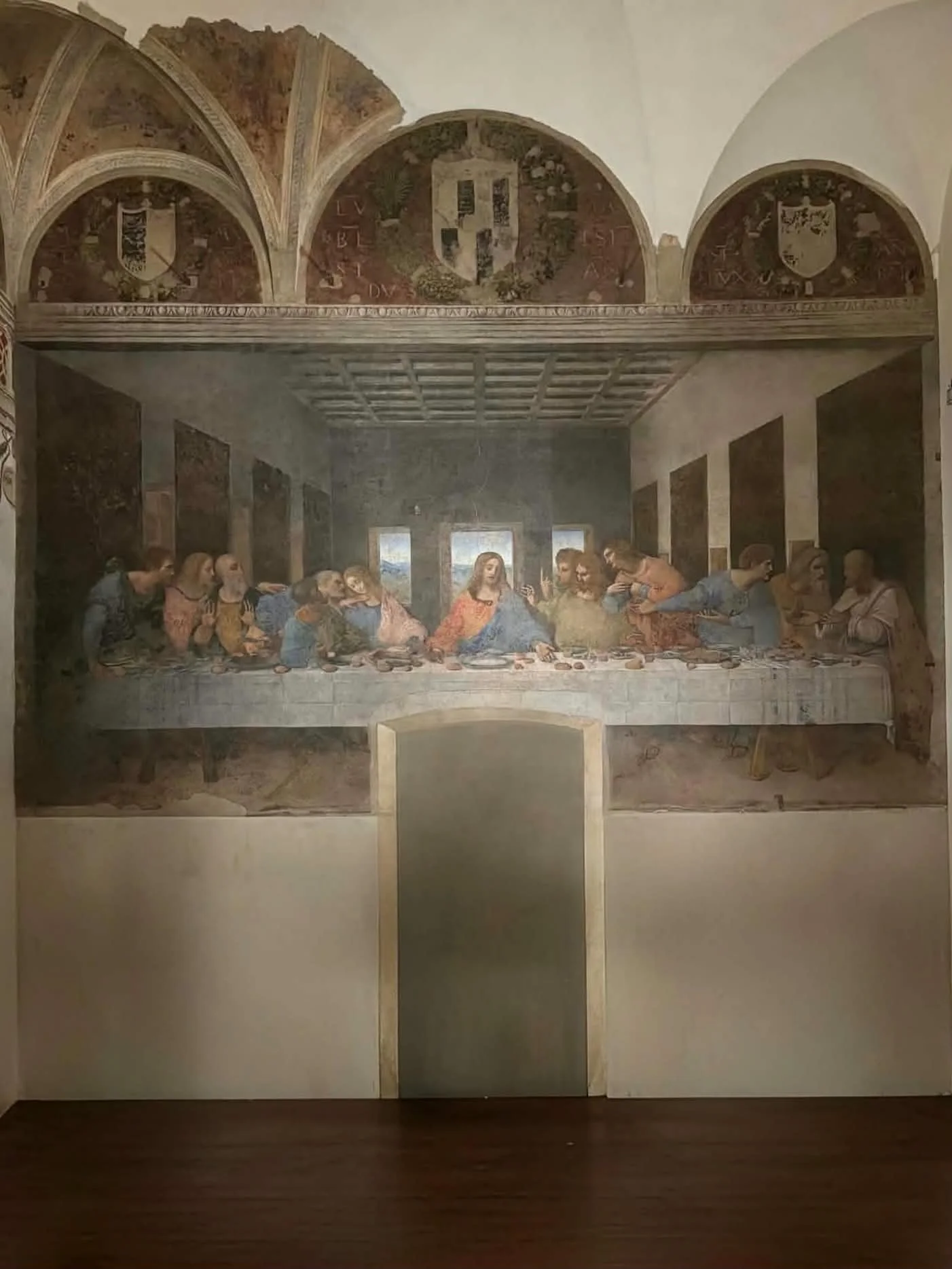
I realized how there is something rather unsettling about finally standing before a painting you have seen reproduced countless times in books, classrooms, museums, and screens. Or even in kitchens in Filipino homes where it is placed on the dining room wall next to a pair of giant wooden spoon and fork with “Baguio City” painted on them. You think you know it already. You know where Judas sits, clutching his bag of 30 pieces of silver. You know Jesus Christ is at the center. You know the apostles are gathered around him. You have seen the gestures and the expressions reproduced so many times that they have almost become visual vocabulary.
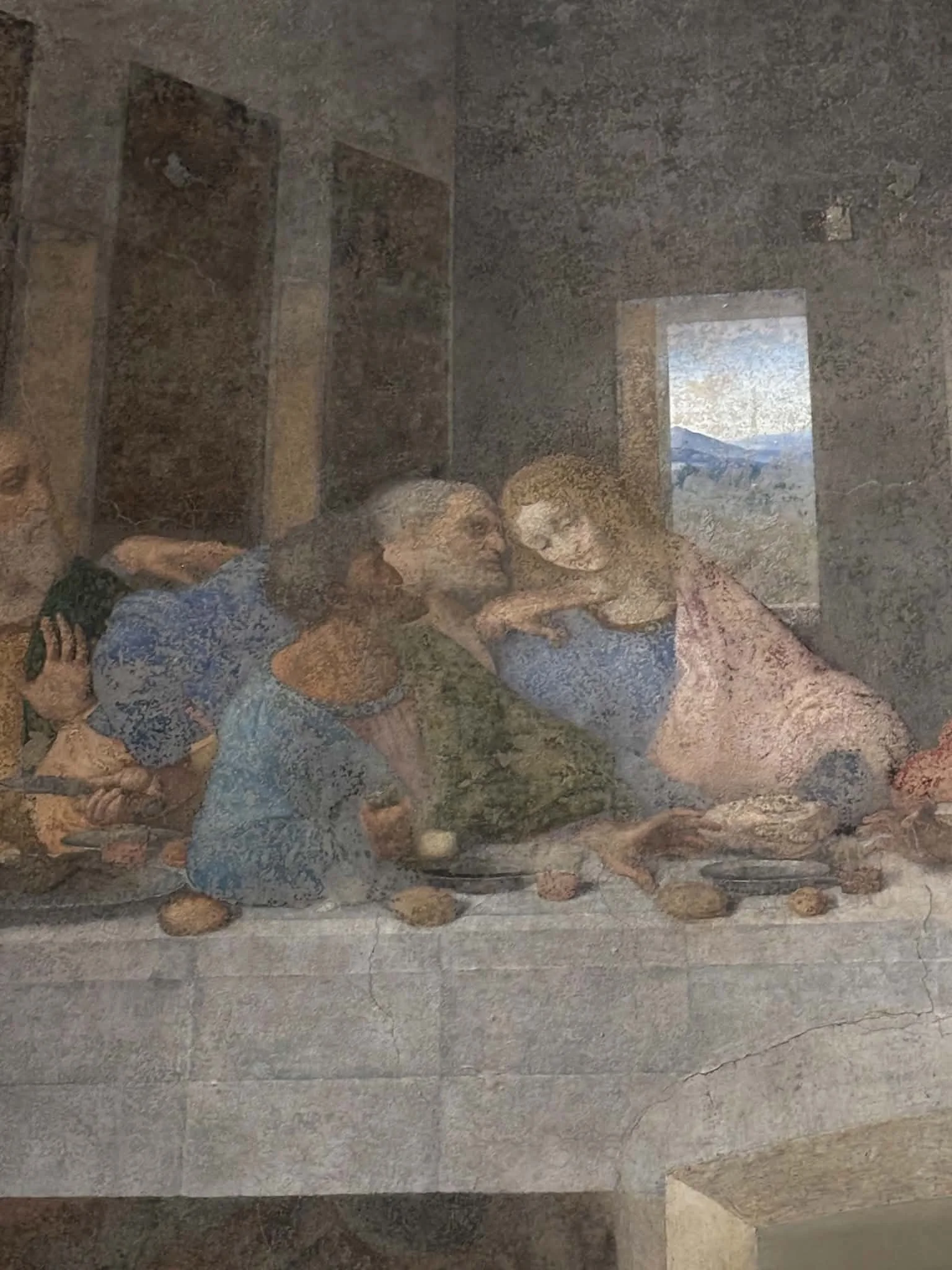
And then you stand in the room and realize that you have never really seen it at all.
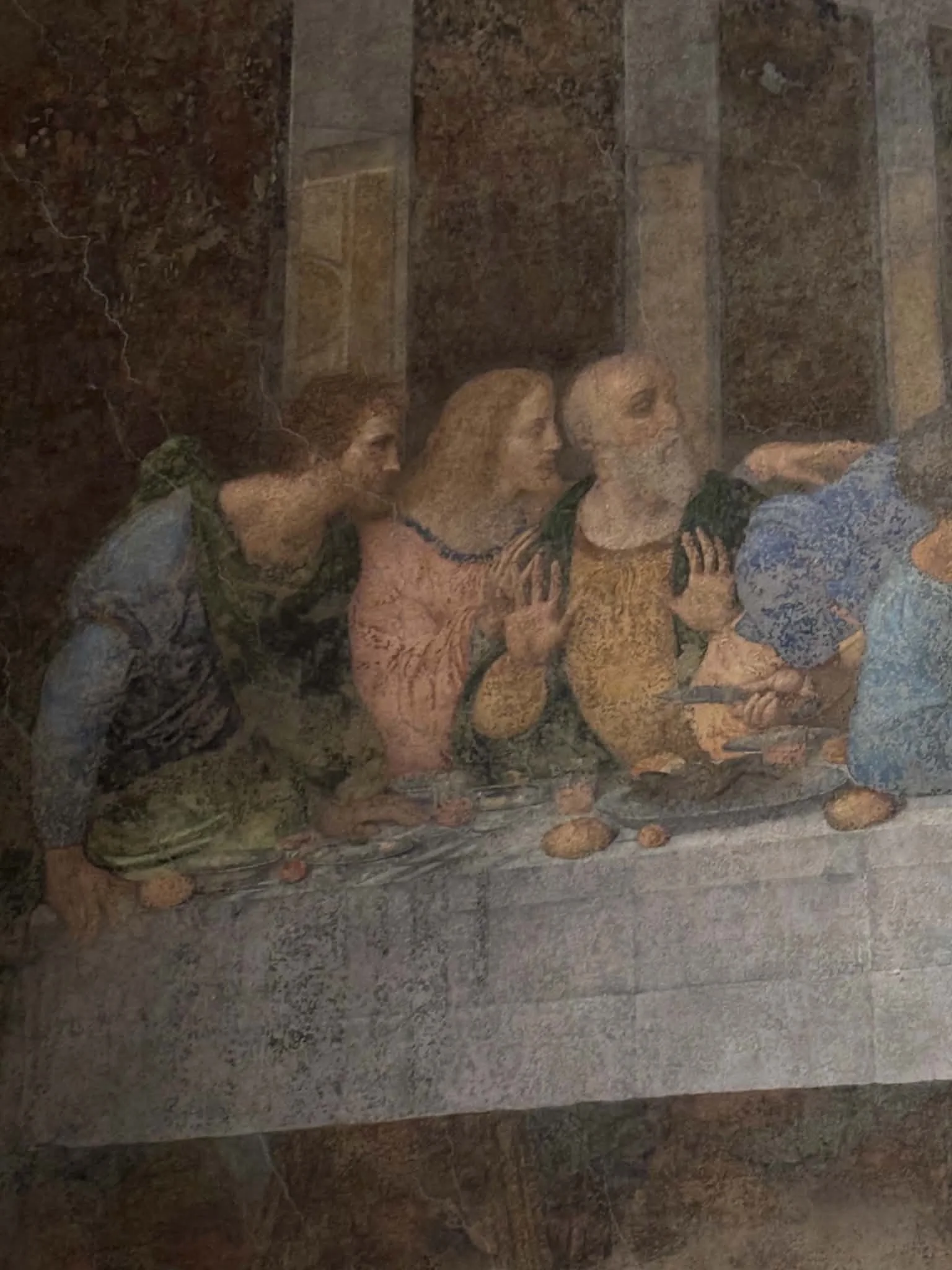
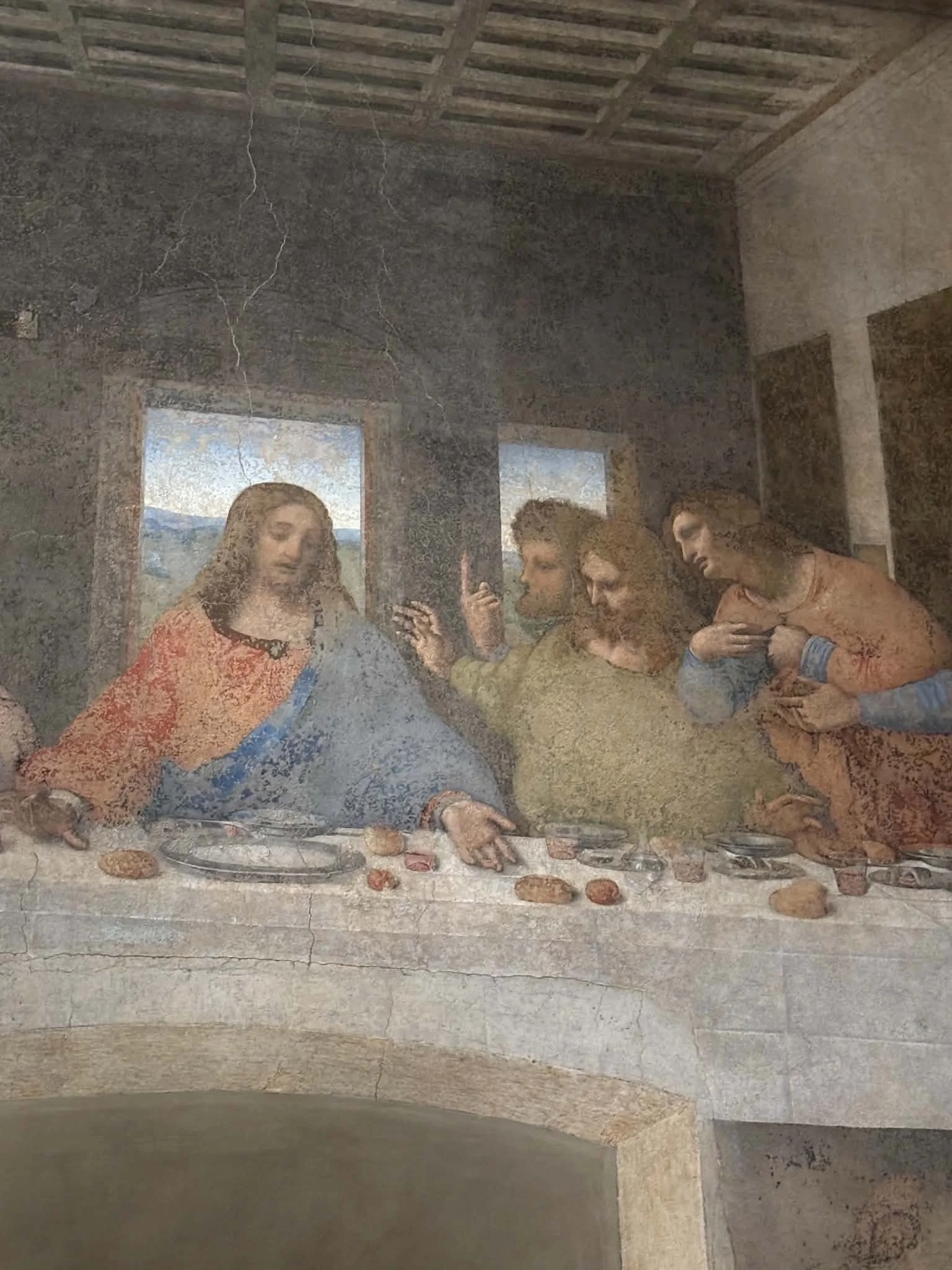
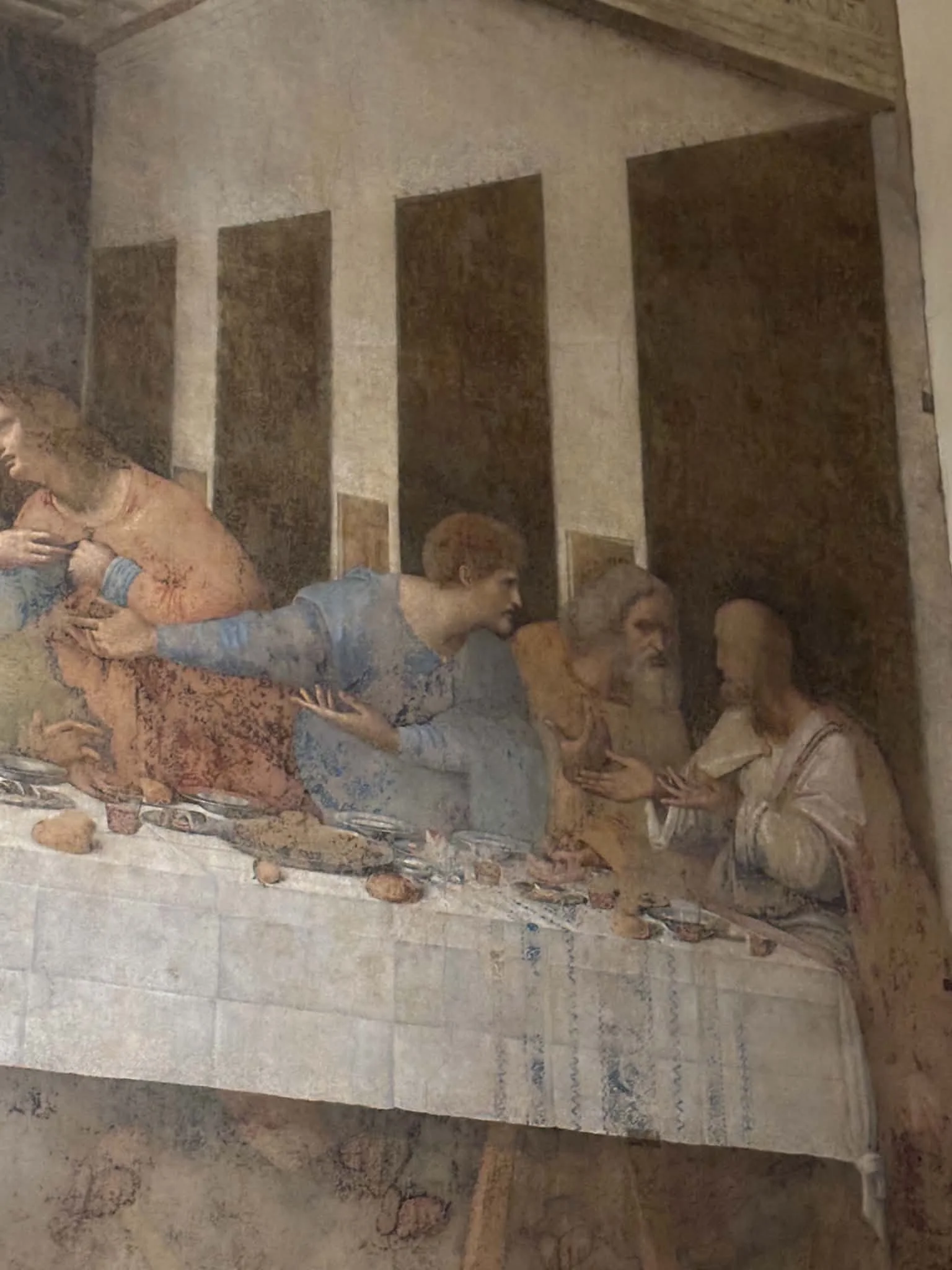
Leonardo’s genius is in the details that photographs and reproductions cannot quite convey: the subtle transitions of light and shadow, the delicate sfumato around the faces, the individuality of each apostle from both facial expressions and hand gestures (very Italian), and the extraordinary way Leonardo captured the moment immediately after Christ announced that one of them would betray him. Every figure reacts differently - shock, disbelief, questioning, agitation - and yet they all remain carefully considered in their execution.
I almost wanted to fall down on my knees in awe.
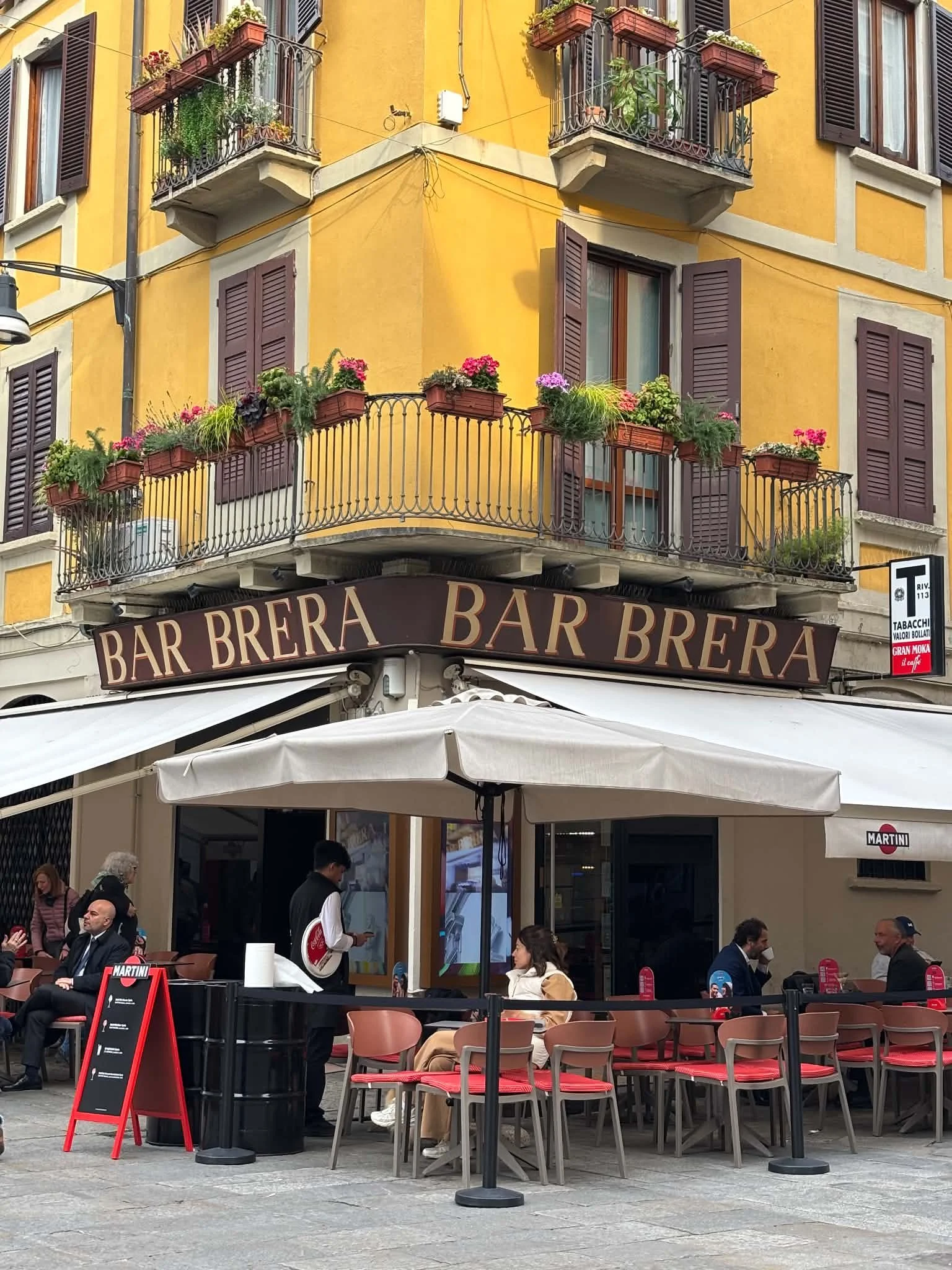
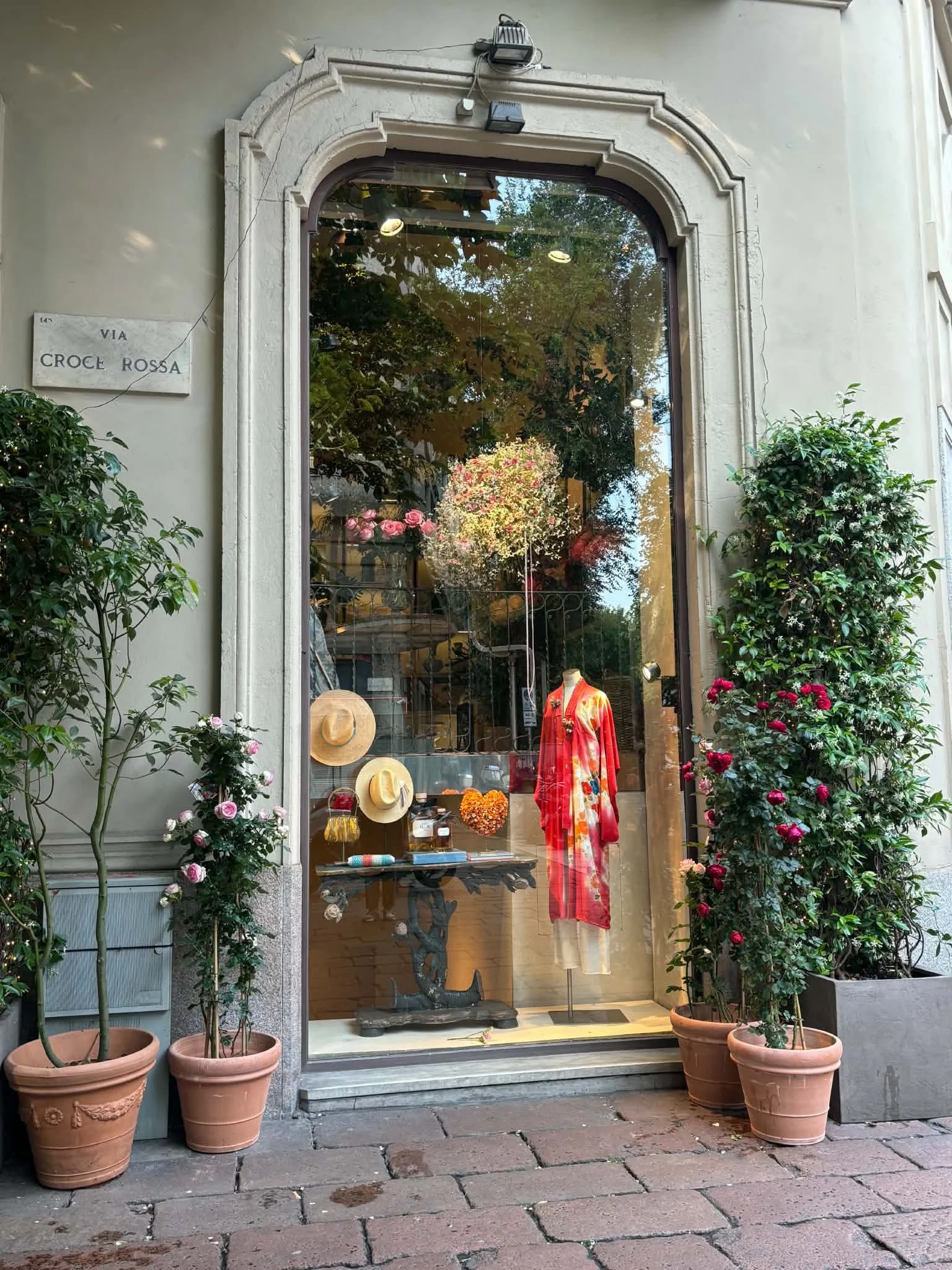
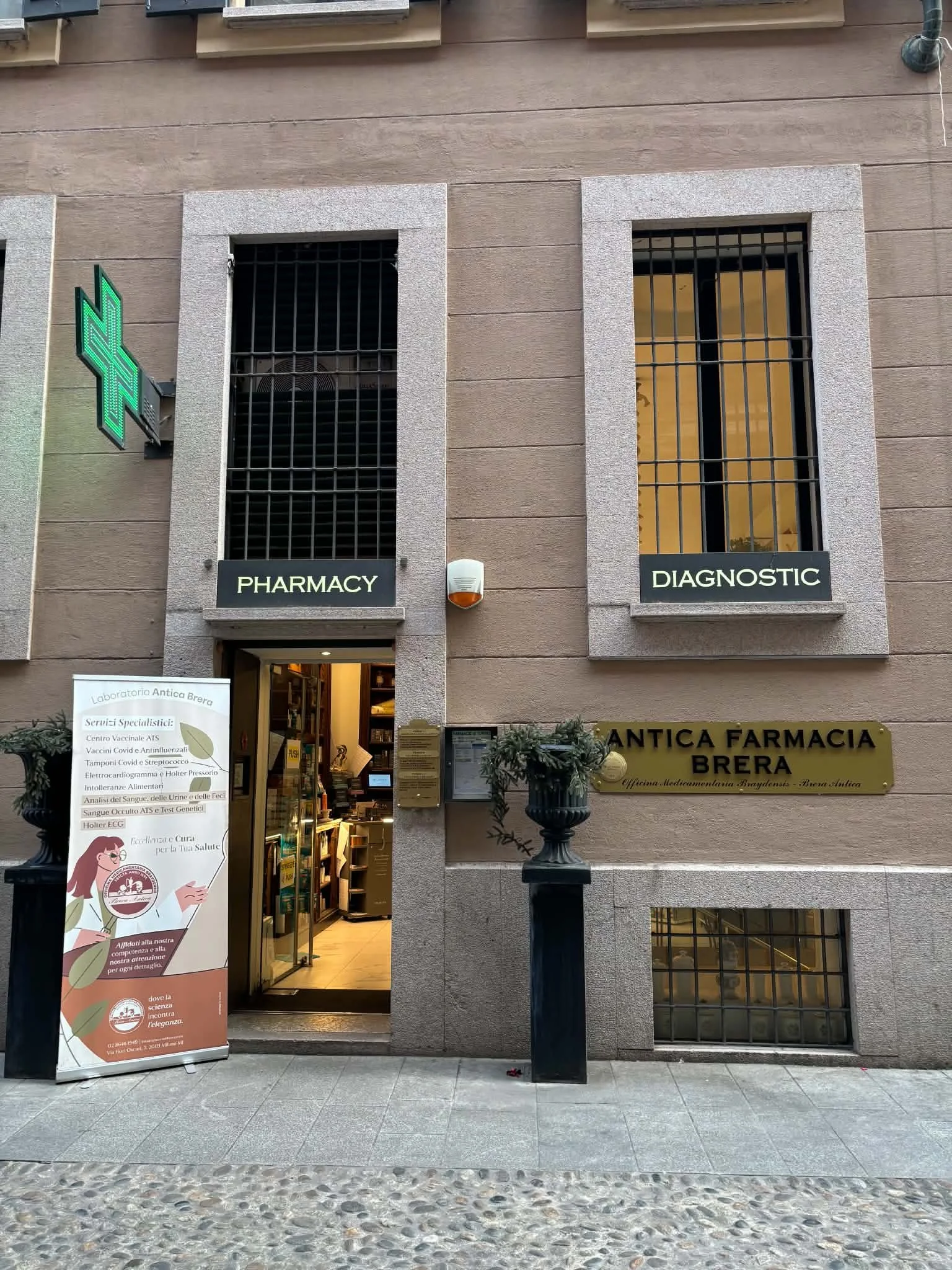
On our last day, we made it a point to explore the charming Brera neighborhood. We walked along its cobblestone streets, taking in the old-world architecture of its pharmacies, trattorias, and independent boutiques. There was something wonderfully intimate about the neighborhood, a welcome contrast to the grand scale of Milan’s city center. Here, it felt as though the city had slowed down just enough for us to appreciate the details.
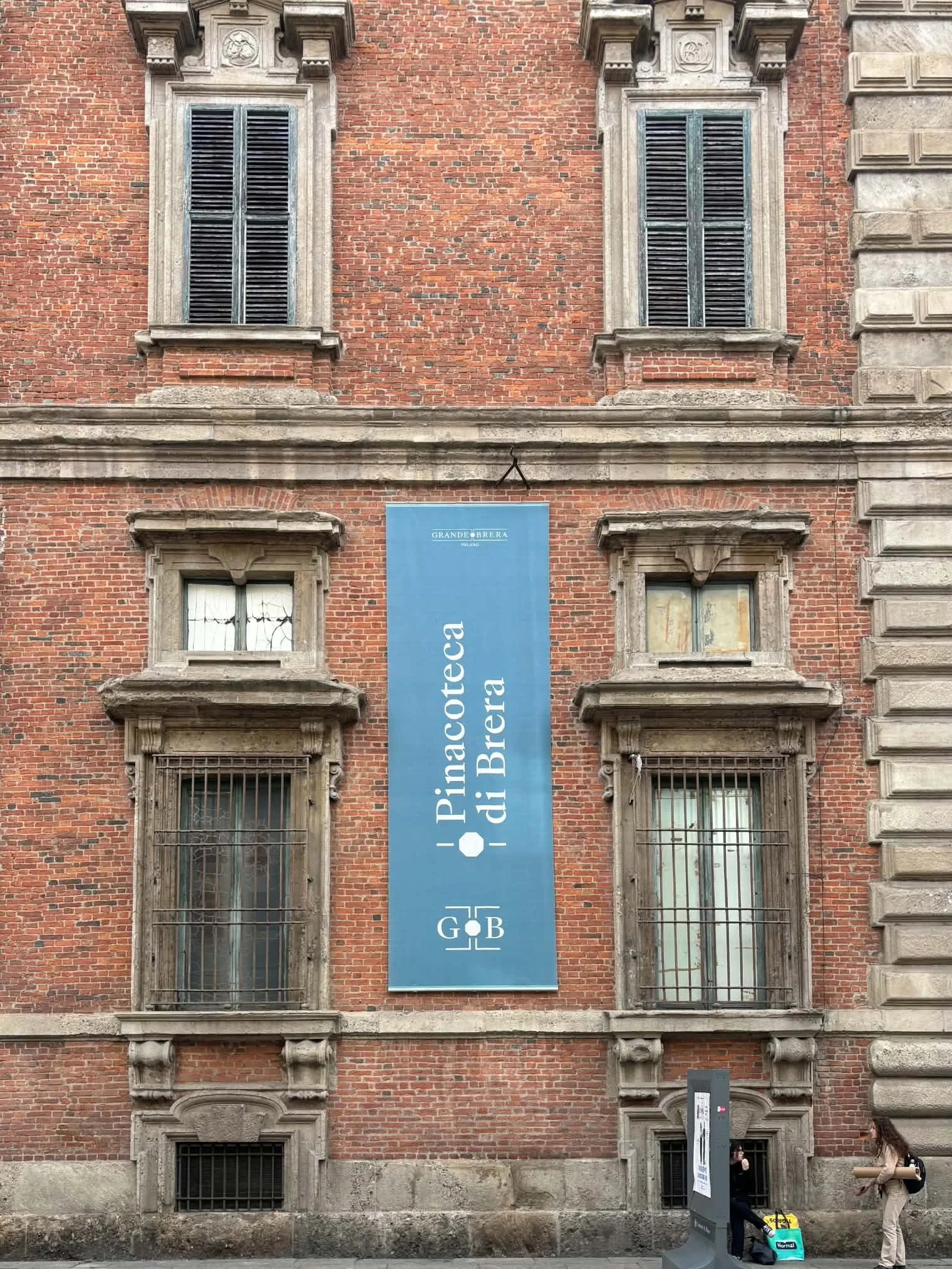
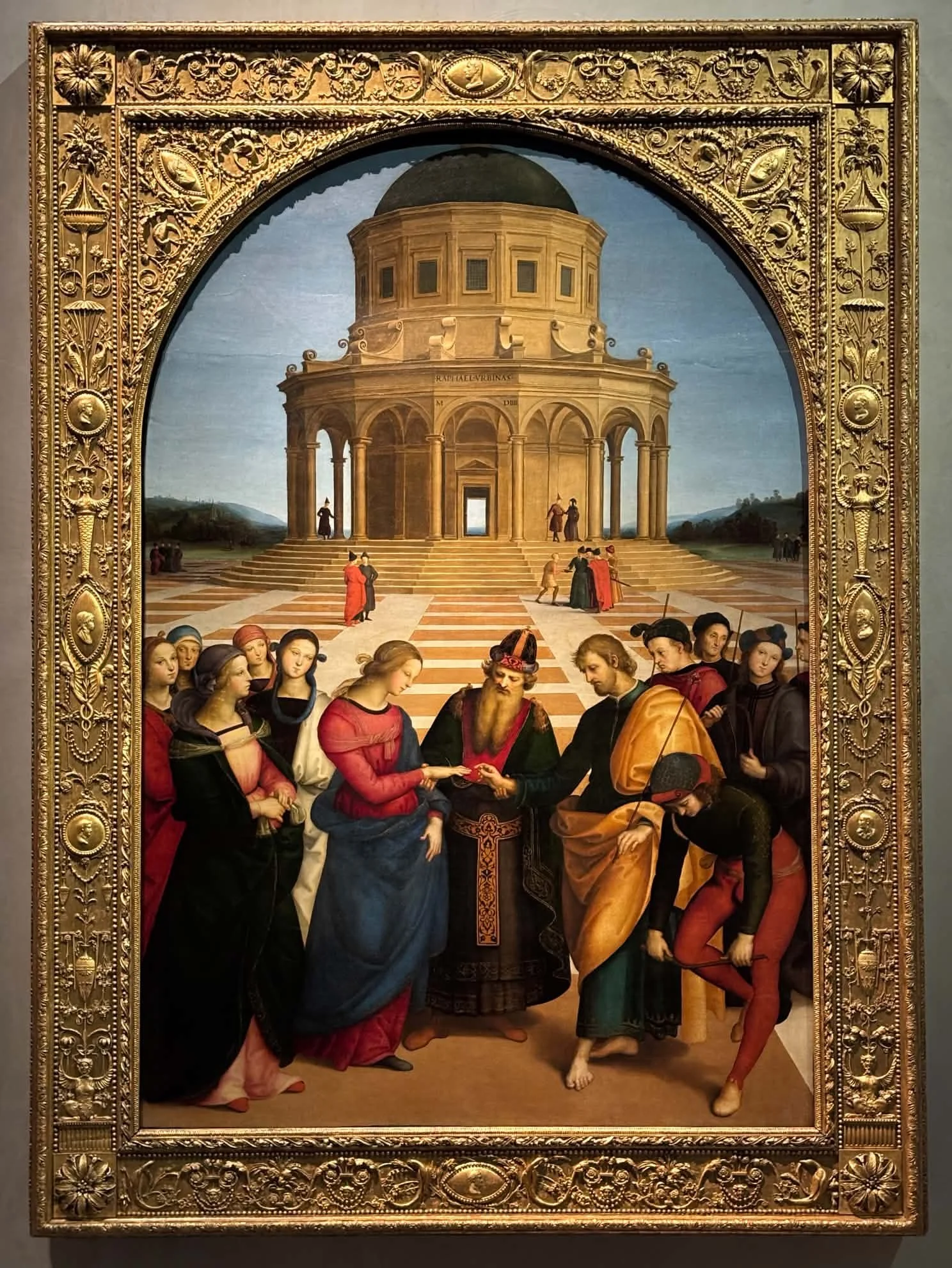
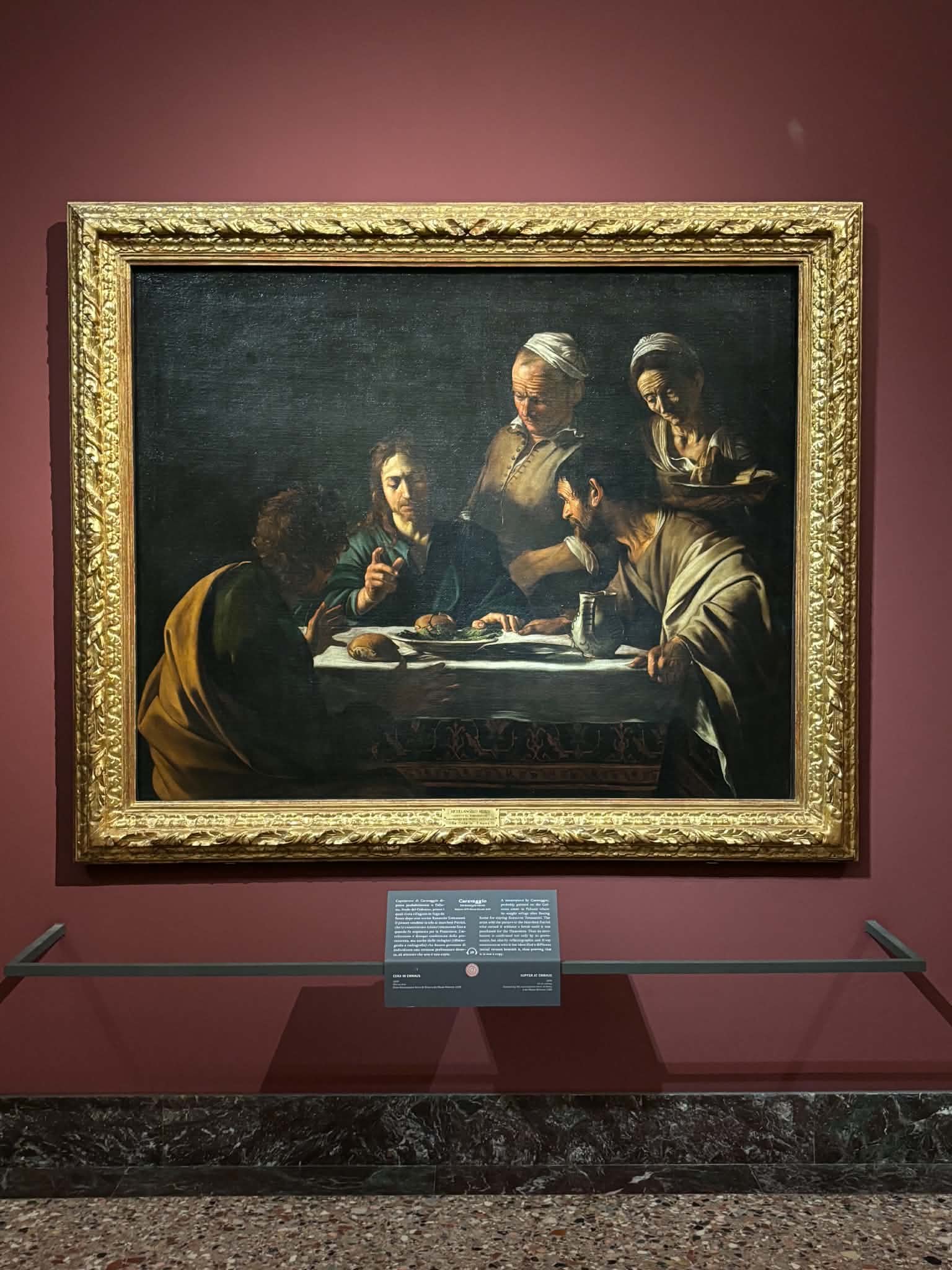
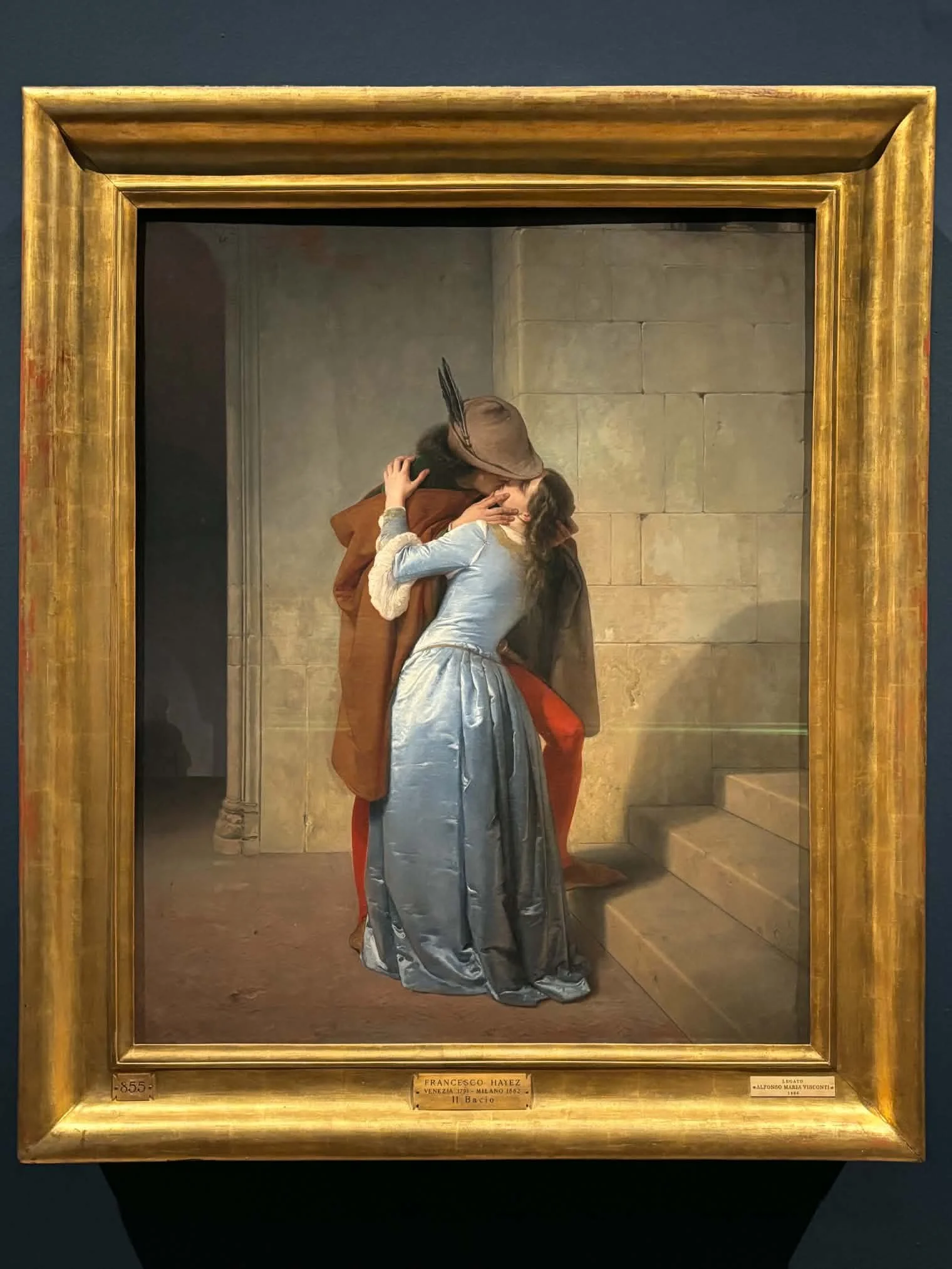
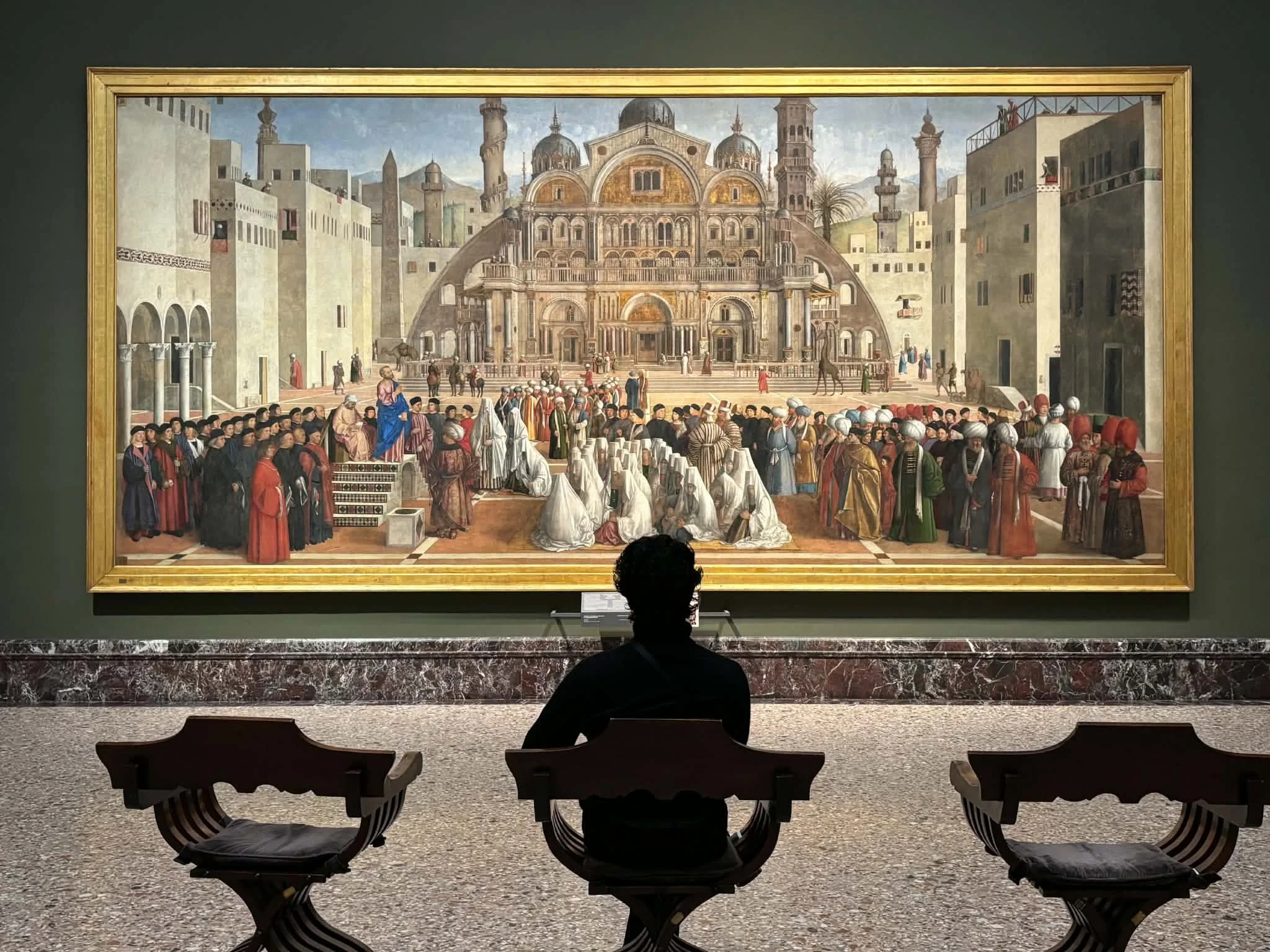
To get our fill of art, we visited the Pinacoteca di Brera, which astounded us with Raphael’s Marriage of the Virgin, Caravaggio’s Supper at Emmaus, and Francesco Hayez’s The Kiss – artworks that my students and I study in my art classes and that now left me overwhelmed having seen them up close. And this for me was one of the most special parts of the trip: bringing home not just photographs and souvenirs, but the memory of standing in front of artworks I have spent years looking at and talking about.
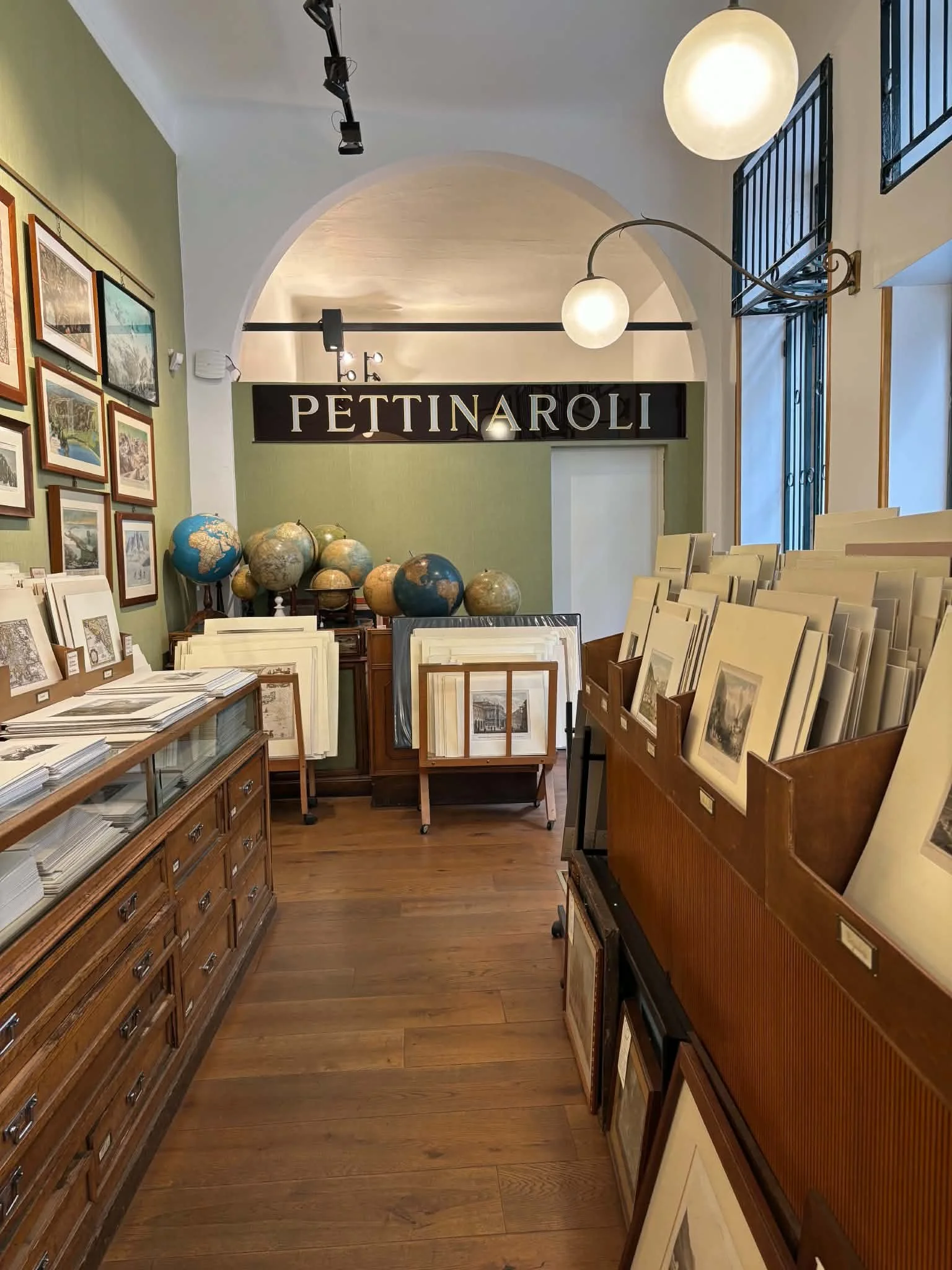
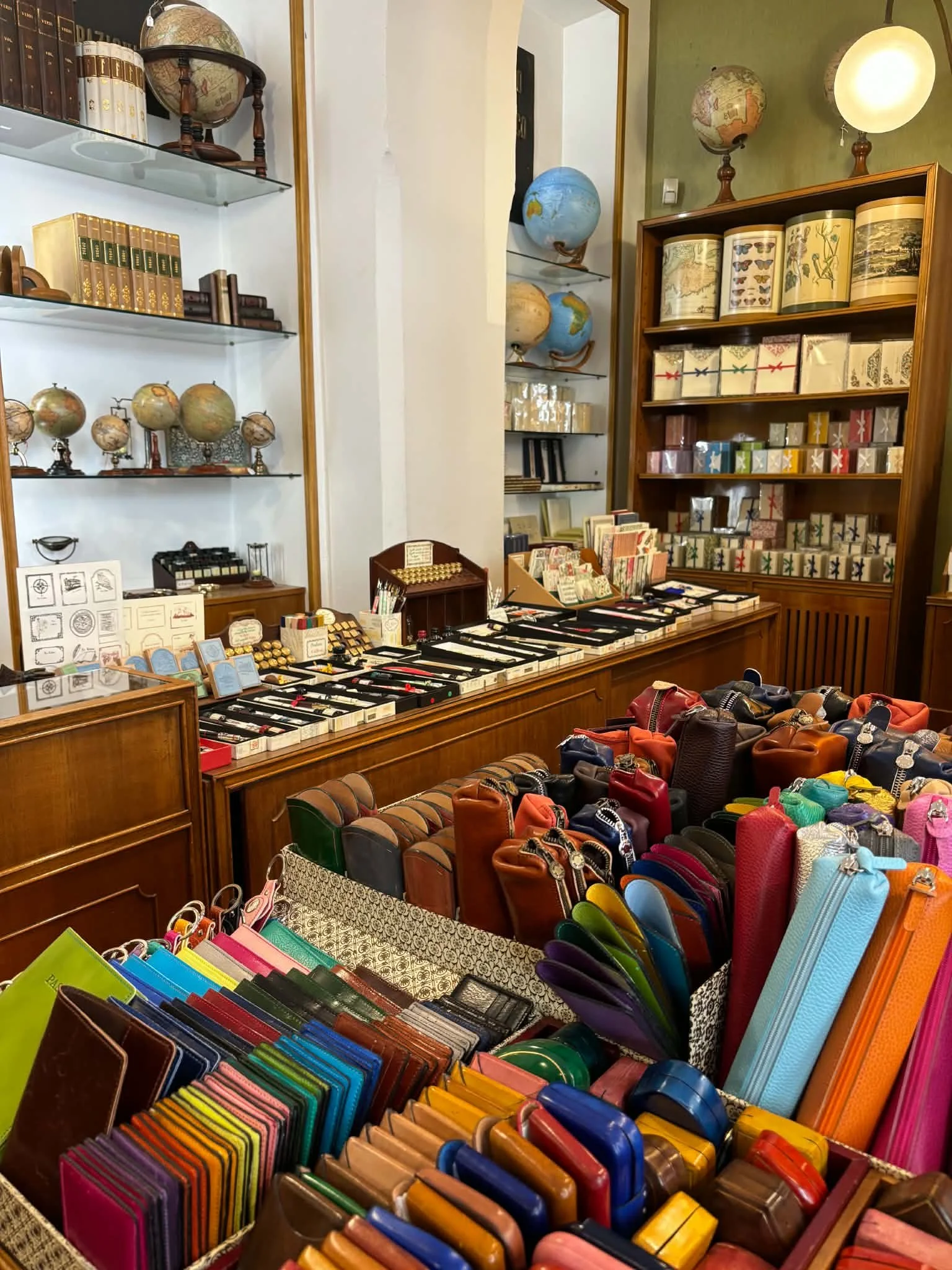
A stroll away from the museum is the loveliest stationery store, F. Pettinaroli. There are globes and maps and beautifully bound leather journals. I took home some notecards to remember the place by.
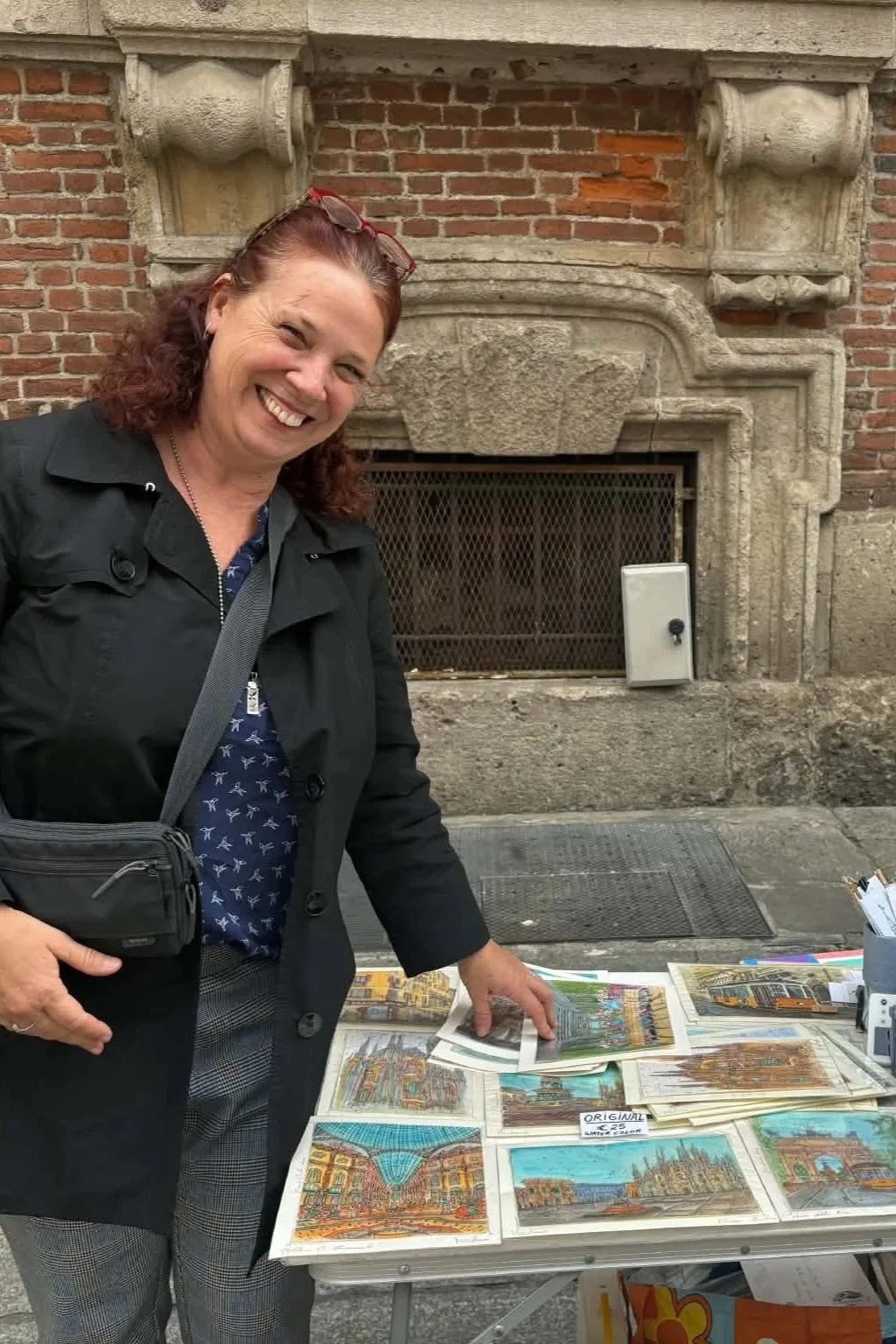
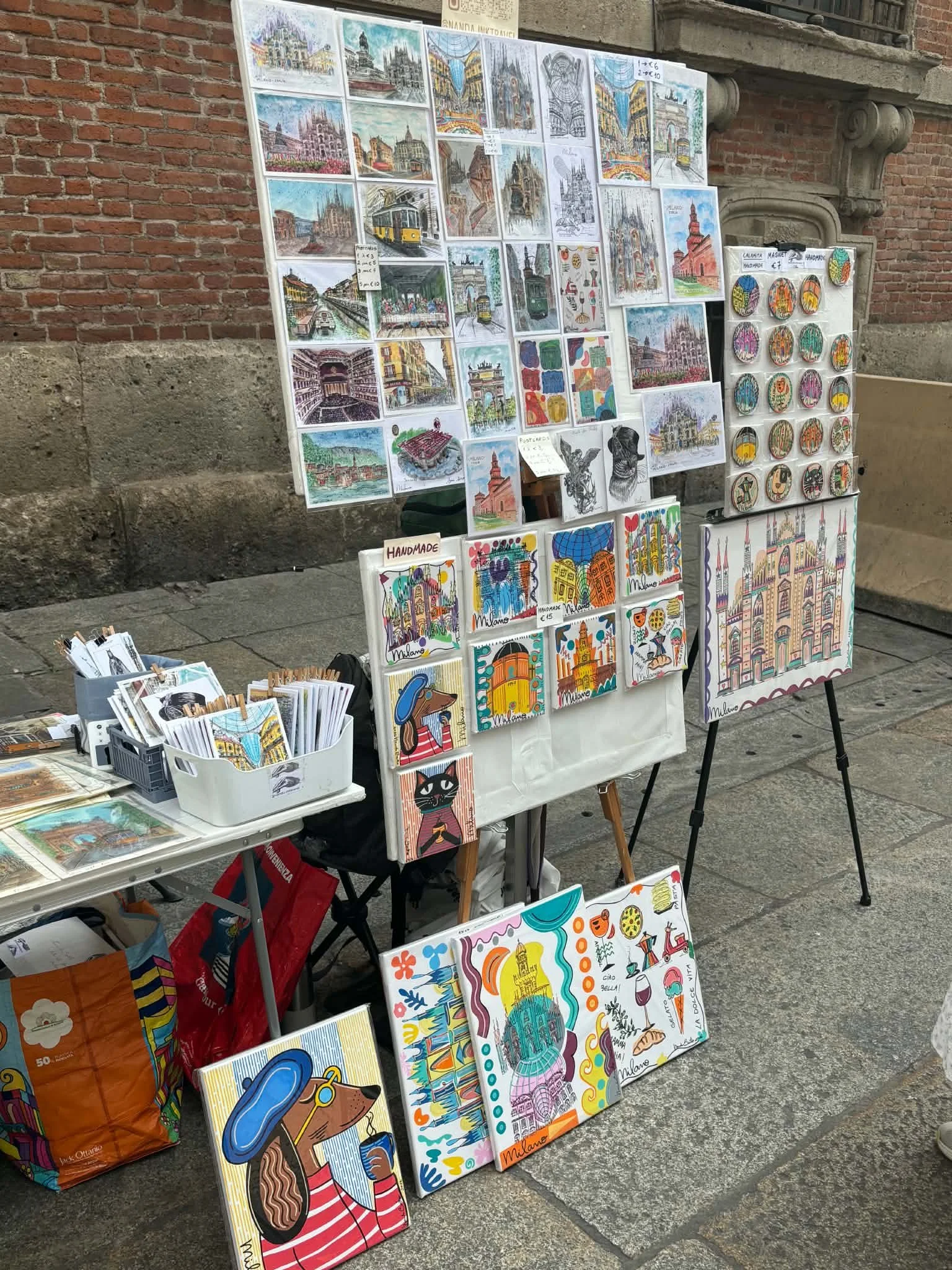
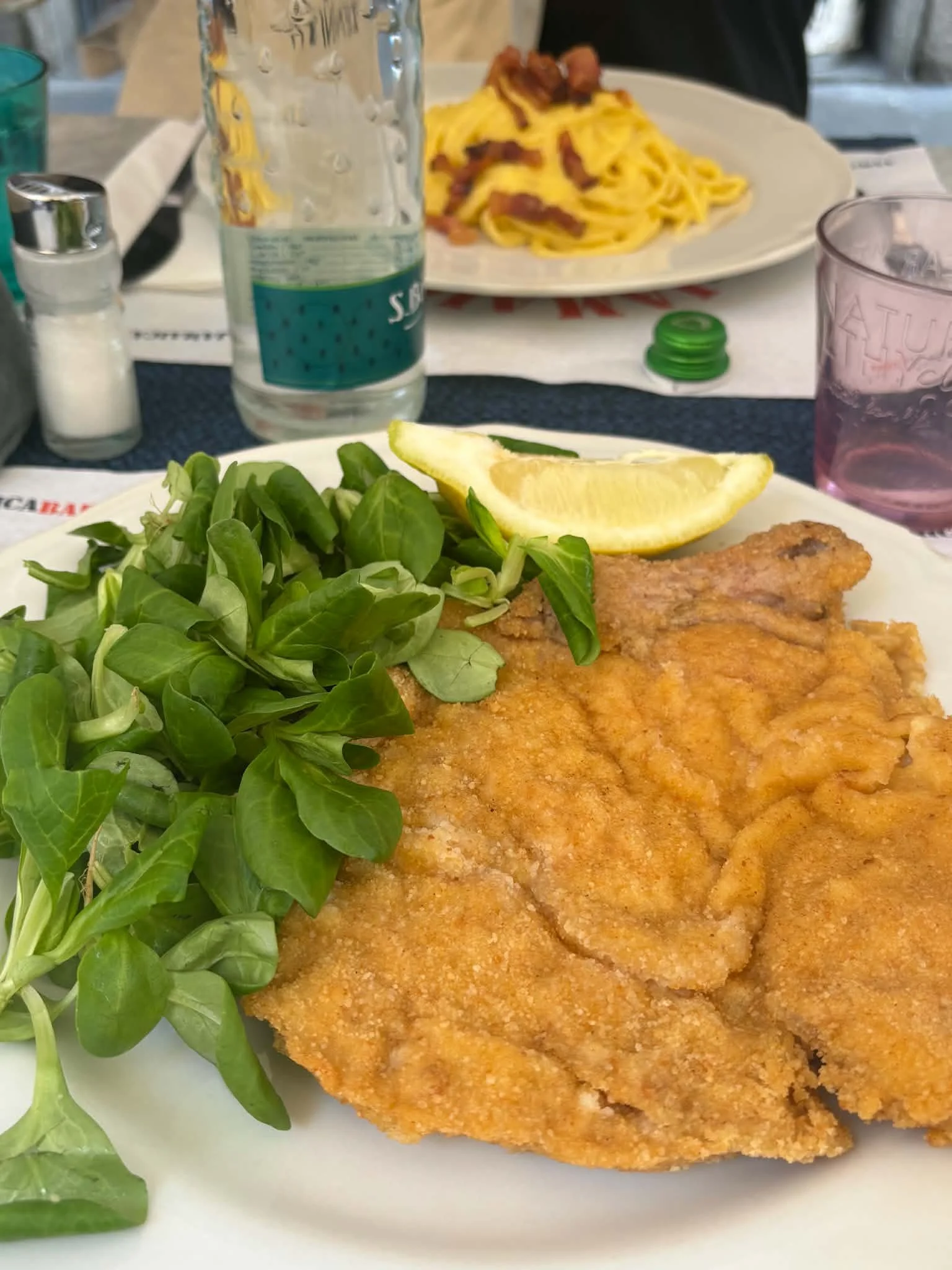
We met another watercolor artist and bought a painting of hers, one she shared was “fresh,” having just finished it before selling it to us. In between strolls and art, we sat al fresco in a trattoria and treated ourselves to cotoletta and carbonara.
And so, when the bellman asked, “How about the shopping?” he was right to assume that I had something that had made my luggage heavier for the trip back home.
But perhaps not in the way he expected.
Yes, there were purchases. There were the notecards, the artworks from two Italian artists, the mindblowing nuggets of gianduja chocolates that requires one to close their eyes as they savor them melting in their mouth. But the best things we brought back from Turin and Milan could not be packed at all: the taste of that first authentic carbonara and risotto Milanese, the view as walked along the porticos of Via Roma where every nook and cranny felt like looking at a painting, the quiet wonder of standing before Leonardo’s The Last Supper, the grandeur of the Duomo that conveniently peeks and greets us as we ascend the staircase from the train station, the paintings I had known only from my lessons, and the unexpected encounters with artists who were kind enough to share a little piece of their work with us.
So maybe the bellman had it right after all.
The shopping was, indeed, “even more okay.”
But so was everything else.
